


Home › Topics › Soil-Transmitted Helminths
Soil-Transmitted Helminths
GMJ News knowledge hub · last reviewed October 2026 · Georgian Medical Journal
SummaryStatisticsGlossaryGMJ newsFAQDocumentsOrganizationsResearch
Soil-transmitted helminths (STH) — intestinal worms including roundworm (Ascaris lumbricoides), whipworm (Trichuris trichiura) and hookworm (Ancylostoma, Necator) — infect approximately 1.5 billion people globally, predominantly children who play in and around soil contaminated with human faeces (WHO). STH cause no acute disease but have profound cumulative effects: anaemia, malnutrition, stunted physical growth, impaired cognitive development and reduced school performance — silently stealing children's potential. School-based deworming with albendazole or mebendazole — safe, cheap and scalable — is WHO's primary strategy; over 700 million children per year receive preventive chemotherapy.
Key messages
1.5 billion people infected
Soil-transmitted helminths (STH) infect approximately 1.5 billion people — nearly one in five of the world's population — predominantly in tropical and subtropical low-income communities where open defecation contaminates soil (WHO).
Silent effects on children
STH cause no acute disease but have profound cumulative effects in children: iron-deficiency anaemia, protein malnutrition, stunted physical growth, impaired cognitive development and reduced school attendance and performance — silently stealing educational potential.
School-based deworming saves lives indirectly
WHO recommends school-based and community deworming with albendazole or mebendazole for all at-risk children in endemic areas — interrupting the cycle of infection, anaemia and malnutrition that perpetuates poverty.
WASH is the permanent solution
School-based deworming treats existing infections but children rapidly reacquire worms from contaminated soil. Permanent elimination requires universal WASH: access to latrines (preventing faecal soil contamination) and clean water (handwashing).
Drug donations
Johnson & Johnson donates mebendazole and GlaxoSmithKline donates albendazole for WHO preventive chemotherapy programmes — together enabling over 700 million children to receive deworming annually.
Hookworm and anaemia
Hookworm (Ancylostoma duodenale, Necator americanus) is particularly harmful — adult worms attach to the intestinal wall and feed on blood, each worm consuming approximately 0.03-0.15mL of blood per day. Heavy hookworm infection causes severe iron-deficiency anaemia.
Key statistics
Children requiring preventive chemotherapy for STH by region (millions) — WHO 2023
Source: WHO. Sub-Saharan Africa and South/Southeast Asia carry the majority of STH burden in children.
Glossary of key terms
Latest GMJ coverage
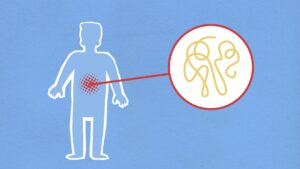
PAHO Partners with Mundo Sano Foundation to Eliminate Neglected Diseases and Cervical Cancer
29/05/2026

Spain Reports 30% Rise in Imported Toxocariasis Cases Among International Travelers
07/07/2026

Scientists Discover Master Clock That Controls Biological Growth and Development
12/06/2026
Frequently asked questions 12 Q&A — structured for Google featured snippets and AI discovery
Knowledge hub: guidelines, conventions and reports
Organizations working in migration and health
Related health topics
NTDsWASHNutritionChild healthAnaemiaSchistosomiasis
About this hub. Produced by the GMJ News Editorial Team as a public-good service. Every statistic is linked to its primary source. Documents are preserved in the GMJ Repository with full attribution. Georgian Medical Journal · Contact the editorial team