🟠 Moderate Evidence
Since the University College London (UCL)–Lancet Commission on Migration and Health published its landmark recommendations in December 2018, implementation of international agreements protecting refugee and migrant health has progressed slowly, according to a new review in The Lancet. Yet a critical lesson has emerged: the COVID-19 pandemic demonstrated that rapid, inclusive health interventions for displaced populations are achievable when political will exists.
Key takeaways
- Global migration and forced displacement trends continue to rise since 2018, even as policy implementation has lagged
- COVID-19 vaccination campaigns proved that reaching refugees and migrants is feasible with coordinated political commitment
- Emergency contexts (pandemic response, Ukraine war) have catalysed innovative inclusive models for healthcare access
- Preventive health measures, including vaccination, demonstrate the benefits of migrant-inclusive health systems
Migration Policy Implementation Status: 2018–2026
Comparative progress across key international health agreement domains
Source: UCL–Lancet Commission on Migration and Health Review, The Lancet, 2026 | Georgian Medical Journal News

Implementation stalled despite rising displacement
The UCL–Lancet Commission’s 2018 report represented a comprehensive roadmap for integrating refugee and migrant health into national and international health systems. According to the commission’s latest review in The Lancet, adoption of these recommendations across signatory nations has been uneven. Meanwhile, global displacement has intensified—a trend documented by the United Nations High Commissioner for Refugees (UNHCR) in successive annual reports tracking rising numbers of refugees and internally displaced persons.
The disconnect between policy ambition and implementation reflects structural barriers familiar to public health advocates: competing fiscal priorities, political resistance to inclusive frameworks, and fragmentation across national and international governance structures. This suggests that rhetorical commitment to migrant health, while necessary, is insufficient without sustained institutional change and resource allocation.
COVID-19 proved rapid inclusion is possible
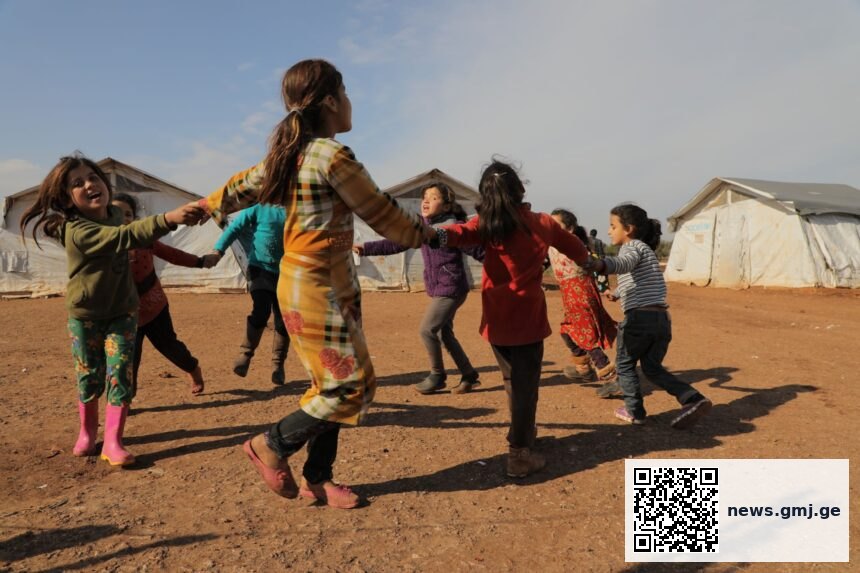
A critical inflection point arrived with the COVID-19 pandemic. According to the commission’s review, vaccine rollouts that successfully reached refugee populations and migrants demonstrated proof-of-concept for inclusive health delivery at scale. Nations that rapidly removed bureaucratic barriers—such as vaccine access without residency documentation, mobile clinic services, and multilingual communication—achieved vaccination rates among displaced populations comparable to or exceeding those in general populations.
This finding has profound implications. As the commission notes in The Lancet, the pandemic response showed that political will and coordinated logistics can overcome structural obstacles. Examples include vaccination campaigns in refugee camps, initiatives targeting undocumented migrants in urban centres, and integration of migrant health teams into national pandemic response structures. The war in Ukraine has similarly catalysed rapid policy innovation, with European nations quickly establishing healthcare access pathways for Ukrainian refugees and internally displaced persons.
Preventive models emerging from crisis response
Rather than reverting to pre-pandemic fragmentation, some healthcare systems have institutionalised the inclusive models developed during emergencies. According to the UCL–Lancet Commission review, a subset of nations—particularly those managing large displacement populations—have embedded migrant-inclusive provisions into routine health system architecture. This includes dedicated migrant health units, language services integration, and removal of administrative requirements that previously created barriers to preventive care.
These developments suggest a pathway forward that does not require waiting for global consensus. Instead, migrant health systems can evolve through pragmatic integration during high-stakes emergencies, with lessons then codified into peacetime structures. The commission indicates that vaccination uptake, tuberculosis screening, and maternal health outcomes have improved in jurisdictions that formally adopted emergency-era inclusive protocols. Health policy reformers can thus point to evidence-based precedents when advocating for sustained investment.
Barriers to universal adoption remain entrenched
Despite these examples, systematic barriers persist across most nations. Immigration policy orthodoxy often treats health access as a secondary concern subordinate to border control. Economic constraints in lower-income nations mean that inclusive frameworks compete with basic service expansion. And political polarisation around immigration makes refugee health a contested domain even when epidemiological logic supports inclusion.
The commission’s assessment suggests these obstacles are not inevitable. As COVID-19 and Ukraine demonstrate, when health security and humanitarian values align with clear epidemiological benefit, rapid policy shifts occur. Conversely, in peacetime contexts without immediate perceived threats, expansion of migrant-inclusive systems slows. This implies that advocacy must connect migrant health to broader public health priorities—disease control, workforce resilience, cost-effectiveness—rather than framing it purely as humanitarian obligation. Global health initiatives that successfully link refugee health to pandemic preparedness or antimicrobial resistance strategies may gain political traction more readily than those relying solely on moral argument.
The COVID-19 pandemic showed that reaching refugees and migrants with health interventions is feasible with political will, with numerous examples of inclusive policy making being rapidly introduced during emergencies such as the pandemic response and the war in Ukraine.
— UCL–Lancet Commission on Migration and Health, The Lancet (2026)
What this means
Frequently asked questions
Has refugee and migrant health access improved since the 2018 UCL–Lancet Commission report?
Implementation of the commission’s recommendations has been slow across most nations, according to the 2026 review in The Lancet. However, COVID-19 emergency responses and the Ukraine conflict have catalysed rapid policy innovation in specific contexts, suggesting that emergency-driven inclusion can transition into sustained institutional change where political commitment exists.
What did the COVID-19 pandemic reveal about reaching migrant populations with vaccines?
The commission’s review highlights that rapid vaccination of refugees and migrants is achievable when bureaucratic barriers are removed—such as eliminating residency requirements, establishing mobile clinics, and providing multilingual communication. Several nations achieved vaccination rates in displaced populations comparable to or exceeding those in general populations, proving feasibility at scale.
Why is migrant health linked to pandemic preparedness?
Exclusion of migrants and refugees from routine health services creates pockets of unvaccinated, under-screened populations that can serve as reservoirs for infectious disease spread, undermining broader pandemic preparedness. Inclusive health systems reduce this epidemiological risk while also improving cost-effectiveness of disease control interventions, making the case for integration both humanitarian and pragmatic.
The eight-year gap between the UCL–Lancet Commission’s initial 2018 report and its 2026 progress review reveals a sobering reality: systemic change in healthcare access for displaced populations occurs neither through policy consensus nor through moral persuasion alone, but through the convergence of crisis, evidence, and political necessity. COVID-19 and the Ukraine conflict have furnished a blueprint. Whether these emergency-era innovations solidify into durable health system architecture—or revert to fragmentation once acute crises subside—depends on sustained advocacy connecting migrant health to core public health missions.
Source: The UCL–Lancet Commission on Migration and Health: review of the state of progress, The Lancet, 2026
Was this article helpful?
Disclaimer. This article is health journalism intended for general information and education. It is not medical advice and is not a substitute for professional diagnosis or treatment. Always consult a qualified healthcare provider about your individual circumstances. Full disclaimer →
Related Coverage



Editorial standards. This article was produced under the GMJ News editorial process, with oversight by the GMJ Editorial Board. Our editorial process. Spotted an error? Contact the editorial team.