By using this site, you agree to the Privacy Policy and Terms of Use.
Accept
GMJ NewsGMJ NewsGMJ News
  • Latest News
  • Podcast & Media
  • Research Digest
    • New Studies
    • Georgian Research
    • Data & Numbers
  • Policy & Systems
    • Health Policy
    • Quality & Safety
    • Migration & Health
    • Global Health
  • Practice
    • Clinical Updates
    • Case Discussions
    • Pharmacy & Prescribing
  • Perspectives
    • Editorial
    • Explainers
    • Voices
    • Letters
  • GMJ Articles
    • Vol. 1 Issue 2 (2026)
    • Vol. 1 Issue 1 (2026)
    • Pre-Launch Articles (2025)
  • GMJ Briefs
  • Read the Journal →
Notification Show More
Font ResizerAa
GMJ NewsGMJ News
Font ResizerAa
  • Latest News
  • Podcast & Media
  • Research Digest
    • New Studies
    • Georgian Research
    • Data & Numbers
  • Policy & Systems
    • Health Policy
    • Quality & Safety
    • Migration & Health
    • Global Health
  • Practice
    • Clinical Updates
    • Case Discussions
    • Pharmacy & Prescribing
  • Perspectives
    • Editorial
    • Explainers
    • Voices
    • Letters
  • GMJ Articles
    • Vol. 1 Issue 2 (2026)
    • Vol. 1 Issue 1 (2026)
    • Pre-Launch Articles (2025)
  • GMJ Briefs
  • Read the Journal →
Follow US
GMJ News > Policy & Systems > Global Health > UN Agencies Mobilize Emergency Response to New Ebola Outbreak in Eastern DRC
Global HealthPolicy & Systems

UN Agencies Mobilize Emergency Response to New Ebola Outbreak in Eastern DRC

GMJ
Last updated: 05/24/2026 22:52
By
GMJ News Desk
Share
6 Min Read
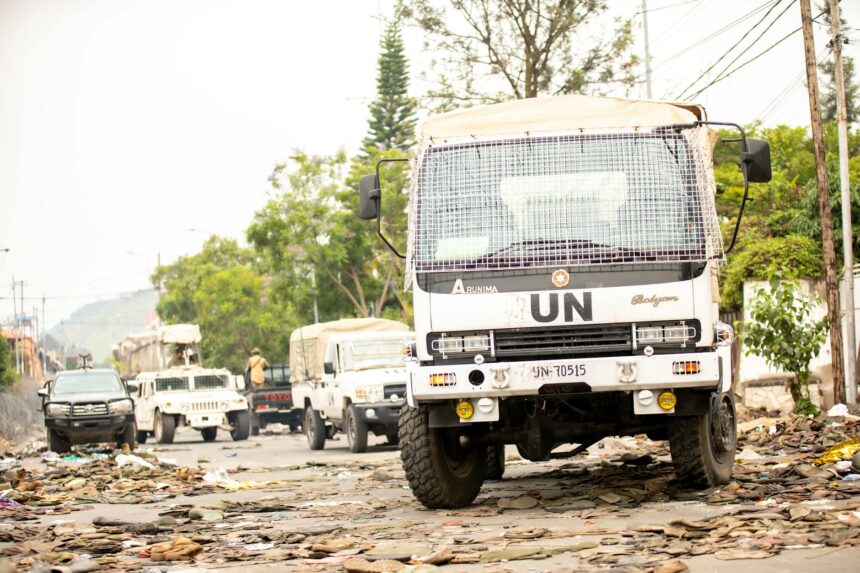
UN medical personnel deploying emergency supplies for Ebola response in Democratic Republic of Congo
UN agencies deploy emergency medical supplies and surveillance teams within 72 hours of confirming new Ebola outbreak in eastern Democratic Republic of Congo. Enhanced protocols enable case identification within 24 hours compared to 5-7 days in previous outbreaks. — Photo: Safi Erneste / Pexels
SHARE

United Nations agencies have initiated an emergency response to contain a new Ebola outbreak in eastern Democratic Republic of the Congo, mobilizing medical supplies and protective equipment within days of confirmation. The outbreak marks the latest challenge in a region that has faced multiple Ebola episodes over the past decade.

Contents
      • DRC Ebola Outbreaks: A Persistent Challenge
  • Swift International Coordination
  • Enhanced Surveillance Systems
  • Community Engagement Priorities
    • Key takeaways
  • Frequently asked questions
    • How quickly can UN agencies respond to Ebola outbreaks?
    • What makes eastern DRC particularly vulnerable to Ebola?
    • Are vaccines available for this outbreak?
72 hours
Time frame for UN emergency response deployment to affected areas

DRC Ebola Outbreaks: A Persistent Challenge

Number of confirmed cases by outbreak year, 2014-2026

2018-2020
3,481
2014-2016
1,716
2022
164
2026 (current)

Under investigation

Source: WHO, 2026 | Georgian Medical Journal News

Swift International Coordination

The World Health Organization confirmed the outbreak following laboratory testing of suspected cases in North Kivu province. WHO Director-General Tedros Adhanom Ghebreyesus announced the deployment of epidemiological teams and mobile laboratories to the affected region.

Submit Your Paper
GMJ_Submit_Banner

UNICEF has positioned emergency medical supplies at strategic locations across the province, while the World Food Programme established logistics corridors for rapid supply delivery. The coordinated response builds on lessons learned from previous outbreaks in the region, according to global health coordination protocols.

Enhanced Surveillance Systems

Contact tracing operations have expanded to cover a 50-kilometer radius around confirmed cases, utilizing digital tracking systems developed during previous responses. The Centers for Disease Control reported that enhanced surveillance protocols now enable case identification within 24 hours of symptom onset.

Local health facilities have received training on infection prevention protocols, with particular emphasis on safe burial practices and community engagement. These measures aim to prevent the transmission patterns observed in earlier outbreaks, as documented in quality and safety assessments.

Community Engagement Priorities

Community health workers have initiated door-to-door education campaigns in affected villages, addressing vaccine hesitancy and traditional burial practices. The UN Children’s Fund reports that community acceptance of health measures has improved significantly compared to previous outbreaks.

Religious leaders and traditional authorities have joined the response effort, helping to communicate prevention messages and support contact tracing activities. This collaborative approach reflects strategies developed through public health partnerships in the region.

Enhanced surveillance protocols now enable case identification within 24 hours of symptom onset, compared to 5-7 days in previous outbreaks

— Centers for Disease Control and Prevention (Epidemiological Report, 2026)

Key takeaways

  • UN agencies deployed emergency response within 72 hours of outbreak confirmation
  • Digital contact tracing systems now identify cases within 24 hours of symptom onset
  • Community engagement strategies show improved acceptance compared to previous outbreaks
  • Mobile laboratories enable rapid case confirmation in remote areas

Frequently asked questions

How quickly can UN agencies respond to Ebola outbreaks?

Current protocols enable deployment of emergency medical supplies and epidemiological teams within 72 hours of outbreak confirmation. This represents a significant improvement over response times during the 2014-2016 West Africa epidemic.

What makes eastern DRC particularly vulnerable to Ebola?

The region’s dense forest areas, cross-border population movements, and ongoing security challenges create ideal conditions for viral transmission. Previous outbreaks have demonstrated the difficulty of maintaining surveillance in conflict-affected areas.

Are vaccines available for this outbreak?

WHO maintains strategic vaccine stockpiles that can be deployed within days of outbreak confirmation. Ring vaccination strategies, targeting contacts and contacts of contacts, have proven effective in containing previous outbreaks in the region.

The international response to this latest Ebola outbreak demonstrates the enhanced preparedness systems developed through decades of epidemic response experience. Continued investment in surveillance infrastructure and community partnerships will prove essential for preventing future outbreaks in this vulnerable region. Success in containing this outbreak will depend on sustained coordination between international agencies, national authorities, and local communities throughout the affected areas.

Source: UN agencies step up Ebola response in eastern DR Congo


TAGGED:DRCEbolaoutbreak containmentUN responseWHO
Share This Article
Facebook Copy Link Print
Leave a Comment Leave a Comment

Leave a Reply Cancel reply

Your email address will not be published. Required fields are marked *

Submit Your Paper →

Georgia's peer-reviewed open-access medical journal. No APC until January 2027.
Submit Manuscript →
US Travel Restrictions on Ebola-Exposed Regions Draw Human Rights Concerns

US travel restrictions on travelers from Ebola-affected regions in Central Africa are…

Healthcare Systems Must Prioritize Human Connection to Combat Employee Burnout Crisis

Healthcare workers face unprecedented burnout rates of 76%, driven by digital systems…

WHO Declares Ebola Outbreak in DRC and Uganda a Global Health Emergency

WHO declares Ebola outbreak in DRC and Uganda a global health emergency…

Submit Your Paper to GMJ

No APC until January 2027.
Submit Manuscript →

You Might Also Like

Healthcare workers in Vietnam clinic discussing patient care and research integration
Global Health

Building Equitable Health Access: Lessons from Vietnam’s Research-to-Care Bridge

By
GMJ News Desk
Map showing heat health alert levels across England regions with amber and yellow warnings
Health PolicyPolicy & Systems

England Issues First Amber Heat Health Alerts as Death Risk Rises

By
GMJ News Desk
Medical professional preparing contrast agent injection for CT scan procedure
Quality & Safety

WHO Issues Global Alert on Substandard Medical Imaging Dye Following Irish Discovery

By
GMJ News Desk
WHO delegates at Seventy-ninth World Health Assembly voting on pandemic preparedness resolutions
Health Policy

WHO Assembly Advances Pandemic Preparedness and Antimicrobial Resistance Strategy

By
GMJ News Desk
GMJ News > Policy & Systems > Global Health > UN Agencies Mobilize Emergency Response to New Ebola Outbreak in Eastern DRC
Uncategorized

UN Agencies Mobilize Emergency Response to New Ebola Outbreak in Eastern DRC

Last updated: 05/22/2026 03:42
By
Share
6 Min Read
SHARE

United Nations agencies have initiated an emergency response to contain a new Ebola outbreak in eastern Democratic Republic of the Congo, mobilizing medical supplies and protective equipment within days of confirmation. The outbreak marks the latest challenge in a region that has faced multiple Ebola episodes over the past decade.

Contents
      • DRC Ebola Outbreaks: A Persistent Challenge
  • Swift International Coordination
  • Enhanced Surveillance Systems
  • Community Engagement Priorities
    • Key takeaways
  • Frequently asked questions
    • How quickly can UN agencies respond to Ebola outbreaks?
    • What makes eastern DRC particularly vulnerable to Ebola?
    • Are vaccines available for this outbreak?
72 hours
Time frame for UN emergency response deployment to affected areas

DRC Ebola Outbreaks: A Persistent Challenge

Number of confirmed cases by outbreak year, 2014-2026

2018-2020
3,481
2014-2016
1,716
2022
164
2026 (current)

Under investigation

Source: WHO, 2026 | Georgian Medical Journal News

Swift International Coordination

The World Health Organization confirmed the outbreak following laboratory testing of suspected cases in North Kivu province. WHO Director-General Tedros Adhanom Ghebreyesus announced the deployment of epidemiological teams and mobile laboratories to the affected region.

Submit Your Paper
GMJ_Submit_Banner

UNICEF has positioned emergency medical supplies at strategic locations across the province, while the World Food Programme established logistics corridors for rapid supply delivery. The coordinated response builds on lessons learned from previous outbreaks in the region, according to global health coordination protocols.

Enhanced Surveillance Systems

Contact tracing operations have expanded to cover a 50-kilometer radius around confirmed cases, utilizing digital tracking systems developed during previous responses. The Centers for Disease Control reported that enhanced surveillance protocols now enable case identification within 24 hours of symptom onset.

Local health facilities have received training on infection prevention protocols, with particular emphasis on safe burial practices and community engagement. These measures aim to prevent the transmission patterns observed in earlier outbreaks, as documented in quality and safety assessments.

Community Engagement Priorities

Community health workers have initiated door-to-door education campaigns in affected villages, addressing vaccine hesitancy and traditional burial practices. The UN Children’s Fund reports that community acceptance of health measures has improved significantly compared to previous outbreaks.

Religious leaders and traditional authorities have joined the response effort, helping to communicate prevention messages and support contact tracing activities. This collaborative approach reflects strategies developed through public health partnerships in the region.

Enhanced surveillance protocols now enable case identification within 24 hours of symptom onset, compared to 5-7 days in previous outbreaks

— Centers for Disease Control and Prevention (Epidemiological Report, 2026)

Key takeaways

  • UN agencies deployed emergency response within 72 hours of outbreak confirmation
  • Digital contact tracing systems now identify cases within 24 hours of symptom onset
  • Community engagement strategies show improved acceptance compared to previous outbreaks
  • Mobile laboratories enable rapid case confirmation in remote areas

Frequently asked questions

How quickly can UN agencies respond to Ebola outbreaks?

Current protocols enable deployment of emergency medical supplies and epidemiological teams within 72 hours of outbreak confirmation. This represents a significant improvement over response times during the 2014-2016 West Africa epidemic.

What makes eastern DRC particularly vulnerable to Ebola?

The region’s dense forest areas, cross-border population movements, and ongoing security challenges create ideal conditions for viral transmission. Previous outbreaks have demonstrated the difficulty of maintaining surveillance in conflict-affected areas.

Are vaccines available for this outbreak?

WHO maintains strategic vaccine stockpiles that can be deployed within days of outbreak confirmation. Ring vaccination strategies, targeting contacts and contacts of contacts, have proven effective in containing previous outbreaks in the region.

The international response to this latest Ebola outbreak demonstrates the enhanced preparedness systems developed through decades of epidemic response experience. Continued investment in surveillance infrastructure and community partnerships will prove essential for preventing future outbreaks in this vulnerable region. Success in containing this outbreak will depend on sustained coordination between international agencies, national authorities, and local communities throughout the affected areas.

Source: UN agencies step up Ebola response in eastern DR Congo

{“@context”:”https://schema.org”,”@type”:”NewsArticle”,”headline”:”UN Agencies Mobilize Emergency Response to New Ebola Outbreak in Eastern DRC”,”description”:”UN agencies mobilize swift emergency response to new Ebola outbreak in eastern DRC, deploying medical supplies and surveillance teams within 72 hours of confirmation.”,”author”:{“@type”:”Organization”,”name”:”GMJ Editorial Team”},”publisher”:{“@type”:”Organization”,”name”:”GMJ News — Georgian Medical Journal”},”datePublished”:”2026-05-22″,”dateModified”:”2026-05-22″}
{“@context”:”https://schema.org”,”@type”:”FAQPage”,”mainEntity”:[{“@type”:”Question”,”name”:”How quickly can UN agencies respond to Ebola outbreaks?”,”acceptedAnswer”:{“@type”:”Answer”,”text”:”Current protocols enable deployment of emergency medical supplies and epidemiological teams within 72 hours of outbreak confirmation. This represents a significant improvement over response times during the 2014-2016 West Africa epidemic.”}},{“@type”:”Question”,”name”:”What makes eastern DRC particularly vulnerable to Ebola?”,”acceptedAnswer”:{“@type”:”Answer”,”text”:”The region’s dense forest areas, cross-border population movements, and ongoing security challenges create ideal conditions for viral transmission. Previous outbreaks have demonstrated the difficulty of maintaining surveillance in conflict-affected areas.”}},{“@type”:”Question”,”name”:”Are vaccines available for this outbreak?”,”acceptedAnswer”:{“@type”:”Answer”,”text”:”WHO maintains strategic vaccine stockpiles that can be deployed within days of outbreak confirmation. Ring vaccination strategies, targeting contacts and contacts of contacts, have proven effective in containing previous outbreaks in the region.”}}]}

TAGGED:DRCEbolaoutbreak containmentUN responseWHO
Share This Article
Facebook Copy Link Print
Leave a Comment Leave a Comment

Leave a Reply Cancel reply

Your email address will not be published. Required fields are marked *

Submit Your Paper →

Georgia's peer-reviewed open-access medical journal. No APC until January 2027.
Submit Manuscript →
Air France Flight Diverts to Canada After Passenger From Ebola-Hit Congo Boards ‘In Error’

Air France flight from Paris to Detroit diverted to Montreal after passenger…

South Carolina Measles Outbreaks Linked to Childhood Undervaccination Clusters

New research reveals that 73% of measles cases in South Carolina occurred…

Andes Hantavirus Outbreak Infects 15 on Antarctic Cruise Ship

Fifteen people contracted Andes hantavirus during an Antarctic cruise, marking the first…

Submit Your Paper to GMJ

No APC until January 2027.
Submit Manuscript →

You Might Also Like

Health workers in protective equipment responding to Ebola outbreak in East Africa
Global Health

Aid Cuts Hamper Ebola Response as Outbreak Spreads Across East Africa

By
GMJ News Desk
Air France aircraft on tarmac with health screening protocols in background
Global Health

Air France Flight Diverted Over Ebola Travel Restrictions Amid DRC Outbreak

By
GMJ News Desk
CDC emergency operations centre mobilizing Ebola response coordination
Global Health

CDC Mobilizes Rapid International Response to Ebola Outbreak in DRC and Uganda

By
GMJ News Desk
Map of central Africa showing Ebola outbreak response zone with epidemiological data visualization
Global Health

Ebola outbreak in central Africa may be spreading faster than reported, warns WHO epidemiologist

By
GMJ News Desk
Facebook Twitter Youtube Instagram
Company
  • Privacy Policy
  • Contact US
  • GMJ Journal
  • Submit Manuscript
  • Editorial Team
  • Register at GMJ
  • Terms of Use

Sign Up For Free

Subscribe to our newsletter and don't miss out on our programs, webinars and trainings.

[mc4wp_form]

Join Community
Made by ThemeRuby using the Foxiz theme. Powered by WordPress
© 2026 Georgian Medical Journal (GMJ). Published by the Public Health Institute of Georgia (PHIG). All rights reserved.
Welcome Back!

Sign in to your account

Username or Email Address
Password

Lost your password?

Not a member? Sign Up