The United States has imposed travel restrictions on individuals from the Democratic Republic of Congo, Uganda, and South Sudan following recent Ebola outbreaks, but public health experts warn these measures may violate human rights and discourage essential humanitarian workers. The World Health Organization has declared the current outbreak in the DRC and Uganda a public health emergency of international concern.
Ebola Outbreaks Across Central Africa
Countries with current travel restrictions and outbreak status, 2024
Source: WHO, CDC, 2024 | Georgian Medical Journal News
WHO Declares International Emergency
The World Health Organization officially declared the Bundibugyo virus strain outbreak in the Democratic Republic of Congo and Uganda a public health emergency of international concern.

According to BBC Health correspondent, the vaccine rollout could take up to nine months to reach affected communities in remote areas. The BBC reports that the delay stems from logistical challenges in conflict-affected regions and the need to maintain cold-chain storage in areas with limited infrastructure.
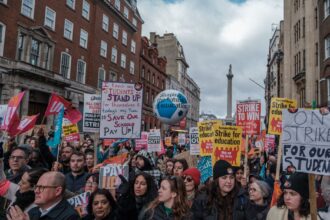
Travel Ban Draws Rights Concerns
The Guardian reports that the measures require 21-day quarantine for travelers from affected regions, regardless of their exposure status or vaccination history.
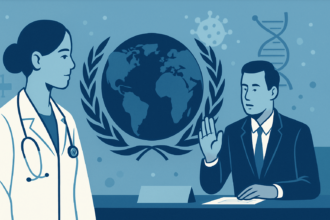
Dr. Lawrence Gostin, director of the WHO Collaborating Center on National and Global Health Law at Georgetown University, told The Guardian that such blanket bans “stigmatize entire populations and may deter the very humanitarian workers needed to contain outbreaks.” The global health response requires international coordination and volunteer deployment.
Outbreak Timeline Reveals Delayed Response
According to the Financial Times investigation, Ebola transmission occurred for several weeks before Congolese authorities formally notified international health agencies. The Financial Times reports this delay complicated contact tracing efforts and allowed the virus to spread across the Uganda border.
The current outbreak involves the Bundibugyo strain, according to WHO reports. Previous Ebola vaccines may offer limited protection against this particular strain, necessitating new vaccine strategies.
Travel restrictions that are not evidence-based risk violating human rights principles while potentially hampering the international response needed to control outbreaks at their source.
— Dr. Lawrence Gostin, Georgetown University (The Guardian, 2024)
Key takeaways
- WHO has declared the Bundibugyo Ebola outbreak a public health emergency affecting DRC and Uganda
- US travel restrictions require 21-day quarantine for travelers from affected regions regardless of exposure status, according to The Guardian
- Vaccine deployment could take 9 months due to logistical challenges in conflict-affected areas, according to BBC reporting
Frequently asked questions
Why are travel restrictions controversial during disease outbreaks?
According to Dr. Lawrence Gostin as quoted in The Guardian, blanket travel bans can stigmatize affected populations and discourage humanitarian workers from deploying to outbreak zones. The WHO generally recommends targeted screening rather than complete travel prohibitions.
How effective are existing Ebola vaccines against the Bundibugyo strain?
Current Ebola vaccines were developed primarily for the Zaire strain and may offer limited cross-protection against Bundibugyo virus, according to WHO reports. New vaccine strategies are being developed specifically for this outbreak.
What makes this Ebola outbreak particularly challenging?
According to the BBC and Financial Times reporting, the outbreak is occurring in conflict-affected regions with limited healthcare infrastructure, making contact tracing and vaccine delivery extremely difficult. The remote location also contributed to delayed international notification.
The balance between protecting public health and preserving human rights remains a critical challenge as international health authorities work to contain the outbreak. The effectiveness of travel restrictions versus targeted public health measures will likely inform future pandemic preparedness strategies, particularly as global health security becomes increasingly complex in an interconnected world.
Source: US curbs on travelers exposed to deadly viruses may infringe rights and deter volunteers
Was this article helpful?
Disclaimer. This article is health journalism intended for general information and education. It is not medical advice and is not a substitute for professional diagnosis or treatment. Always consult a qualified healthcare provider about your individual circumstances. Full disclaimer →
Related Coverage




Editorial standards. This article was produced under the GMJ News editorial process, with oversight by the GMJ Editorial Board. Our editorial process. Spotted an error? Contact the editorial team.