
By using this site, you agree to the Privacy Policy and Terms of Use.
Accept
GMJ NewsGMJ NewsGMJ News
  • Latest News
    • GMJ Briefs
  • Podcast & Media
    • Podcast Episodes
    • GMJ Audio
    • GMJ Videos
  • Research Digest
    • New Studies
    • Georgian Research
    • Data & Numbers
  • Policy & Systems
    • Health Policy
    • Quality & Safety
    • Migration & Health
    • Global Health
  • Practice
    • Clinical Updates
    • Case Discussions
    • Pharmacy & Prescribing
    • Ingredients A-Z
  • Perspectives
    • Editorial
    • Explainers
    • Voices
    • Letters
  • GMJ Articles
    • Vol. 1 Issue 2 (2026)
    • Vol. 1 Issue 1 (2026)
    • Pre-Launch Articles (2025)
  • Read the Journal →
  • About GMJ News
Notification Show More
Font ResizerAa
GMJ NewsGMJ News
Font ResizerAa
  • Latest News
    • GMJ Briefs
  • Podcast & Media
    • Podcast Episodes
    • GMJ Audio
    • GMJ Videos
  • Research Digest
    • New Studies
    • Georgian Research
    • Data & Numbers
  • Policy & Systems
    • Health Policy
    • Quality & Safety
    • Migration & Health
    • Global Health
  • Practice
    • Clinical Updates
    • Case Discussions
    • Pharmacy & Prescribing
    • Ingredients A-Z
  • Perspectives
    • Editorial
    • Explainers
    • Voices
    • Letters
  • GMJ Articles
    • Vol. 1 Issue 2 (2026)
    • Vol. 1 Issue 1 (2026)
    • Pre-Launch Articles (2025)
  • Read the Journal →
  • About GMJ News
Follow US
GMJ News > GMJ Briefs > What Patients Should Know About the Dexcom G7 Sensor Theft

What Patients Should Know About the Dexcom G7 Sensor Theft

GMJ
Last updated: 07/07/2026 10:51
By
Prof. Giorgi Pkhakadze
Share
1 Min Read
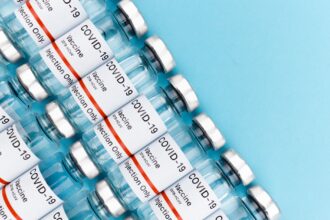
Dexcom G7 continuous glucose monitoring sensor with FDA safety alert overlay
Dexcom has notified the FDA of theft involving defective G7 glucose sensors that were designated as manufacturing scrap and intended for destruction. The company discovered the breach during routine quality reviews in May 2026. — Photo: Tara Winstead / Pexels
SHARE
1 min read|161 words

The recent Dexcom G7 security incident involves three critical facts patients should understand. First, the stolen sensors were manufacturing rejects that failed quality control standards and were never approved for patient use—these were not approved devices diverted from legitimate supply chains. Second, the FDA has issued an official safety alert regarding potentially compromised devices, recommending verification of device authenticity. Third, patients should contact their healthcare providers to confirm their current sensor legitimacy and discuss appropriate next steps.

For continuous glucose monitoring users, verification is straightforward: consult your healthcare provider or Dexcom directly to confirm your device serial numbers and batch information. Patients should not discontinue glucose monitoring without medical guidance, as maintaining glycemic control remains essential. Healthcare providers are advised to maintain current inventory records and verify device authenticity through official Dexcom channels. This incident highlights the importance of supply chain integrity in medical device distribution and underscores patient advocacy in device security.

Read the full article on GMJ Newsroom.

Was this article helpful?
GMJ Brief · Takeaway

📰 Read the full article: Dexcom Reports Theft of Defective G7 Glucose Sensors Designated for Destruction →

Share This Article
Facebook LinkedIn Bluesky Copy Link Print
GMJ
ByProf. Giorgi Pkhakadze
Follow:
Prof. Giorgi Pkhakadze, MD, MPH, PhD, is Editor-in-Chief of the Georgian Medical Journal and Chair of the Public Health Institute of Georgia (PHIG). He is Professor and Head of the Department of Social and Behavioural Sciences at David Tvildiani Medical University, and Secretary/Treasurer of the UEMS Section of Public Health. ORCID: 0000-0001-7609-4515.

Submit Your Paper →

Georgia's peer-reviewed open-access medical journal. No APC until January 2027.
Submit Manuscript →
Trump Administration Removes Job Protections for Thousands of Federal Health Workers

Thousands of federal health workers at HHS agencies including CDC, FDA, and…

Rare Lymphatic-Urinary Fistula Causes Milky Urine in NEJM Case Report

A rare case of chyluria caused by a lymphatic-urinary fistula demonstrates how…

Gene Therapy Shows Promise for Inherited Cholesterol Disorder in First-in-Human Trial

First-in-human gene therapy trial shows preliminary safety and efficacy for treating homozygous…

Submit Your Paper to GMJ

No APC until January 2027.
Submit Manuscript →

You Might Also Like

Scientific illustration showing amino acid pathways in brain neurotransmitter synthesis

Amino Acids: The Chemical Messengers Controlling Your Every Thought

By
Prof. Giorgi Pkhakadze
03/06/2026

PHEIC Declaration: Ebola Cross-Border Transmission DRC-Uganda

By
Prof. Giorgi Pkhakadze
31/05/2026
Healthcare cost reduction chart showing potential savings from medically tailored meal interventions

Key Finding: Medically Tailored Meals Show Promise in Reducing Healthcare Costs, Nature Medicine Reports

By
Prof. Giorgi Pkhakadze
20/06/2026
Medical imaging workstation showing before and after processing times with FireANTs algorithm

Penn Engineers Launch Open-Source Algorithm to Revolutionize Medical Imaging Workflow

By
Prof. Giorgi Pkhakadze
30/06/2026
Facebook Twitter Youtube Instagram
Company
  • Privacy Policy
  • Contact US
  • GMJ Journal
  • Submit Manuscript
  • Editorial Team
  • Register at GMJ
  • Terms of Use

Subscribe to GMJ News — Click here

Join Community
© 2026 Georgian Medical Journal (GMJ). Published by the Public Health Institute of Georgia (PHIG). All rights reserved.
Welcome Back!

Sign in to your account

Username or Email Address
Password

Lost your password?

Not a member? Sign Up