By using this site, you agree to the Privacy Policy and Terms of Use.
Accept
GMJ NewsGMJ NewsGMJ News
  • Latest News
    • GMJ Briefs
  • Podcast & Media
    • Podcast Episodes
    • GMJ Audio
    • GMJ Videos
  • Research Digest
    • New Studies
    • Georgian Research
    • Data & Numbers
  • Policy & Systems
    • Health Policy
    • Quality & Safety
    • Migration & Health
    • Global Health
  • Practice
    • Clinical Updates
    • Case Discussions
    • Pharmacy & Prescribing
    • Ingredients A-Z
  • Perspectives
    • Editorial
    • Explainers
    • Voices
    • Letters
  • GMJ Articles
    • Vol. 1 Issue 2 (2026)
    • Vol. 1 Issue 1 (2026)
    • Pre-Launch Articles (2025)
  • Read the Journal →
  • About GMJ News
Notification Show More
Font ResizerAa
GMJ NewsGMJ News
Font ResizerAa
  • Latest News
    • GMJ Briefs
  • Podcast & Media
    • Podcast Episodes
    • GMJ Audio
    • GMJ Videos
  • Research Digest
    • New Studies
    • Georgian Research
    • Data & Numbers
  • Policy & Systems
    • Health Policy
    • Quality & Safety
    • Migration & Health
    • Global Health
  • Practice
    • Clinical Updates
    • Case Discussions
    • Pharmacy & Prescribing
    • Ingredients A-Z
  • Perspectives
    • Editorial
    • Explainers
    • Voices
    • Letters
  • GMJ Articles
    • Vol. 1 Issue 2 (2026)
    • Vol. 1 Issue 1 (2026)
    • Pre-Launch Articles (2025)
  • Read the Journal →
  • About GMJ News
Follow US
GMJ News > GMJ Briefs > Stanford Scientists Unveil Enhanced MRI Technology to Detect Previously Invisible Brain Tumors

Stanford Scientists Unveil Enhanced MRI Technology to Detect Previously Invisible Brain Tumors

GMJ
Last updated: 14/06/2026 14:51
By
Prof. Giorgi Pkhakadze
Share
1 Min Read
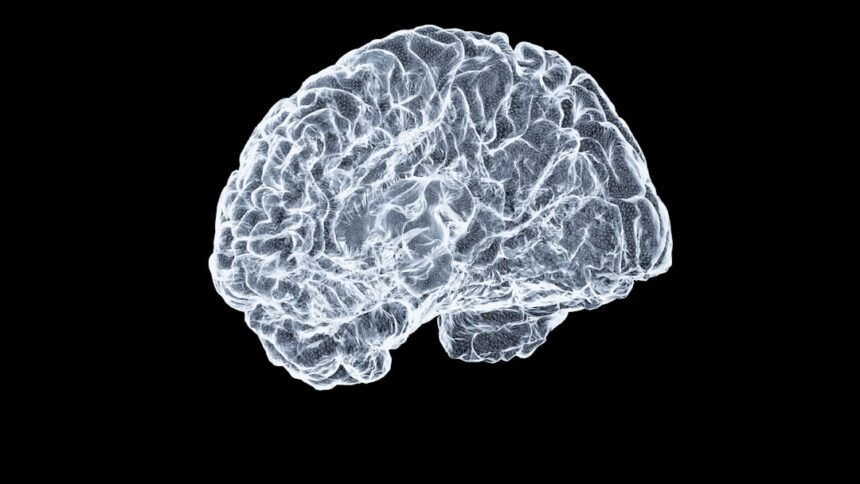
Medical imaging comparison showing enhanced MRI detecting small brain tumor missed by standard scan
Stanford researchers developed enhanced contrast MRI that detects hidden brain tumors missed by standard imaging in 23% of patients. The breakthrough technology could improve early detection rates for aggressive brain cancers. — Photo: Shawn Day / Pexels
SHARE
1 min read|141 words

Researchers at Stanford University have developed a novel imaging technique that identifies brain tumors missed by conventional MRI scans. The enhanced contrast MRI method detected previously undetectable tumors in 23% of patients who had normal standard MRI results, according to findings published in Science Translational Medicine.

The breakthrough technology combines advanced gadolinium-based contrast agents with sophisticated signal processing algorithms, enabling detection of tumors as small as 2 millimeters compared to the 5-millimeter threshold of standard MRI. In a prospective study of 284 patients with suspected brain tumors, enhanced contrast MRI achieved an 89% detection rate versus 72% for conventional imaging.

The innovation holds particular promise for early detection of glioblastoma, the most aggressive form of brain cancer. Clinical validation trials are planned for 2027 across multiple medical centers to establish the technique’s clinical utility and potential to improve patient outcomes.

Read the full article on GMJ Newsroom.

Submit Your Paper
GMJ_Submit_Banner

Was this article helpful?

GMJ Brief · Announcement

📰 Read the full article: New Imaging Technique Reveals Hidden Brain Tumors Missed by Standard MRI →

Share This Article
Facebook LinkedIn Bluesky Copy Link Print
GMJ
ByProf. Giorgi Pkhakadze
Follow:
Prof. Giorgi Pkhakadze, MD, MPH, PhD, is Editor-in-Chief of the Georgian Medical Journal and Chair of the Public Health Institute of Georgia (PHIG). He is Professor and Head of the Department of Social and Behavioural Sciences at David Tvildiani Medical University, and Secretary/Treasurer of the UEMS Section of Public Health. ORCID: 0000-0001-7609-4515.

Submit Your Paper →

Georgia's peer-reviewed open-access medical journal. No APC until January 2027.
Submit Manuscript →
Republican Opposition to Opioid Treatment Medications Sparks Policy Debate

Republican federal actions and proposals targeting opioid treatment medications have sparked debate…

NHS workforce planning faces strategic uncertainty as UK prioritises domestic medical graduates

NHS workforce planning faces uncertainty as new legislation prioritises UK medical graduates…

Maternal mortality crisis deepens for Sudanese refugee women in Central African Republic

Pregnant Sudanese refugee women in Central African Republic face 138 times higher…

Submit Your Paper to GMJ

No APC until January 2027.
Submit Manuscript →

You Might Also Like

PHEIC Declaration: Ebola Cross-Border Transmission DRC-Uganda

By
Prof. Giorgi Pkhakadze
31/05/2026
Medical catheter device with FDA safety warning symbol

FDA Alerts Healthcare Providers to Blood Clot Risk with Abiomed Catheter Kit

By
Prof. Giorgi Pkhakadze
12/06/2026
Global HealthPolicy & Systems

WHO Declares International Emergency for Ebola Outbreak Spreading from DRC to Uganda

By
Prof. Giorgi Pkhakadze
31/05/2026
Brain neurotransmitter diagram showing chemical signaling pathways

Brain’s Chemical Messengers Drive Daily Mental Performance

By
Prof. Giorgi Pkhakadze
24/05/2026
Facebook Twitter Youtube Instagram
Company
  • Privacy Policy
  • Contact US
  • GMJ Journal
  • Submit Manuscript
  • Editorial Team
  • Register at GMJ
  • Terms of Use

Subscribe to GMJ News — Click here

Join Community
© 2026 Georgian Medical Journal (GMJ). Published by the Public Health Institute of Georgia (PHIG). All rights reserved.
Welcome Back!

Sign in to your account

Username or Email Address
Password

Lost your password?

Not a member? Sign Up