By using this site, you agree to the Privacy Policy and Terms of Use.
Accept
GMJ NewsGMJ NewsGMJ News
  • Latest News
    • GMJ Briefs
  • Podcast & Media
    • Podcast Episodes
    • GMJ Audio
    • GMJ Videos
  • Research Digest
    • New Studies
    • Georgian Research
    • Data & Numbers
  • Policy & Systems
    • Health Policy
    • Quality & Safety
    • Migration & Health
    • Global Health
  • Practice
    • Clinical Updates
    • Case Discussions
    • Pharmacy & Prescribing
    • Ingredients A-Z
  • Perspectives
    • Editorial
    • Explainers
    • Voices
    • Letters
  • GMJ Articles
    • Vol. 1 Issue 2 (2026)
    • Vol. 1 Issue 1 (2026)
    • Pre-Launch Articles (2025)
  • Read the Journal →
  • About GMJ News
Notification Show More
Font ResizerAa
GMJ NewsGMJ News
Font ResizerAa
  • Latest News
    • GMJ Briefs
  • Podcast & Media
    • Podcast Episodes
    • GMJ Audio
    • GMJ Videos
  • Research Digest
    • New Studies
    • Georgian Research
    • Data & Numbers
  • Policy & Systems
    • Health Policy
    • Quality & Safety
    • Migration & Health
    • Global Health
  • Practice
    • Clinical Updates
    • Case Discussions
    • Pharmacy & Prescribing
    • Ingredients A-Z
  • Perspectives
    • Editorial
    • Explainers
    • Voices
    • Letters
  • GMJ Articles
    • Vol. 1 Issue 2 (2026)
    • Vol. 1 Issue 1 (2026)
    • Pre-Launch Articles (2025)
  • Read the Journal →
  • About GMJ News
Follow US
GMJ News > Policy & Systems > Health Policy > US Dietary Guidelines 2025-2030: Mixed Progress on Nutrition as Implementation Challenges Persist
Health PolicyPolicy & Systems

US Dietary Guidelines 2025-2030: Mixed Progress on Nutrition as Implementation Challenges Persist

GMJ
Last updated: 15/06/2026 12:25
By
GMJ Policy Desk
Share
5 Min Read
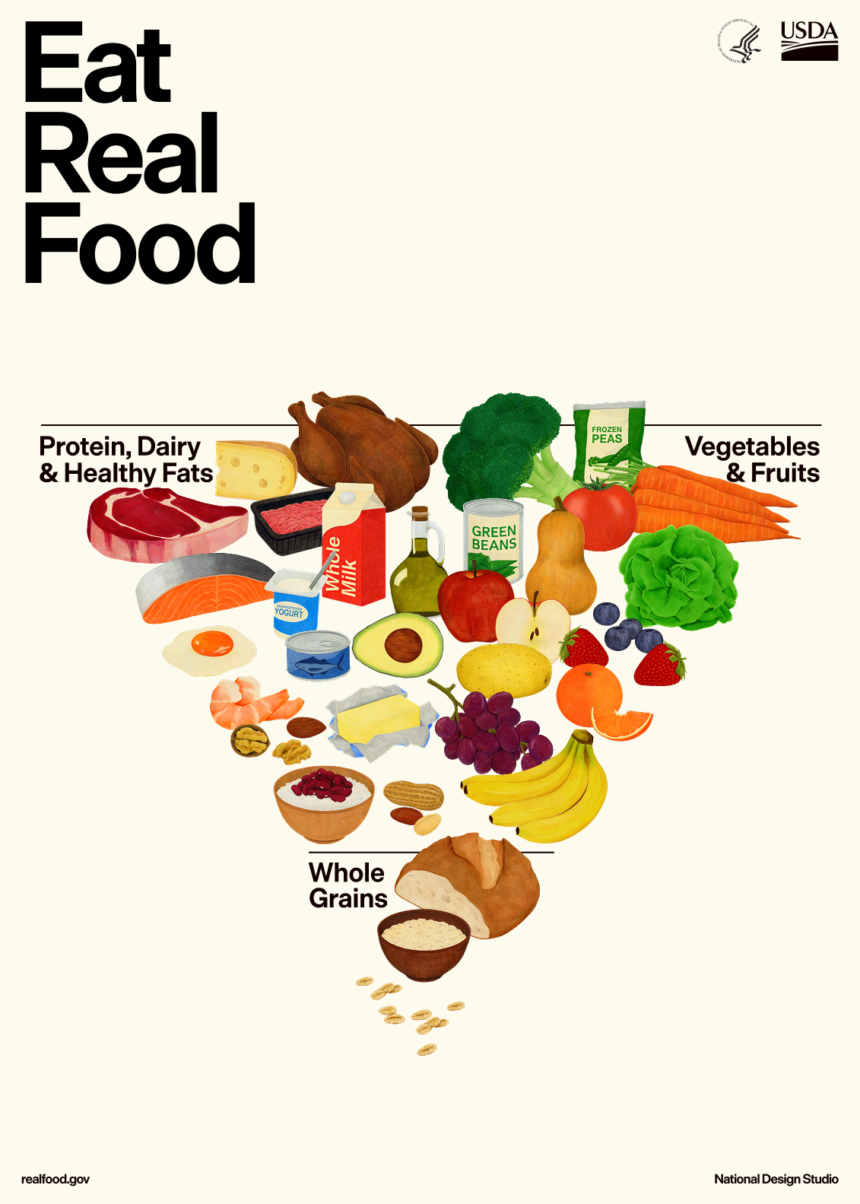
Chart showing US dietary guidelines recommendations evolution from 2010-2030Illustrative image · EatRealFood2025.webp by Unknown authorUnknown author / Public domain via Wikimedia Commons (Public domain)
New US Dietary Guidelines for 2025-2030 show incremental progress in nutrition science while highlighting persistent implementation challenges. Despite five editions since 1980, fewer than 10% of Americans meet all dietary recommendations. — EatRealFood2025.webp by Unknown authorUnknown author / Public domain via Wikimedia Commons (Public domain)
SHARE
3 min read|667 words

The latest edition of the Dietary Guidelines for Americans, released for 2025-2030, demonstrates incremental progress in nutrition science while highlighting persistent gaps between evidence and implementation. According to analysis published in The New England Journal of Medicine, the new guidelines maintain core recommendations while facing ongoing challenges in translating science into practical dietary advice for 330 million Americans.

Contents
      • US Dietary Guidelines Evolution: Key Focus Areas
  • Scientific Foundation Strengthens Despite Political Pressures
  • Implementation Gaps Persist Across Demographics
  • Ultra-Processed Foods Debate Continues
  • Global Context and Future Directions
    • Key takeaways
  • Frequently asked questions
    • How do the 2025-2030 guidelines differ from previous versions?
    • Why don’t the guidelines address ultra-processed foods more directly?
    • How do these guidelines affect federal nutrition programs?
2025-2030
Fifth edition of evidence-based dietary recommendations affecting federal nutrition programs

US Dietary Guidelines Evolution: Key Focus Areas

Priority recommendations by guideline edition, 2010-2030

Fruits & Vegetables
Consistent
Whole Grains
Strengthened
Added Sugars
Enhanced
Sodium Limits
Maintained
Ultra-processed Foods

Limited Progress

Source: USDA-HHS Dietary Guidelines, 2025 | Georgian Medical Journal News

Scientific Foundation Strengthens Despite Political Pressures

The 2025-2030 guidelines build upon decades of nutrition research while navigating complex political and economic influences. The USDA and Department of Health and Human Services jointly oversee the guidelines, which directly influence federal nutrition programs affecting millions of Americans through school meals, WIC, and SNAP benefits.

Submit Your Paper
GMJ_Submit_Banner

The scientific advisory committee reviewed over 150 systematic reviews and original studies to inform recommendations. However, as noted in the NEJM analysis, industry lobbying and political considerations continue to shape final recommendations, sometimes diluting evidence-based conclusions.

🎙️ Related Podcast Episodes
🎧 #50 | GMJ Podcast | Inclusive Health for Refugees and Migrants: WHO Reports Global Progress and Remaining Gaps · 17m
🎧 #13 | Six Years After COVID-19: Is the World Better Prepared for the Next Pandemic? · 19m
🎧 #9 Leprosy in 2026: Bridging Medical Cure and Social Inclusion – WHO World Leprosy Day Message · 18m
🎧 #53 | GMJ Podcast | Palliative Care in Georgia — Health System Gaps, Access Barriers, and Policy Implications · 16m
🎧 #40 | GMJ Podcast | [Insert Article Title] — Evidence, Clinical Implications, and Public Health Perspective · 16m

Implementation Gaps Persist Across Demographics

Despite five editions of guidelines since 1980, adherence remains problematic across all demographic groups. CDC surveillance data shows that fewer than 10% of Americans meet recommended intake levels for all food groups simultaneously.

The guidelines emphasize health equity, acknowledging that structural barriers including food access, affordability, and cultural preferences significantly impact dietary patterns. Low-income households face particular challenges, with processed foods often more accessible and affordable than fresh produce in many communities.

Ultra-Processed Foods Debate Continues

One notable limitation in the 2025-2030 edition is the continued reluctance to address ultra-processed foods comprehensively. While emerging research links these products to increased risks of obesity, cardiovascular disease, and diabetes, the guidelines maintain focus on individual nutrients rather than food processing levels.

This approach reflects ongoing tensions between nutrition science and food industry interests. The policy implications are significant, as federal nutrition programs currently allow many ultra-processed products that technically meet nutrient guidelines while potentially undermining overall dietary quality.

Global Context and Future Directions

The US guidelines increasingly align with international nutrition recommendations, particularly those from the World Health Organization. However, environmental sustainability considerations remain limited compared to dietary guidelines from other developed nations.

Future editions may need to address climate change impacts on food systems more directly. The intersection of planetary health and human nutrition represents a growing area of scientific consensus that has yet to be fully integrated into US policy frameworks.

The 2025-2030 Dietary Guidelines maintain evidence-based core recommendations while highlighting persistent challenges in translating nutrition science into effective public health policy.

— Analysis by nutrition policy experts, multiple institutions (The New England Journal of Medicine, 2025)

Key takeaways

  • Fifth edition maintains focus on fruits, vegetables, whole grains, and limited added sugars
  • Implementation challenges persist with fewer than 10% of Americans meeting all recommendations
  • Ultra-processed foods remain inadequately addressed despite growing evidence of health risks

Frequently asked questions

How do the 2025-2030 guidelines differ from previous versions?

The new guidelines maintain core recommendations while strengthening emphasis on health equity and access barriers. They include updated evidence on added sugars and refined language around dietary patterns rather than individual nutrients.

Why don’t the guidelines address ultra-processed foods more directly?

The guidelines process involves multiple stakeholders including food industry representatives. While scientific evidence increasingly links ultra-processed foods to health risks, the committee maintains focus on nutrient-based rather than processing-based recommendations.

How do these guidelines affect federal nutrition programs?

The dietary guidelines directly influence USDA programs including school meals, WIC benefits, and SNAP-Ed education. Changes in recommendations typically lead to updated food packages and meal requirements within 2-3 years of publication.

The path forward for American nutrition policy will likely require addressing systemic barriers to healthy eating alongside continued refinement of evidence-based recommendations. Success will depend on coordinated efforts across food systems, healthcare, and social policy to make healthy dietary patterns accessible to all Americans regardless of income or geographic location.

Source: The 2025–2030 Dietary Guidelines for Americans — Progress, Pitfalls, and the Path Forward

Was this article helpful?

Disclaimer. This article is health journalism intended for general information and education. It is not medical advice and is not a substitute for professional diagnosis or treatment. Always consult a qualified healthcare provider about your individual circumstances. Full disclaimer →

Related Coverage

Medical Professionals Face Involuntary Practice Closure: NEJM Analysis Reveals Growing Healthcare Access CrisisJun 18, 2026
Climate Coalition Proposes Fossil Fuel Phase-Out After UN Process StallsJun 18, 2026
Climate Change Linked to Rising Antimicrobial Resistance in Salmonella GloballyJun 18, 2026
Warning Labels on Restaurant Menus Cut Sugar Orders by 31%, Major US Trial ShowsJun 18, 2026
Related reference
  • Obesity · Condition
  • Sodium · Ingredient
  • Iron · Ingredient
PG
Written by
Prof. Giorgi Pkhakadze, MD, MPH, PhD
Editor-in-Chief, GMJ News
Full profile →
Medical disclaimer. This article is health journalism intended for general information. It is not medical advice and is not a substitute for consultation with a qualified healthcare professional. Always seek your physician's advice regarding any medical condition.
Medically reviewed by Prof. Giorgi Pkhakadze, MD, MPH, PhD. Spotted an error? Contact the editorial team.

Get the GMJ News digest
Evidence-based health journalism in your inbox. No spam; unsubscribe anytime.
TAGGED:dietary guidelinesfood systemshealth equitynutrition policypublic health
Share This Article
Facebook LinkedIn Bluesky Copy Link Print
GMJ
ByGMJ Policy Desk
Follow:
GMJ Policy Desk is part of GMJ News, the newsroom of the Georgian Medical Journal (gmj.ge), published by the Public Health Institute of Georgia. Every article is editorially reviewed before publication.
Leave a Comment Leave a Comment

Leave a Reply Cancel reply

Your email address will not be published. Required fields are marked *

Submit Your Paper →

Georgia's peer-reviewed open-access medical journal. No APC until January 2027.
Submit Manuscript →
Black Esophagus: Rare Acute Esophageal Necrosis Case Highlights Critical Recognition Need

A rare case of acute esophageal necrosis documented in NEJM highlights the…

Medical Professionals Face Involuntary Practice Closure: NEJM Analysis Reveals Growing Healthcare Access Crisis

New NEJM analysis reveals growing crisis of involuntary medical practice closures affecting…

Weekly semaglutide outperforms dulaglutide for diabetes control in UK primary care study

Large UK study shows weekly semaglutide provides superior blood sugar control and…

Submit Your Paper to GMJ

No APC until January 2027.
Submit Manuscript →

You Might Also Like

Healthcare regulatory oversight and patient safety concept
Policy & SystemsQuality & Safety

UK Nursing Regulator Failed to Screen Criminal Records for 12 Years

By
GMJ Policy Desk
28/05/2026
Medical professional examining insulin pump device for safety inspectionIllustrative image · Photo by Pavel Danilyuk on Pexels (Pexels License)
Policy & SystemsQuality & Safety

FDA Issues Early Alert for Insulin Pump Leak Risk in Omnipod Devices

By
GMJ Policy Desk
15/06/2026
Healthcare professional using digital tablet to access public health resources on government platform
Health PolicyPolicy & Systems

UK Launches Comprehensive Digital Public Health Resource Hub for Healthcare Professionals

By
GMJ Policy Desk
24/05/2026
Chart showing TB financing capacity across different country income levels
Health PolicyPolicy & Systems

Three-Quarters of High-Burden Countries Could Self-Fund TB Programs Without Donor Support

By
GMJ Policy Desk
31/05/2026
Facebook Twitter Youtube Instagram
Company
  • Privacy Policy
  • Contact US
  • GMJ Journal
  • Submit Manuscript
  • Editorial Team
  • Register at GMJ
  • Terms of Use

Subscribe to GMJ News — Click here

Join Community
© 2026 Georgian Medical Journal (GMJ). Published by the Public Health Institute of Georgia (PHIG). All rights reserved.
Welcome Back!

Sign in to your account

Username or Email Address
Password

Lost your password?

Not a member? Sign Up