Updated 14/09/2026
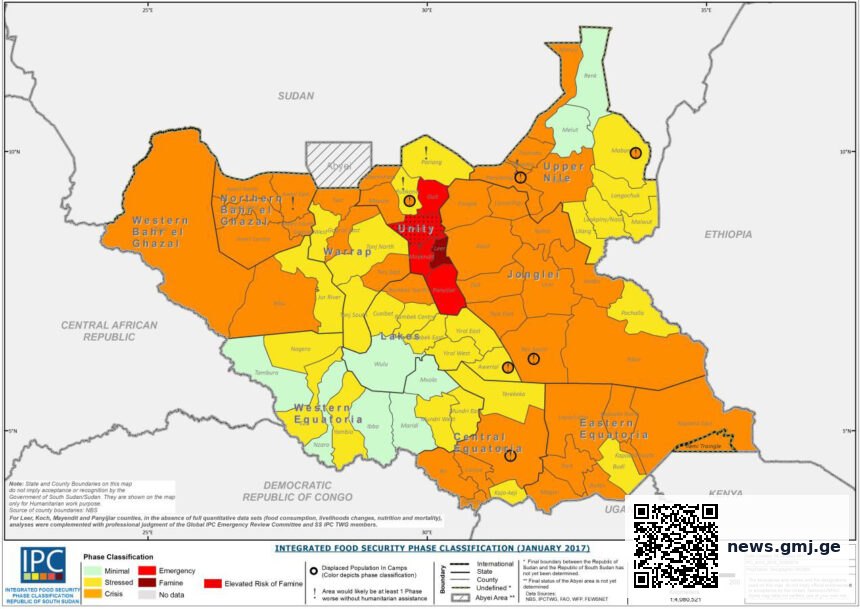
South Sudan’s humanitarian crisis has reached alarming proportions, with 7.8 million people—nearly two-thirds of the population—facing high levels of acute food insecurity, according to the latest UNICEF assessment. The situation has deteriorated significantly, with 2.2 million children now suffering from acute malnutrition in what represents one of the world’s most severe humanitarian emergencies.
South Sudan Hunger Crisis by the Numbers
Population facing acute food insecurity and malnutrition, 2024
food insecurity
malnutrition
affected
Source: UNICEF, 2024 | Georgian Medical Journal News

Crisis Reaches Two-Thirds of Population
The World Health Organization has classified South Sudan’s situation as a Grade 3 emergency, the highest level in the UN system. The 7.8 million people facing acute food insecurity represent approximately 63% of the country’s total population, making this one of the most severe food crises globally.
UNICEF’s data reveals that the situation has worsened compared to previous assessments, with conflict, climate shocks, and economic instability driving the escalation. The organization emphasizes that immediate intervention is required to prevent further deterioration into famine conditions.
Related coverage of global food security challenges can be found in our global health section, which tracks humanitarian crises affecting public health outcomes worldwide.
Child Malnutrition Reaches Critical Threshold
The 2.2 million children suffering from acute malnutrition represents a public health emergency within the broader crisis. According to UNICEF’s nutrition standards, this figure indicates that child malnutrition has surpassed emergency thresholds established by international humanitarian protocols.
Acute malnutrition in children under five years of age is measured using standardized anthropometric indicators. When prevalence exceeds 15% of the child population, it triggers emergency response protocols under WHO guidelines.
The Georgian Medical Journal has previously published research on malnutrition’s long-term developmental impacts, highlighting how early childhood nutritional deficits can affect cognitive development and immune system function throughout life.
Humanitarian Response Challenges
Access constraints continue to hamper relief efforts, with security concerns limiting humanitarian organizations’ ability to reach affected populations. The UN Office for the Coordination of Humanitarian Affairs reports that several regions remain inaccessible due to ongoing conflict.
Funding gaps also threaten response capacity, with humanitarian appeals consistently underfunded. The complex emergency requires coordinated intervention across multiple sectors, including health, nutrition, water sanitation, and food security.
Our migration and health coverage examines similar challenges in other displacement contexts, where populations face barriers to essential health services.
Climate and Conflict Compound Crisis
South Sudan’s food security crisis reflects the intersection of multiple risk factors, including recurring droughts, flooding, and protracted conflict since 2013. These compound emergencies create particularly challenging conditions for sustaining agricultural production and maintaining basic health services.
The Food and Agriculture Organization has documented how climate variability disrupts seasonal farming patterns, reducing local food production capacity. This environmental vulnerability intersects with conflict-related displacement, creating complex humanitarian needs.
7.8 million people in South Sudan face high levels of acute food insecurity, with 2.2 million children suffering from acute malnutrition, representing one of the world’s most severe humanitarian crises.
— UNICEF South Sudan Crisis Assessment (2024)
Key takeaways
- 7.8 million people (63% of population) face acute food insecurity in South Sudan
- 2.2 million children suffer from acute malnutrition, exceeding emergency thresholds
- Complex emergency combines conflict, climate shocks, and economic instability
- Access constraints and funding gaps limit humanitarian response capacity
Frequently asked questions
What defines acute food insecurity?
Acute food insecurity occurs when people cannot meet minimum food needs for survival and livelihood protection. It requires immediate humanitarian intervention to prevent malnutrition and death.
How is child malnutrition measured?
Acute malnutrition in children is measured using weight-for-height ratios and mid-upper arm circumference. Severe acute malnutrition affects children who fall below critical anthropometric thresholds.
What factors drive South Sudan’s food crisis?
The crisis results from protracted conflict since 2013, climate variability including droughts and floods, economic collapse, and limited agricultural production capacity. These factors create compound humanitarian emergencies.
The scale of South Sudan’s humanitarian crisis demands sustained international attention and coordinated response efforts. As 7.8 million people face acute food insecurity and 2.2 million children suffer malnutrition, the situation represents a critical test of global humanitarian systems’ capacity to respond to complex emergencies that combine conflict, climate, and economic shocks.
🗺️ Find certified Georgian healthcare providers: sheniekimi.ge — Georgia Health Map · 998 clinics · 6,600+ doctors · 2,296 pharmacies
Was this article helpful?
Disclaimer. This article is health journalism intended for general information and education. It is not medical advice and is not a substitute for professional diagnosis or treatment. Always consult a qualified healthcare provider about your individual circumstances. Full disclaimer →
Related Coverage




Editorial standards. This article was produced under the GMJ News editorial process, with oversight by the GMJ Editorial Board. Our editorial process. Spotted an error? Contact the editorial team.