By using this site, you agree to the Privacy Policy and Terms of Use.
Accept
GMJ NewsGMJ NewsGMJ News
  • Latest News
    • GMJ Briefs
  • Podcast & Media
    • Podcast Episodes
    • GMJ Audio
    • GMJ Videos
  • Research Digest
    • New Studies
    • Georgian Research
    • Data & Numbers
  • Policy & Systems
    • Health Policy
    • Quality & Safety
    • Migration & Health
    • Global Health
  • Practice
    • Clinical Updates
    • Case Discussions
    • Pharmacy & Prescribing
    • Ingredients A-Z
  • Perspectives
    • Editorial
    • Explainers
    • Voices
    • Letters
  • GMJ Articles
    • Vol. 1 Issue 2 (2026)
    • Vol. 1 Issue 1 (2026)
    • Pre-Launch Articles (2025)
  • Read the Journal →
  • About GMJ News
Notification Show More
Font ResizerAa
GMJ NewsGMJ News
Font ResizerAa
  • Latest News
    • GMJ Briefs
  • Podcast & Media
    • Podcast Episodes
    • GMJ Audio
    • GMJ Videos
  • Research Digest
    • New Studies
    • Georgian Research
    • Data & Numbers
  • Policy & Systems
    • Health Policy
    • Quality & Safety
    • Migration & Health
    • Global Health
  • Practice
    • Clinical Updates
    • Case Discussions
    • Pharmacy & Prescribing
    • Ingredients A-Z
  • Perspectives
    • Editorial
    • Explainers
    • Voices
    • Letters
  • GMJ Articles
    • Vol. 1 Issue 2 (2026)
    • Vol. 1 Issue 1 (2026)
    • Pre-Launch Articles (2025)
  • Read the Journal →
  • About GMJ News
Follow US
GMJ News > Research Digest > New Studies > Dual Lassa Fever-Rabies Vaccine Shows Promise in First Human Trial
New StudiesResearch Digest

Dual Lassa Fever-Rabies Vaccine Shows Promise in First Human Trial

GMJ
Last updated: 23/06/2026 18:42
By
GMJ Research Desk
Share
6 Min Read
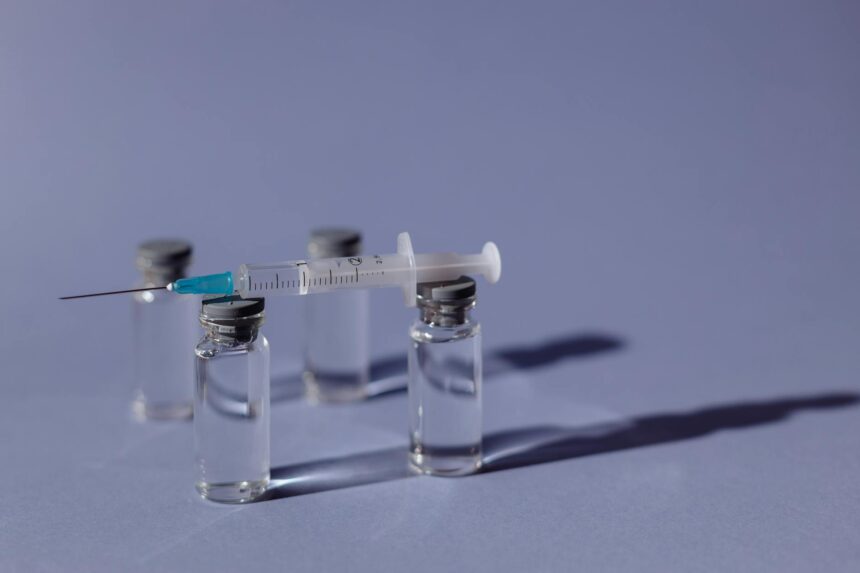
Medical researcher working with vaccine vials in laboratory setting for Lassa fever vaccine developmentIllustrative image · Photo by Thirdman on Pexels (Pexels License)
A novel dual vaccine targeting Lassa fever and rabies shows promising safety and immune response results in its first human clinical trial. The University of Maryland study represents important progress for a disease affecting hundreds of thousands annually in West Africa. — Photo by Thirdman on Pexels (Pexels License)
SHARE
4 min read|727 words
✓ Medically reviewed by Prof. Giorgi Pkhakadze, MD, MPH, PhD · ORCID 0000-0001-7609-4515

🟠 Moderate Evidence

Contents
    • Key takeaways
      • Study at a Glance
      • Lassa Fever: A Critical Gap in Global Vaccine Coverage
  • Promising Safety and Immunogenicity Profile
  • Addressing a Critical Global Health Gap
  • Implications for West African Public Health
    • What this means
  • Frequently asked questions
    • When might a Lassa fever vaccine become available?
    • Why combine Lassa fever and rabies in one vaccine?
    • How many people are affected by Lassa fever annually?

A novel dual vaccine targeting both Lassa fever and rabies has demonstrated safety and immunogenicity in its first human clinical trial, researchers at the University of Maryland School of Medicine’s Center for Vaccine Development and Global Health reported. The phase 1 study, published in Nature Medicine, represents a significant step forward in addressing Lassa fever, a hemorrhagic fever endemic to West Africa for which no licensed vaccines currently exist.

Key takeaways

  • First-in-human trial shows dual Lassa fever-rabies vaccine is safe and generates immune responses against both viruses
  • No licensed vaccines against Lassa fever are currently available on the market
  • Results published in Nature Medicine represent important progress for West African public health

Study at a Glance

Source Nature Medicine
Study type Phase 1 clinical trial
Sample size First-in-human participants
Population Healthy adult volunteers
Institution University of Maryland School of Medicine
Zero
licensed vaccines currently available against Lassa fever worldwide

Lassa Fever: A Critical Gap in Global Vaccine Coverage

Current vaccine availability for major hemorrhagic fevers

Yellow Fever
Licensed
Ebola
Licensed
Marburg
In trials
Lassa Fever

None available

Source: WHO Vaccine Pipeline Database, 2026 | Georgian Medical Journal News

Submit Your Paper
GMJ_Submit_Banner

Promising Safety and Immunogenicity Profile

The University of Maryland research team, led by the Center for Vaccine Development and Global Health, conducted the phase 1 trial to evaluate the safety, tolerability, and immune response of their novel dual vaccine platform. The study found that participants developed immune responses against both Lassa fever virus and rabies virus without significant adverse events.

🎙️ Related Podcast Episodes
🎧 #52 | GMJ Podcast | Health and Migration Knowledge Hub — A Global Resource for Evidence-Based Practice · 17m

“This represents an important milestone in our efforts to develop vaccines against neglected tropical diseases that disproportionately affect resource-limited settings,” the research team noted in their Nature Medicine publication. The dual-target approach offers potential advantages for deployment in regions where both diseases pose public health threats.

Addressing a Critical Global Health Gap

Lassa fever affects an estimated 100,000 to 300,000 people annually across West Africa, according to the World Health Organization. The hemorrhagic fever has a case fatality rate ranging from 1% in the general population to 15% among hospitalized patients, with higher mortality rates during pregnancy.

The absence of licensed vaccines has left populations in endemic areas vulnerable to outbreaks. Current prevention strategies rely primarily on avoiding contact with infected rodents and implementing infection control measures in healthcare settings. For more insights on emerging vaccine research, our coverage tracks the latest developments in preventive medicine.

Implications for West African Public Health

The successful completion of this first-in-human trial positions the dual vaccine for advancement to larger phase 2 studies. The Centers for Disease Control and Prevention has identified Lassa fever vaccine development as a priority for global health security, particularly given its potential for epidemic spread.

Researchers noted that the dual vaccine approach could provide logistical advantages in regions where both Lassa fever and rabies are endemic. Nigeria, Sierra Leone, Liberia, and Guinea represent priority countries for future vaccine deployment, should the candidate advance through clinical development. Our global health coverage continues to monitor vaccine equity initiatives across Sub-Saharan Africa.

The dual vaccine demonstrated safety and induced immune responses against both Lassa fever and rabies viruses in healthy adult volunteers

— University of Maryland research team (Nature Medicine, 2026)

What this means

For patients: No immediate changes to current prevention recommendations, but promising progress toward future vaccine availability in endemic regions
For clinicians: Continue current Lassa fever prevention counseling while monitoring vaccine development progress for future deployment planning
For policymakers: Early evidence supports continued investment in neglected tropical disease vaccine development and preparation for potential future vaccination campaigns

Frequently asked questions

When might a Lassa fever vaccine become available?

This phase 1 trial represents early-stage development, with phase 2 and 3 trials still required before regulatory approval. The timeline for vaccine availability typically spans several years for successful candidates.

Why combine Lassa fever and rabies in one vaccine?

Dual vaccines can provide logistical advantages in regions where both diseases are endemic, potentially reducing costs and simplifying vaccination programs in West African countries.

How many people are affected by Lassa fever annually?

The WHO estimates 100,000 to 300,000 people are infected with Lassa fever annually across West Africa, with case fatality rates ranging from 1% to 15% depending on clinical setting.

The successful completion of this first-in-human trial marks an important step toward addressing a critical gap in global vaccine coverage. As the research advances to larger clinical studies, the dual vaccine approach could offer new hope for populations in Lassa fever-endemic regions while contributing to broader pandemic preparedness efforts.

Source: New Lassa fever vaccine shows promising results for first-in-human clinical trial

Was this article helpful?

Disclaimer. This article is health journalism intended for general information and education. It is not medical advice and is not a substitute for professional diagnosis or treatment. Always consult a qualified healthcare provider about your individual circumstances. Full disclaimer →

Related Coverage

Kidney Drug Finerenone Shows Promise for Non-Diabetic Chronic Kidney DiseaseJun 24, 2026
Drinking Water Nitrate Linked to Higher Dementia Risk in Major 54,000-Person StudyJun 24, 2026
New Drug Target for Alzheimer's Shows Promise in Preclinical StudiesJun 24, 2026
New AI Algorithm Cuts Medical Image Analysis Time from Week to MinutesJun 23, 2026
PG
Written by
Prof. Giorgi Pkhakadze, MD, MPH, PhD
Editor-in-Chief, GMJ News
Full profile →  ·  ORCID 0000-0001-7609-4515
Medical disclaimer. This article is health journalism intended for general information. It is not medical advice and is not a substitute for consultation with a qualified healthcare professional. Always seek your physician's advice regarding any medical condition.
Medically reviewed by Prof. Giorgi Pkhakadze, MD, MPH, PhD. Spotted an error? Contact the editorial team.

Get the GMJ News digest
Evidence-based health journalism in your inbox. No spam; unsubscribe anytime.
TAGGED:clinical trialsHemorrhagic FeverLassa fevervaccine developmentWest Africa
Share This Article
Facebook LinkedIn Bluesky Copy Link Print
GMJ
ByGMJ Research Desk
Follow:
GMJ Research Desk is part of GMJ News, the newsroom of the Georgian Medical Journal (gmj.ge), published by the Public Health Institute of Georgia. Every article is editorially reviewed before publication.
Leave a Comment Leave a Comment

Leave a Reply Cancel reply

Your email address will not be published. Required fields are marked *

Submit Your Paper →

Georgia's peer-reviewed open-access medical journal. No APC until January 2027.
Submit Manuscript →
Kidney Drug Finerenone Shows Promise for Non-Diabetic Chronic Kidney Disease

New clinical trial data show finerenone reduces kidney disease progression by 23%…

Drinking Water Nitrate Linked to Higher Dementia Risk in Major 54,000-Person Study

Major study of 54,000+ adults reveals vegetable nitrates protect against dementia while…

New Drug Target for Alzheimer’s Shows Promise in Preclinical Studies

Researchers identified a novel Alzheimer's mechanism and developed an experimental compound that…

Submit Your Paper to GMJ

No APC until January 2027.
Submit Manuscript →

You Might Also Like

Medical illustration showing targeted therapy attacking lung cancer cells with EGFR mutations
New StudiesResearch Digest

Breakthrough Drug Shows 75% Response Rate in Hard-to-Treat Lung Cancer

By
GMJ Research Desk
10/06/2026
Medical illustration showing dual PET imaging technology monitoring both cancer tumors and heart inflammation
New StudiesResearch Digest

Dual PET Imaging Simultaneously Tracks Cancer Progression and Heart Inflammation During Treatment

By
GMJ Research Desk
05/06/2026
Laboratory researcher preparing nasal spray for brain aging studyIllustrative image · Photo by Shawn Day on Unsplash (Unsplash License)
New StudiesResearch Digest

Nasal spray reverses brain aging in preclinical trial, researchers report

By
GMJ Research Desk
22/06/2026
Healthcare provider using point-of-care testing device in rural clinic settingIllustrative image · Photo by www.kaboompics.com on Pexels (Pexels License)
New StudiesResearch Digest

Point-of-care testing cuts antibiotic prescribing by 61% in Chinese village clinics

By
GMJ Research Desk
21/06/2026
Facebook Twitter Youtube Instagram
Company
  • Privacy Policy
  • Contact US
  • GMJ Journal
  • Submit Manuscript
  • Editorial Team
  • Register at GMJ
  • Terms of Use

Subscribe to GMJ News — Click here

Join Community
© 2026 Georgian Medical Journal (GMJ). Published by the Public Health Institute of Georgia (PHIG). All rights reserved.
Welcome Back!

Sign in to your account

Username or Email Address
Password

Lost your password?

Not a member? Sign Up