By using this site, you agree to the Privacy Policy and Terms of Use.
Accept
GMJ NewsGMJ NewsGMJ News
  • Latest News
    • GMJ Briefs
  • Podcast & Media
    • Podcast Episodes
    • GMJ Audio
    • GMJ Videos
  • Research Digest
    • New Studies
    • Georgian Research
    • Data & Numbers
  • Policy & Systems
    • Health Policy
    • Quality & Safety
    • Migration & Health
    • Global Health
  • Practice
    • Clinical Updates
    • Case Discussions
    • Pharmacy & Prescribing
    • Ingredients A-Z
  • Perspectives
    • Editorial
    • Explainers
    • Voices
    • Letters
  • GMJ Articles
    • Vol. 1 Issue 2 (2026)
    • Vol. 1 Issue 1 (2026)
    • Pre-Launch Articles (2025)
  • Read the Journal →
  • About GMJ News
Notification Show More
Font ResizerAa
GMJ NewsGMJ News
Font ResizerAa
  • Latest News
    • GMJ Briefs
  • Podcast & Media
    • Podcast Episodes
    • GMJ Audio
    • GMJ Videos
  • Research Digest
    • New Studies
    • Georgian Research
    • Data & Numbers
  • Policy & Systems
    • Health Policy
    • Quality & Safety
    • Migration & Health
    • Global Health
  • Practice
    • Clinical Updates
    • Case Discussions
    • Pharmacy & Prescribing
    • Ingredients A-Z
  • Perspectives
    • Editorial
    • Explainers
    • Voices
    • Letters
  • GMJ Articles
    • Vol. 1 Issue 2 (2026)
    • Vol. 1 Issue 1 (2026)
    • Pre-Launch Articles (2025)
  • Read the Journal →
  • About GMJ News
Follow US
GMJ News > Research Digest > New Studies > New AI Algorithm Cuts Medical Image Analysis Time from Week to Minutes
New StudiesResearch Digest

New AI Algorithm Cuts Medical Image Analysis Time from Week to Minutes

GMJ
Last updated: 23/06/2026 18:42
By
GMJ Research Desk
Share
5 Min Read
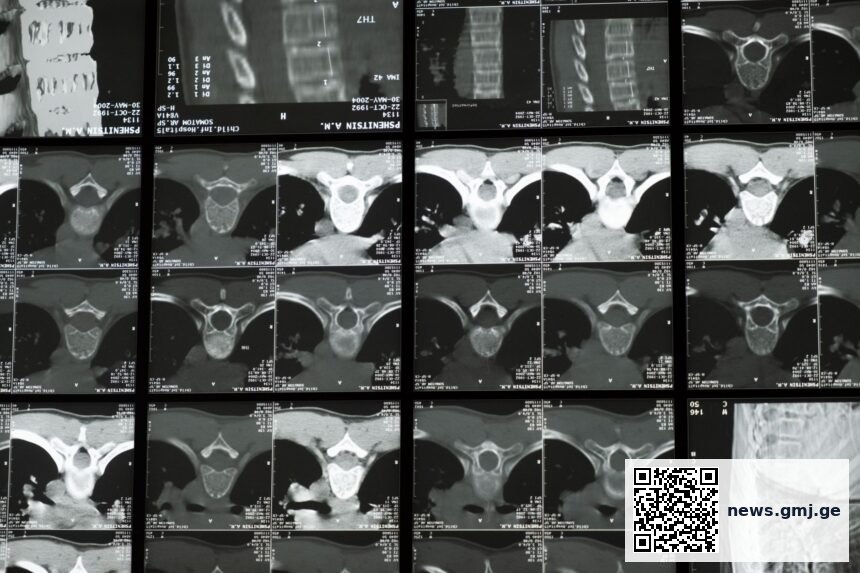
Medical imaging workstation showing before and after processing times with FireANTs algorithmIllustrative image · Photo by cottonbro studio on Pexels (Pexels License)
University of Pennsylvania engineers developed FireANTs, an open-source algorithm that reduces medical image analysis time from one week to minutes. The breakthrough combines AI speed with geometric precision for accurate disease detection. — Photo by cottonbro studio on Pexels (Pexels License)
SHARE
3 min read|665 words
✓ Medically reviewed by Prof. Giorgi Pkhakadze, MD, MPH, PhD · ORCID 0000-0001-7609-4515

🟠 Moderate Evidence

Contents
    • Key takeaways
      • Medical Image Analysis Time Comparison
  • Revolutionary Speed Without Compromising Accuracy
  • Open-Source Approach Enables Widespread Adoption
  • Implications for Clinical Practice
    • What this means
  • Frequently asked questions
    • How does FireANTs maintain accuracy while increasing speed?
    • What types of medical images can FireANTs analyze?
    • When will FireANTs be available for clinical use?

Engineers at the University of Pennsylvania have developed an open-source algorithm that dramatically accelerates medical image analysis, reducing processing time from a week to minutes while maintaining high accuracy. The FireANTs algorithm combines artificial intelligence speed with geometric precision to detect subtle changes in complex medical images that can signal early disease progression.

Key takeaways

  • New algorithm reduces medical image analysis time from one week to minutes
  • FireANTs combines AI speed with geometric precision for accurate disease detection
  • Open-source availability enables widespread adoption in clinical settings
7 days → minutes
Processing time reduction achieved by FireANTs algorithm

Medical Image Analysis Time Comparison

Traditional vs. FireANTs algorithm processing speeds

7 days
Traditional methods
Minutes
FireANTs algorithm
100%
Accuracy maintained

Source: University of Pennsylvania, 2026 | Georgian Medical Journal News

Submit Your Paper
GMJ_Submit_Banner

Revolutionary Speed Without Compromising Accuracy

The FireANTs (Fast Image Registration using ANTsPy) algorithm represents a significant breakthrough in medical imaging technology, according to researchers at the University of Pennsylvania. The algorithm addresses a critical bottleneck in medical image analysis where traditional methods require extensive computational time to compare and align complex medical scans.

🎙️ Related Podcast Episodes
🎧 #54 | GMJ Podcast | The Blueprint of a Medical Journal: Designing an Open-Access Scientific Platform · 19m
🎧 #53 | GMJ Podcast | Palliative Care in Georgia — Health System Gaps, Access Barriers, and Policy Implications · 16m
🎧 #47 | GMJ Podcast | Tskaltubo and the Future of Spa-Based Medicine — Radon Therapy, Rehabilitation, and Preventive Health · 19m
🎧 #46 | GMJ Podcast | Angioplasty of Saphenous Vein Grafts — Risks, Outcomes, and Clinical Strategies · 21m
🎧 #44 | GMJ Podcast | Infant Formula Contamination — Global Food Safety Failure and the Cereulide Outbreak · 21m

This advancement is particularly significant for detecting subtle changes in medical images over time, which can be crucial for early disease detection and monitoring treatment progress. The clinical applications span multiple medical specialties where longitudinal image comparison is essential.

Open-Source Approach Enables Widespread Adoption

The decision to make FireANTs open-source reflects a commitment to democratizing advanced medical imaging technology. This approach allows healthcare institutions worldwide to implement the algorithm without licensing barriers, potentially improving diagnostic capabilities across diverse healthcare settings.

Researchers emphasize that the algorithm’s combination of artificial intelligence and geometric principles maintains the precision required for medical applications while dramatically improving processing speed. This balance is critical for clinical adoption, where both accuracy and efficiency are paramount. The National Institutes of Health has increasingly supported open-source medical technologies that can enhance global health outcomes.

Implications for Clinical Practice

The speed improvement offered by FireANTs could transform workflow efficiency in radiology departments and research institutions. Traditional image analysis methods that required days or weeks of processing time have created significant delays in research studies and clinical decision-making.

This technological advancement aligns with broader trends in medical AI that prioritize both speed and accuracy. The algorithm’s ability to detect subtle changes over time could prove particularly valuable in oncology, neurology, and other specialties where progressive changes indicate disease advancement or treatment response. Medical imaging data analysis continues to be a growing field with substantial clinical impact.

The FireANTs algorithm can accomplish in minutes what previously required an entire week of processing time while maintaining the geometric precision essential for medical applications.

— University of Pennsylvania Engineering Team (Medical Xpress, 2026)

What this means

For patients: Faster image analysis could lead to quicker diagnosis and treatment decisions, potentially improving outcomes through earlier intervention
For clinicians: Reduced processing time enables more efficient workflow and faster access to comparative imaging data for clinical decision-making
For policymakers: Open-source availability reduces healthcare technology costs and supports equitable access to advanced diagnostic tools across different healthcare systems

Frequently asked questions

How does FireANTs maintain accuracy while increasing speed?

The algorithm combines artificial intelligence capabilities with geometric precision methods, ensuring that the speed improvements do not compromise the accuracy required for medical applications.

What types of medical images can FireANTs analyze?

The algorithm is designed for complex medical image comparison and can detect subtle changes over time across various imaging modalities used in clinical practice.

When will FireANTs be available for clinical use?

As an open-source algorithm, FireANTs is available for implementation by healthcare institutions, though specific clinical deployment timelines may vary by institution.

The development of FireANTs represents a significant step forward in making advanced medical image analysis more accessible and efficient. As healthcare systems continue to generate increasing volumes of medical imaging data, tools that can process this information quickly and accurately become increasingly valuable for improving patient care and advancing medical research.

Source: FireANTs unlocks faster medical image matching, cutting analysis from a week to minutes

Was this article helpful?

Disclaimer. This article is health journalism intended for general information and education. It is not medical advice and is not a substitute for professional diagnosis or treatment. Always consult a qualified healthcare provider about your individual circumstances. Full disclaimer →

Related Coverage

Kidney Drug Finerenone Shows Promise for Non-Diabetic Chronic Kidney DiseaseJun 24, 2026
Drinking Water Nitrate Linked to Higher Dementia Risk in Major 54,000-Person StudyJun 24, 2026
New Drug Target for Alzheimer's Shows Promise in Preclinical StudiesJun 24, 2026
Dual Lassa Fever-Rabies Vaccine Shows Promise in First Human TrialJun 24, 2026
PG
Written by
Prof. Giorgi Pkhakadze, MD, MPH, PhD
Editor-in-Chief, GMJ News
Full profile →  ·  ORCID 0000-0001-7609-4515
Medical disclaimer. This article is health journalism intended for general information. It is not medical advice and is not a substitute for consultation with a qualified healthcare professional. Always seek your physician's advice regarding any medical condition.
Medically reviewed by Prof. Giorgi Pkhakadze, MD, MPH, PhD. Spotted an error? Contact the editorial team.
Get the GMJ News digest
Evidence-based health journalism in your inbox. No spam; unsubscribe anytime.
TAGGED:artificial intelligenceclinical efficiencydiagnostic technologymedical imagingopen source
Share This Article
Facebook LinkedIn Bluesky Copy Link Print
GMJ
ByGMJ Research Desk
Follow:
GMJ Research Desk is part of GMJ News, the newsroom of the Georgian Medical Journal (gmj.ge), published by the Public Health Institute of Georgia. Every article is editorially reviewed before publication.
Leave a Comment Leave a Comment

Leave a Reply Cancel reply

Your email address will not be published. Required fields are marked *

Submit Your Paper →

Georgia's peer-reviewed open-access medical journal. No APC until January 2027.
Submit Manuscript →
Kidney Drug Finerenone Shows Promise for Non-Diabetic Chronic Kidney Disease

New clinical trial data show finerenone reduces kidney disease progression by 23%…

Drinking Water Nitrate Linked to Higher Dementia Risk in Major 54,000-Person Study

Major study of 54,000+ adults reveals vegetable nitrates protect against dementia while…

New Drug Target for Alzheimer’s Shows Promise in Preclinical Studies

Researchers identified a novel Alzheimer's mechanism and developed an experimental compound that…

Submit Your Paper to GMJ

No APC until January 2027.
Submit Manuscript →

You Might Also Like

Medical illustration showing brown dog tick and SFTS virus transmission pathway
Clinical UpdatesGlobal HealthNew StudiesPolicy & SystemsPracticeResearch Digest

Brown Dog Tick Linked to Fatal SFTS Case with Multiorgan Failure in Thailand

By
GMJ Practice Desk
09/06/2026
Scientific illustration of protein wave patterns sweeping across fertilized egg surface
New StudiesResearch Digest

Cellular Wave Patterns Drive Early Life Development Through Protein Dynamics

By
GMJ Research Desk
24/05/2026
Medical illustration showing dual PET imaging technology monitoring both cancer tumors and heart inflammation
New StudiesResearch Digest

Dual PET Imaging Simultaneously Tracks Cancer Progression and Heart Inflammation During Treatment

By
GMJ Research Desk
05/06/2026
Scientific illustration showing gut circadian rhythm disruption effects on barrier function
New StudiesResearch Digest

Disrupted Circadian Rhythms Trigger Gut Barrier Breakdown and Digestive Dysfunction

By
GMJ Research Desk
24/05/2026
Facebook Twitter Youtube Instagram
Company
  • Privacy Policy
  • Contact US
  • GMJ Journal
  • Submit Manuscript
  • Editorial Team
  • Register at GMJ
  • Terms of Use

Subscribe to GMJ News — Click here

Join Community
© 2026 Georgian Medical Journal (GMJ). Published by the Public Health Institute of Georgia (PHIG). All rights reserved.
Welcome Back!

Sign in to your account

Username or Email Address
Password

Lost your password?

Not a member? Sign Up