By using this site, you agree to the Privacy Policy and Terms of Use.
Accept
GMJ NewsGMJ NewsGMJ News
  • Latest News
    • GMJ Briefs
  • Podcast & Media
    • Podcast Episodes
    • GMJ Audio
    • GMJ Videos
  • Research Digest
    • New Studies
    • Georgian Research
    • Data & Numbers
  • Policy & Systems
    • Health Policy
    • Quality & Safety
    • Migration & Health
    • Global Health
  • Practice
    • Clinical Updates
    • Case Discussions
    • Pharmacy & Prescribing
    • Ingredients A-Z
  • Perspectives
    • Editorial
    • Explainers
    • Voices
    • Letters
  • GMJ Articles
    • Vol. 1 Issue 2 (2026)
    • Vol. 1 Issue 1 (2026)
    • Pre-Launch Articles (2025)
  • Read the Journal →
  • About GMJ News
Notification Show More
Font ResizerAa
GMJ NewsGMJ News
Font ResizerAa
  • Latest News
    • GMJ Briefs
  • Podcast & Media
    • Podcast Episodes
    • GMJ Audio
    • GMJ Videos
  • Research Digest
    • New Studies
    • Georgian Research
    • Data & Numbers
  • Policy & Systems
    • Health Policy
    • Quality & Safety
    • Migration & Health
    • Global Health
  • Practice
    • Clinical Updates
    • Case Discussions
    • Pharmacy & Prescribing
    • Ingredients A-Z
  • Perspectives
    • Editorial
    • Explainers
    • Voices
    • Letters
  • GMJ Articles
    • Vol. 1 Issue 2 (2026)
    • Vol. 1 Issue 1 (2026)
    • Pre-Launch Articles (2025)
  • Read the Journal →
  • About GMJ News
Follow US
GMJ News > GMJ Briefs > What You Need to Know: Three Critical Dimensions of Yemen’s Food Crisis

What You Need to Know: Three Critical Dimensions of Yemen’s Food Crisis

GMJ
Last updated: 11/07/2026 12:07
By
Prof. Giorgi Pkhakadze
Share
1 Min Read
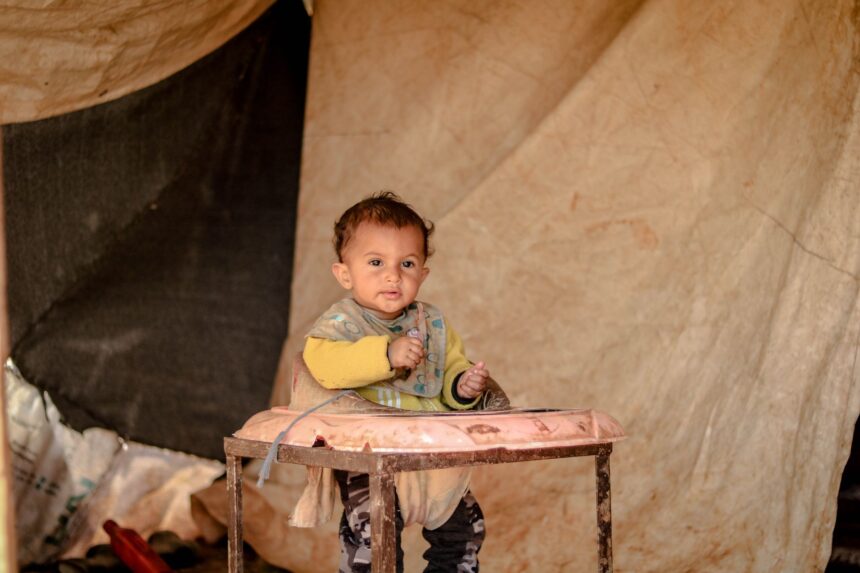
Children receiving nutrition assistance at a Yemen healthcare facility
Nearly 11.2 million Yemenis face severe acute food insecurity as international humanitarian funding drops 60% below 2025 levels. Child malnutrition rates exceed WHO emergency thresholds in 12 governorates, threatening generational health impacts. — Photo: Ahmed akacha / Pexels
SHARE
1 min read|139 words

Yemen’s humanitarian crisis demands attention across three interconnected fronts. First, the scale is massive: 11.2 million people in government-controlled areas experience acute food insecurity, with half classified in crisis or emergency phases requiring immediate aid. Second, vulnerable children face particular danger, as severe acute malnutrition rates exceed WHO emergency thresholds in 12 governorates, while nutrition programs serving 2.8 million children have been suspended due to funding shortfalls. Third, the healthcare system is collapsing under resource constraints, with 127 health facilities forced to close as international humanitarian funding has dropped 60% since 2025. Together, these factors create a cascading public health emergency affecting nutrition, disease prevention, and maternal health simultaneously. Healthcare professionals and policymakers should understand that funding cuts directly translate to facility closures and suspended lifesaving programs. Without immediate intervention, Yemen risks catastrophic famine and widespread preventable disease. Read the full article on GMJ Newsroom.

Was this article helpful?

GMJ Brief · Takeaway

📰 Read the full article: Yemen Food Crisis: 11.2 Million Face Acute Hunger as International Aid Funding Cuts Continue →

Share This Article
Facebook LinkedIn Bluesky Copy Link Print
GMJ
ByProf. Giorgi Pkhakadze
Follow:
Prof. Giorgi Pkhakadze, MD, MPH, PhD, is Editor-in-Chief of the Georgian Medical Journal and Chair of the Public Health Institute of Georgia (PHIG). He is Professor and Head of the Department of Social and Behavioural Sciences at David Tvildiani Medical University, and Secretary/Treasurer of the UEMS Section of Public Health. ORCID: 0000-0001-7609-4515.

Submit Your Paper →

Georgia's peer-reviewed open-access medical journal. No APC until January 2027.
Submit Manuscript →
Why Nearly Half of U.S. Counties Lack Maternity Care Despite Falling Birth Rates

Nearly 50% of U.S. counties lack an obstetrician-gynecologist despite falling birth rates.…

Why Sunlight Triggers Sneezing in Some People: The Science Behind Photic Sneeze Reflex

Approximately 18–35% of people experience involuntary sneezing when exposed to bright sunlight—a…

Correction issued for MAGE-A4/A8 immunotherapy trial in advanced solid tumours

Nature Medicine has published an author correction to a phase 1 trial…

Submit Your Paper to GMJ

No APC until January 2027.
Submit Manuscript →

You Might Also Like

Mobile medical clinic van providing vascular care services to homeless patients

Mass General Deploys Mobile Vascular Clinic to Combat Amputation Crisis in Homeless Communities

By
Prof. Giorgi Pkhakadze
12/07/2026
Medical illustration showing interconnected heart and brain health management protocols

CMAJ Releases Integrated Framework for Heart-Brain Multimorbidity Care

By
Prof. Giorgi Pkhakadze
26/06/2026

SITUATION BRIEF: Ebola Cross-Border Transmission – DRC to Uganda, PHEIC Declared

By
Prof. Giorgi Pkhakadze
31/05/2026
Global HealthHealth PolicyPolicy & Systems

Ebola and Hantavirus Outbreaks Highlight Federal Health Response Gaps

By
Prof. Giorgi Pkhakadze
02/06/2026
Facebook Twitter Youtube Instagram
Company
  • Privacy Policy
  • Contact US
  • GMJ Journal
  • Submit Manuscript
  • Editorial Team
  • Register at GMJ
  • Terms of Use

Subscribe to GMJ News — Click here

Join Community
© 2026 Georgian Medical Journal (GMJ). Published by the Public Health Institute of Georgia (PHIG). All rights reserved.
Welcome Back!

Sign in to your account

Username or Email Address
Password

Lost your password?

Not a member? Sign Up