By using this site, you agree to the Privacy Policy and Terms of Use.
Accept
GMJ NewsGMJ NewsGMJ News
  • Latest News
    • GMJ Briefs
  • Podcast & Media
    • Podcast Episodes
    • GMJ Audio
    • GMJ Videos
  • Research Digest
    • New Studies
    • Georgian Research
    • Data & Numbers
  • Policy & Systems
    • Health Policy
    • Quality & Safety
    • Migration & Health
    • Global Health
  • Practice
    • Clinical Updates
    • Case Discussions
    • Pharmacy & Prescribing
    • Ingredients A-Z
  • Perspectives
    • Editorial
    • Explainers
    • Voices
    • Letters
  • GMJ Articles
    • Vol. 1 Issue 2 (2026)
    • Vol. 1 Issue 1 (2026)
    • Pre-Launch Articles (2025)
  • Read the Journal →
  • About GMJ News
Notification Show More
Font ResizerAa
GMJ NewsGMJ News
Font ResizerAa
  • Latest News
    • GMJ Briefs
  • Podcast & Media
    • Podcast Episodes
    • GMJ Audio
    • GMJ Videos
  • Research Digest
    • New Studies
    • Georgian Research
    • Data & Numbers
  • Policy & Systems
    • Health Policy
    • Quality & Safety
    • Migration & Health
    • Global Health
  • Practice
    • Clinical Updates
    • Case Discussions
    • Pharmacy & Prescribing
    • Ingredients A-Z
  • Perspectives
    • Editorial
    • Explainers
    • Voices
    • Letters
  • GMJ Articles
    • Vol. 1 Issue 2 (2026)
    • Vol. 1 Issue 1 (2026)
    • Pre-Launch Articles (2025)
  • Read the Journal →
  • About GMJ News
Follow US
GMJ News > GMJ Briefs > Breaking Silos: Why Healthcare and Agriculture Must Collaborate on Antimicrobial Resistance

Breaking Silos: Why Healthcare and Agriculture Must Collaborate on Antimicrobial Resistance

GMJ
Last updated: 13/07/2026 13:47
By
Prof. Giorgi Pkhakadze
Share
1 Min Read
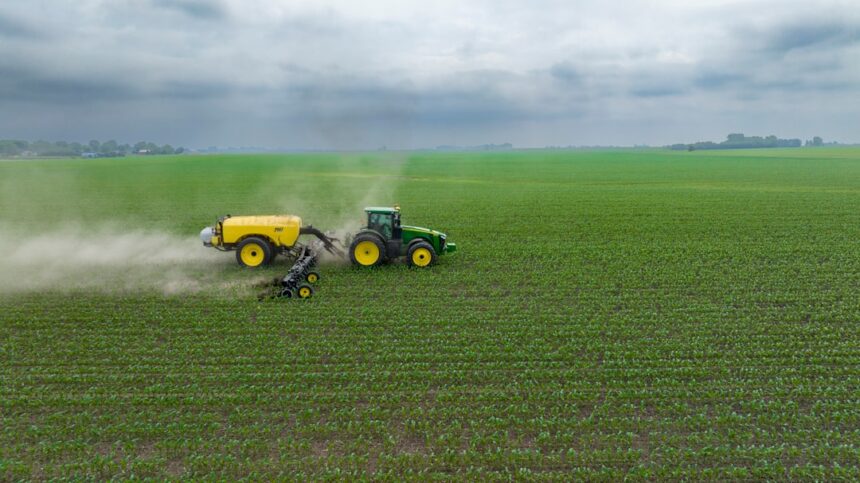
Laboratory researcher examining fungal cultures with agricultural chemicals in background
University of Manchester scientists warn that common agricultural chemicals may be creating drug-resistant fungal pathogens. These resistant fungi could subsequently cause life-threatening infections in vulnerable hospital patients. — Photo by James Baltz on Unsplash (Unsplash License)
SHARE
1 min read|131 words

New research from the University of Manchester reveals three critical insights for healthcare professionals and policymakers regarding the farm-to-hospital antimicrobial resistance pathway. First, agricultural chemicals may select for drug-resistant fungi through mechanisms distinct from clinical selective pressure. Second, these pre-resistant pathogens can cause life-threatening hospital infections in vulnerable patients. Third, current surveillance systems operate in isolation, missing this critical connection between sectors.

The findings emphasize an urgent need for integrated surveillance systems that monitor antimicrobial resistance across agricultural and healthcare domains simultaneously. Healthcare institutions, agricultural regulators, and public health authorities must establish coordinated protocols to track fungal resistance patterns and evaluate the clinical impact of agricultural chemical use. This One Health approach represents a paradigm shift in how antimicrobial resistance is understood and addressed, requiring cross-sector collaboration to protect patient safety.

Was this article helpful?
GMJ Brief · Takeaway

📰 Read the full article: Common Farm Chemicals May Fuel Deadly Hospital Infections, UK Scientists Warn →

Share This Article
Facebook LinkedIn Bluesky Copy Link Print
GMJ
ByProf. Giorgi Pkhakadze
Follow:
Prof. Giorgi Pkhakadze, MD, MPH, PhD, is Editor-in-Chief of the Georgian Medical Journal and Chair of the Public Health Institute of Georgia (PHIG). He is Professor and Head of the Department of Social and Behavioural Sciences at David Tvildiani Medical University, and Secretary/Treasurer of the UEMS Section of Public Health. ORCID: 0000-0001-7609-4515.

Submit Your Paper →

Georgia's peer-reviewed open-access medical journal. No APC until January 2027.
Submit Manuscript →
Eye-tracking study reveals depression shifts children’s attention to sad faces

Eye-tracking research reveals that depression alters how children visually attend to emotional…

Why Nearly Half of U.S. Counties Lack Maternity Care Despite Falling Birth Rates

Nearly 50% of U.S. counties lack an obstetrician-gynecologist despite falling birth rates.…

Why Sunlight Triggers Sneezing in Some People: The Science Behind Photic Sneeze Reflex

Approximately 18–35% of people experience involuntary sneezing when exposed to bright sunlight—a…

Submit Your Paper to GMJ

No APC until January 2027.
Submit Manuscript →

You Might Also Like

Automated compounding system with syringe labels in hospital pharmacy setting

What Healthcare Facilities Need to Know About the Omnicell Syringe Label Recall

By
Prof. Giorgi Pkhakadze
25/06/2026
Athlete resting during training break with fitness retention data visualization

What Athletes Need to Know About Training Breaks and Recovery

By
Prof. Giorgi Pkhakadze
24/05/2026

PHEIC Declaration: Ebola Outbreak Cross-Border Transmission DRC-Uganda

By
Prof. Giorgi Pkhakadze
31/05/2026

PHEIC Declaration for Cross-Border Ebola Outbreak: DRC-Uganda

By
Prof. Giorgi Pkhakadze
31/05/2026
Facebook Twitter Youtube Instagram
Company
  • Privacy Policy
  • Contact US
  • GMJ Journal
  • Submit Manuscript
  • Editorial Team
  • Register at GMJ
  • Terms of Use

Subscribe to GMJ News — Click here

Join Community
© 2026 Georgian Medical Journal (GMJ). Published by the Public Health Institute of Georgia (PHIG). All rights reserved.
Welcome Back!

Sign in to your account

Username or Email Address
Password

Lost your password?

Not a member? Sign Up