By using this site, you agree to the Privacy Policy and Terms of Use.
Accept
GMJ NewsGMJ NewsGMJ News
  • Latest News
    • GMJ Briefs
  • Podcast & Media
    • Podcast Episodes
    • GMJ Audio
    • GMJ Videos
  • Research Digest
    • New Studies
    • Georgian Research
    • Data & Numbers
  • Policy & Systems
    • Health Policy
    • Quality & Safety
    • Migration & Health
    • Global Health
  • Practice
    • Clinical Updates
    • Case Discussions
    • Pharmacy & Prescribing
    • Ingredients A-Z
  • Perspectives
    • Editorial
    • Explainers
    • Voices
    • Letters
  • GMJ Articles
    • Vol. 1 Issue 2 (2026)
    • Vol. 1 Issue 1 (2026)
    • Pre-Launch Articles (2025)
  • Read the Journal →
  • About GMJ News
Notification Show More
Font ResizerAa
GMJ NewsGMJ News
Font ResizerAa
  • Latest News
    • GMJ Briefs
  • Podcast & Media
    • Podcast Episodes
    • GMJ Audio
    • GMJ Videos
  • Research Digest
    • New Studies
    • Georgian Research
    • Data & Numbers
  • Policy & Systems
    • Health Policy
    • Quality & Safety
    • Migration & Health
    • Global Health
  • Practice
    • Clinical Updates
    • Case Discussions
    • Pharmacy & Prescribing
    • Ingredients A-Z
  • Perspectives
    • Editorial
    • Explainers
    • Voices
    • Letters
  • GMJ Articles
    • Vol. 1 Issue 2 (2026)
    • Vol. 1 Issue 1 (2026)
    • Pre-Launch Articles (2025)
  • Read the Journal →
  • About GMJ News
Follow US
GMJ News > GMJ Briefs > One Cardiovascular Event Prevented for Every 47 Non-Diabetic CKD Patients Treated

One Cardiovascular Event Prevented for Every 47 Non-Diabetic CKD Patients Treated

GMJ
Last updated: 29/06/2026 22:26
By
Prof. Giorgi Pkhakadze
Share
1 Min Read
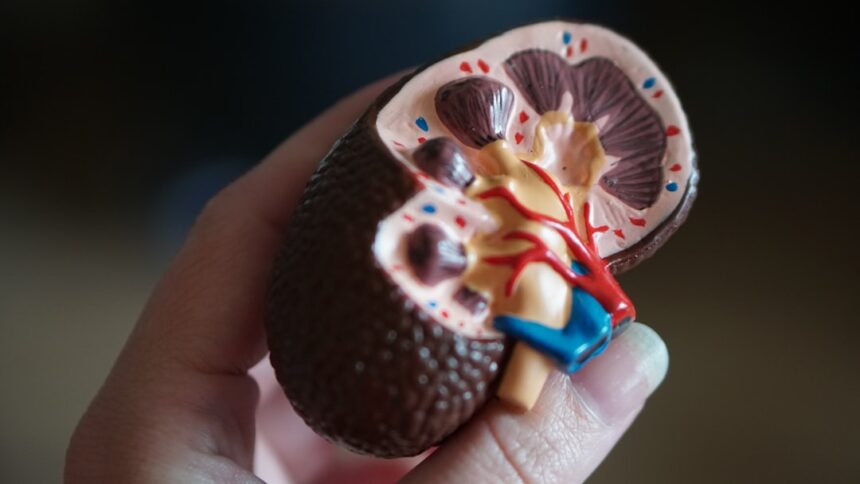
Medical illustration showing kidney and heart protection with finerenone treatment
Finerenone significantly reduces cardiovascular events by 14% in non-diabetic chronic kidney disease patients, according to landmark NEJM trial. The drug offers new cardiovascular protection for millions of previously underserved patients. — Photo by Robina Weermeijer on Unsplash (Unsplash License)
SHARE
1 min read|111 words

The FIND-CKD trial quantifies a clinically meaningful prevention metric: finerenone prevents one major cardiovascular event for every 47 non-diabetic chronic kidney disease patients treated over approximately 3.4 years of follow-up. This number-needed-to-treat calculation underscores the drug’s practical therapeutic value in real-world clinical settings. The 14% relative risk reduction translates to substantial absolute risk reduction across the study population, with benefits observed consistently in stage 3 chronic kidney disease patients experiencing 18% event reduction and stage 4 patients showing 12% reduction. These data support finerenone’s integration into evidence-based treatment algorithms for non-diabetic kidney disease, offering healthcare providers a quantifiable tool for cardiovascular risk stratification and decision-making when counseling patients about therapeutic options.

Read the full article on GMJ Newsroom.

Was this article helpful?

GMJ Brief · Key Finding

📰 Read the full article: Finerenone Shows Cardiovascular Benefits in Non-Diabetic Chronic Kidney Disease Patients →

Related reference
  • Chronic Kidney Disease · Condition
Share This Article
Facebook LinkedIn Bluesky Copy Link Print
GMJ
ByProf. Giorgi Pkhakadze
Follow:
Prof. Giorgi Pkhakadze, MD, MPH, PhD, is Editor-in-Chief of the Georgian Medical Journal and Chair of the Public Health Institute of Georgia (PHIG). He is Professor and Head of the Department of Social and Behavioural Sciences at David Tvildiani Medical University, and Secretary/Treasurer of the UEMS Section of Public Health. ORCID: 0000-0001-7609-4515.

Submit Your Paper →

Georgia's peer-reviewed open-access medical journal. No APC until January 2027.
Submit Manuscript →
Engineered Heart Muscle From Stem Cells Shows Promise in First-in-Human Trial

A first-in-human clinical trial of engineered heart muscle derived from induced pluripotent…

Most People Who Stop GLP-1 Drugs Like Ozempic Eventually Return to Treatment

A new analysis of treatment patterns shows that many patients who discontinue…

Semaglutide Linked to Fewer Bone Fractures Despite Greater Weight Loss in Type 2 Diabetes

A real-world analysis of 60,000 adults with type 2 diabetes shows semaglutide…

Submit Your Paper to GMJ

No APC until January 2027.
Submit Manuscript →

You Might Also Like

School building with vaccine safety information overlay showing scientific evidence

Key Finding: Pennsylvania Schools Distribute Debunked Vaccine Misinformation to Thousands of Parents

By
Prof. Giorgi Pkhakadze
02/07/2026
Healthcare worker experiencing occupational stress in a hospital setting, illustrating the importance of occupational safety and health, burnout prevention, infection control, workplace violence prevention, and health worker wellbeing in Georgia.

COVID-19 Revealed a Hidden Crisis: The Vulnerability of Healthcare Workers Worldwide

By
Prof. Giorgi Pkhakadze
18/06/2026

🚨 Ebola: Outbreak cases are “tip of iceberg,” says Africa CDC official at centre of epidemic

By
Prof. Giorgi Pkhakadze
02/07/2026
Clinical UpdatesPolicy & SystemsPracticeQuality & Safety

England Reports Sharp Rise in Norovirus Cases as Summer Season Peaks

By
Prof. Giorgi Pkhakadze
24/06/2026
Facebook Twitter Youtube Instagram
Company
  • Privacy Policy
  • Contact US
  • GMJ Journal
  • Submit Manuscript
  • Editorial Team
  • Register at GMJ
  • Terms of Use

Subscribe to GMJ News — Click here

Join Community
© 2026 Georgian Medical Journal (GMJ). Published by the Public Health Institute of Georgia (PHIG). All rights reserved.
Welcome Back!

Sign in to your account

Username or Email Address
Password

Lost your password?

Not a member? Sign Up