By using this site, you agree to the Privacy Policy and Terms of Use.
Accept
GMJ NewsGMJ NewsGMJ News
  • Latest News
    • GMJ Briefs
  • Podcast & Media
    • Podcast Episodes
    • GMJ Audio
    • GMJ Videos
  • Research Digest
    • New Studies
    • Georgian Research
    • Data & Numbers
  • Policy & Systems
    • Health Policy
    • Quality & Safety
    • Migration & Health
    • Global Health
  • Practice
    • Clinical Updates
    • Case Discussions
    • Pharmacy & Prescribing
    • Ingredients A-Z
  • Perspectives
    • Editorial
    • Explainers
    • Voices
    • Letters
  • GMJ Articles
    • Vol. 1 Issue 2 (2026)
    • Vol. 1 Issue 1 (2026)
    • Pre-Launch Articles (2025)
  • Read the Journal →
  • About GMJ News
Notification Show More
Font ResizerAa
GMJ NewsGMJ News
Font ResizerAa
  • Latest News
    • GMJ Briefs
  • Podcast & Media
    • Podcast Episodes
    • GMJ Audio
    • GMJ Videos
  • Research Digest
    • New Studies
    • Georgian Research
    • Data & Numbers
  • Policy & Systems
    • Health Policy
    • Quality & Safety
    • Migration & Health
    • Global Health
  • Practice
    • Clinical Updates
    • Case Discussions
    • Pharmacy & Prescribing
    • Ingredients A-Z
  • Perspectives
    • Editorial
    • Explainers
    • Voices
    • Letters
  • GMJ Articles
    • Vol. 1 Issue 2 (2026)
    • Vol. 1 Issue 1 (2026)
    • Pre-Launch Articles (2025)
  • Read the Journal →
  • About GMJ News
Follow US
GMJ News > Policy & Systems > Health Policy > New US Rules Require Work Activities for Medicaid Recipients
Health PolicyPolicy & Systems

New US Rules Require Work Activities for Medicaid Recipients

GMJ
Last updated: 23/06/2026 18:42
By
GMJ Policy Desk
Share
6 Min Read
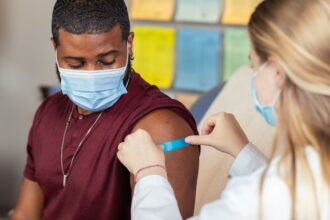
Healthcare policy document showing Medicaid work requirements implementation timelineIllustrative image · Photo by Julia Zyablova on Unsplash (Unsplash License)
New federal rules require Medicaid recipients to demonstrate work activities or face coverage loss, with exemptions for vulnerable groups. States must implement verification systems while protecting eligible populations. — Photo by Julia Zyablova on Unsplash (Unsplash License)
SHARE
🎧 Listen to this article4:53 min · 689 words · GMJ Audio
3 min read|689 words
✓ Reviewed by Prof. Giorgi Pkhakadze, MD, MPH, PhD · ORCID 0000-0001-7609-4515

The Trump administration has finalized regulations requiring millions of Americans receiving Medicaid to demonstrate work activities or face coverage loss, according to final rules released by the Centers for Medicare & Medicaid Services (CMS). The policy affects non-disabled adults aged 19-64 without dependent children enrolled in state Medicaid expansion programs.

Contents
    • Key takeaways
      • Work Requirement Implementation Timeline
  • Federal Framework Establishes State Flexibility
  • Exemption Categories Protect Vulnerable Groups
  • Implementation Challenges and State Responses
    • What this means
  • Frequently asked questions
    • Who is exempt from Medicaid work requirements?
    • What activities count toward work requirements?
    • When do these requirements take effect?

Key takeaways

  • Final federal rules allow states to implement Medicaid work requirements for able-bodied adults
  • Recipients must work or complete approved activities for minimum 20 hours weekly
  • Exemptions include pregnant women, caregivers, and those with mental health conditions
20 hours
minimum weekly work requirement for Medicaid recipients under new federal rules

Work Requirement Implementation Timeline

States must phase in requirements over multiple years

Year 1
Limited implementation
Year 2
Expanded coverage
Year 3+
Full requirements

Source: Centers for Medicare & Medicaid Services, 2025 | Georgian Medical Journal News

Federal Framework Establishes State Flexibility

The Centers for Medicare & Medicaid Services final rules provide states with guidance on implementing work requirements while maintaining federal oversight. States must submit waiver applications demonstrating how the requirements advance Medicaid’s core mission of providing healthcare coverage to vulnerable populations.

Submit Your Paper
GMJ_Submit_Banner

According to the final regulations, qualifying work activities include traditional employment, job training programs, education, community service, and caregiving responsibilities. States retain discretion in defining specific parameters within federal guidelines, creating potential variation in implementation across jurisdictions.

For comprehensive analysis of similar healthcare policy developments, see our coverage of health policy reforms affecting vulnerable populations.

Exemption Categories Protect Vulnerable Groups

The final rules establish broad exemption categories based on medical, social, and economic factors. Pregnant women, primary caregivers of children under six, and individuals receiving disability benefits automatically qualify for exemptions under federal guidelines.

Mental health conditions, substance use disorders, and domestic violence situations also trigger exemption eligibility, according to federal guidance issued alongside the final rules. States must establish streamlined processes for exemption applications and appeals to ensure eligible individuals maintain coverage.

Consumer advocacy organizations have raised concerns about administrative burden and potential coverage gaps during transition periods. The Kaiser Family Foundation notes that complex verification requirements may create barriers for eligible recipients seeking exemptions.

Implementation Challenges and State Responses

State Medicaid agencies face significant administrative challenges in implementing work verification systems, according to health policy analysts. The Medicaid and CHIP Payment and Access Commission has documented technical and operational hurdles in previous state pilot programs.

Federal rules require states to establish comprehensive tracking systems for work activities, exemption processing, and coverage transitions. These systems must integrate with existing Medicaid enrollment platforms while maintaining privacy protections and data security standards mandated by federal healthcare regulations.

Several state governments have indicated plans to pursue work requirement waivers, while others have expressed concerns about implementation costs and administrative complexity. The National Governors Association continues monitoring federal guidance for state-specific implementation strategies.

States implementing work requirements must demonstrate how these policies advance Medicaid’s fundamental purpose of providing healthcare coverage to vulnerable populations

— Centers for Medicare & Medicaid Services Final Rules (2025)

What this means

For patients: Medicaid recipients should understand work requirements and available exemptions to maintain healthcare coverage
For clinicians: Healthcare providers may need to assist patients with exemption documentation for medical conditions
For policymakers: State officials must balance federal compliance with protecting vulnerable populations from coverage loss

Frequently asked questions

Who is exempt from Medicaid work requirements?

Exemptions include pregnant women, caregivers of children under six, individuals with disabilities, those receiving disability benefits, and people with mental health or substance use conditions. States must establish clear exemption processes.

What activities count toward work requirements?

Qualifying activities include employment, job training, education, community service, and caregiving responsibilities. States define specific parameters within federal guidelines for minimum 20 hours weekly participation.

When do these requirements take effect?

Implementation timing varies by state based on waiver approval processes. States must submit detailed implementation plans to CMS and establish phased rollout schedules to ensure adequate administrative capacity.

The long-term impact of Medicaid work requirements will depend significantly on state implementation approaches and federal oversight mechanisms. Early monitoring data will be crucial for assessing policy effectiveness and identifying necessary adjustments to protect vulnerable populations while achieving stated program goals.

Source: Final Rules for Medicaid Work Requirements Are Out. Here’s What You Need To Know.

Was this article helpful?

Disclaimer. This article is health journalism intended for general information and education. It is not medical advice and is not a substitute for professional diagnosis or treatment. Always consult a qualified healthcare provider about your individual circumstances. Full disclaimer →

Related Coverage

California Legislator Passes Landmark Ultra-Processed Food Regulations Despite Industry OppositionJul 1, 2026
Arts Engagement Shows Promise as 'Social Prescribing' for Health and Medical EmpathyJun 30, 2026
WHO Kidney Health Resolution Needs Urgent Implementation Framework, Lancet Editorial WarnsJun 30, 2026
UK A&E Departments See Record 2.4 Million Attendances During May HeatwaveJun 30, 2026
PG
Written by
Prof. Giorgi Pkhakadze, MD, MPH, PhD
Editor-in-Chief, GMJ News
Full profile →  ·  ORCID 0000-0001-7609-4515
Medical disclaimer. This article is health journalism intended for general information. It is not medical advice and is not a substitute for consultation with a qualified healthcare professional. Always seek your physician's advice regarding any medical condition.
Medically reviewed by Prof. Giorgi Pkhakadze, MD, MPH, PhD. Spotted an error? Contact the editorial team.

Get the GMJ News digest
Evidence-based health journalism in your inbox. No spam; unsubscribe anytime.
TAGGED:CMShealth insurancehealthcare policymedicaidwork requirements
Share This Article
Facebook LinkedIn Bluesky Copy Link Print
GMJ
ByGMJ Policy Desk
Follow:
GMJ Policy Desk is part of GMJ News, the newsroom of the Georgian Medical Journal (gmj.ge), published by the Public Health Institute of Georgia. Every article is editorially reviewed before publication.
Leave a Comment Leave a Comment

Leave a Reply Cancel reply

Your email address will not be published. Required fields are marked *

Submit Your Paper →

Georgia's peer-reviewed open-access medical journal. No APC until January 2027.
Submit Manuscript →
Supermarket Data Reveals Women Buying Less Effective Period Pain Relief

Supermarket purchasing data reveals many women are buying less effective pain medications…

Breastfeeding Support Failures Leave New Mothers Traumatized, UK Survey Reveals

UK mothers report inadequate breastfeeding support causing trauma severe enough to influence…

California Legislator Passes Landmark Ultra-Processed Food Regulations Despite Industry Opposition

California Assembly member Jesse Gabriel has passed more ultra-processed food legislation in…

Submit Your Paper to GMJ

No APC until January 2027.
Submit Manuscript →

You Might Also Like

Dexcom G7 continuous glucose monitoring sensor with FDA safety alert overlay
Policy & SystemsQuality & Safety

Dexcom Reports Theft of Defective G7 Glucose Sensors Designated for Destruction

By
GMJ Policy Desk
07/06/2026
Air France aircraft on tarmac with health screening protocols in background
Global Health

Air France Flight Diverted Over Ebola Travel Restrictions Amid DRC Outbreak

By
GMJ Policy Desk
22/05/2026
Healthcare professional reviewing vaccination guidelines and patient immunisation recordsPhoto by CDC on Unsplash (Unsplash License)
Health PolicyPolicy & Systems

UK Health Security Agency Updates Vaccination Guidelines for Incomplete Immunisation Records

By
GMJ Policy Desk
13/06/2026
Automated compounding system with syringe labels in hospital pharmacy setting
Policy & SystemsQuality & Safety

FDA Recalls Omnicell Syringe Labels After Automated Compounding System Failures

By
GMJ Policy Desk
25/05/2026
Facebook Twitter Youtube Instagram
Company
  • Privacy Policy
  • Contact US
  • GMJ Journal
  • Submit Manuscript
  • Editorial Team
  • Register at GMJ
  • Terms of Use

Subscribe to GMJ News — Click here

Join Community
© 2026 Georgian Medical Journal (GMJ). Published by the Public Health Institute of Georgia (PHIG). All rights reserved.
Welcome Back!

Sign in to your account

Username or Email Address
Password

Lost your password?

Not a member? Sign Up