By using this site, you agree to the Privacy Policy and Terms of Use.
Accept
GMJ NewsGMJ NewsGMJ News
  • Latest News
    • GMJ Briefs
  • Podcast & Media
    • Podcast Episodes
    • GMJ Audio
    • GMJ Videos
  • Research Digest
    • New Studies
    • Georgian Research
    • Data & Numbers
  • Policy & Systems
    • Health Policy
    • Quality & Safety
    • Migration & Health
    • Global Health
  • Practice
    • Clinical Updates
    • Case Discussions
    • Pharmacy & Prescribing
    • Ingredients A-Z
  • Perspectives
    • Editorial
    • Explainers
    • Voices
    • Letters
  • GMJ Articles
    • Vol. 1 Issue 2 (2026)
    • Vol. 1 Issue 1 (2026)
    • Pre-Launch Articles (2025)
  • Read the Journal →
  • About GMJ News
Notification Show More
Font ResizerAa
GMJ NewsGMJ News
Font ResizerAa
  • Latest News
    • GMJ Briefs
  • Podcast & Media
    • Podcast Episodes
    • GMJ Audio
    • GMJ Videos
  • Research Digest
    • New Studies
    • Georgian Research
    • Data & Numbers
  • Policy & Systems
    • Health Policy
    • Quality & Safety
    • Migration & Health
    • Global Health
  • Practice
    • Clinical Updates
    • Case Discussions
    • Pharmacy & Prescribing
    • Ingredients A-Z
  • Perspectives
    • Editorial
    • Explainers
    • Voices
    • Letters
  • GMJ Articles
    • Vol. 1 Issue 2 (2026)
    • Vol. 1 Issue 1 (2026)
    • Pre-Launch Articles (2025)
  • Read the Journal →
  • About GMJ News
Follow US
GMJ News > GMJ Briefs > One in Five Adults Affected: The Staggering Global Burden of Fatty Liver Disease

One in Five Adults Affected: The Staggering Global Burden of Fatty Liver Disease

GMJ
Last updated: 30/06/2026 20:26
By
Prof. Giorgi Pkhakadze
Share
1 Min Read
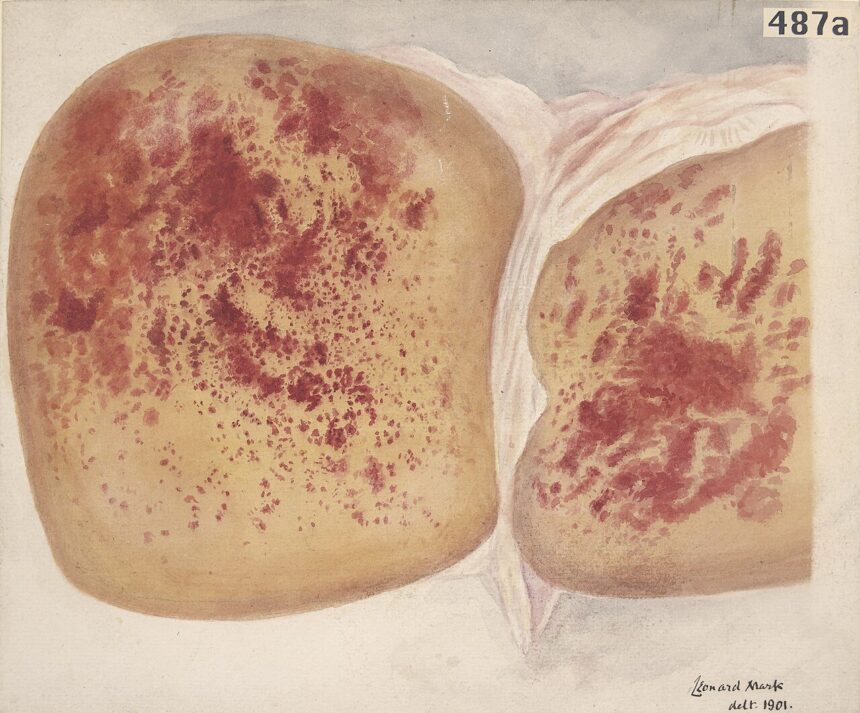
WHO World Health Assembly meeting hall during historic fatty liver disease resolution vote
The World Health Assembly has adopted a historic resolution recognizing steatotic liver disease as a critical missing piece in global NCD strategies. The landmark decision affects an estimated 1.5 billion people worldwide. — Liver from a woman who died of puerpal eclampsia Wellcome L0061645.jpg by Mark, Leonard Portal / CC BY 4.0 via Wikimedia Commons (CC BY 4.0)
SHARE
1 min read|168 words

A staggering 1.5 billion people worldwide are estimated to have steatotic liver disease, yet this epidemic has remained largely invisible in global health policy until now. This figure represents approximately one in five adults globally, making SLD one of the most common liver conditions on the planet—comparable in burden to diabetes and cardiovascular disease combined.

Despite these alarming statistics, fatty liver disease has been conspicuously absent from international noncommunicable disease frameworks. The WHO’s newly adopted resolution marks the first formal acknowledgment of this public health crisis at the global governance level. The recognition comes as clinicians and public health officials increasingly recognize that SLD is not merely a liver concern but a systemic disease linked to metabolic dysfunction, obesity, and cardiovascular complications.

With such a massive affected population, the implications for healthcare systems are profound. Enhanced surveillance, prevention strategies, and system strengthening are now prioritized to address this long-neglected condition and improve outcomes for the billions living with fatty liver disease.

Read the full article on GMJ Newsroom.

Submit Your Paper
GMJ_Submit_Banner

Was this article helpful?

GMJ Brief · Key Finding

📰 Read the full article: WHO Adopts Historic Resolution on Fatty Liver Disease as Missing Link in Global NCD Strategy →

Related reference
  • Obesity · Condition
Share This Article
Facebook LinkedIn Bluesky Copy Link Print
GMJ
ByProf. Giorgi Pkhakadze
Follow:
Prof. Giorgi Pkhakadze, MD, MPH, PhD, is Editor-in-Chief of the Georgian Medical Journal and Chair of the Public Health Institute of Georgia (PHIG). He is Professor and Head of the Department of Social and Behavioural Sciences at David Tvildiani Medical University, and Secretary/Treasurer of the UEMS Section of Public Health. ORCID: 0000-0001-7609-4515.

Submit Your Paper →

Georgia's peer-reviewed open-access medical journal. No APC until January 2027.
Submit Manuscript →
Rare Lymphatic-Urinary Fistula Causes Milky Urine in NEJM Case Report

A rare case of chyluria caused by a lymphatic-urinary fistula demonstrates how…

Gene Therapy Shows Promise for Inherited Cholesterol Disorder in First-in-Human Trial

First-in-human gene therapy trial shows preliminary safety and efficacy for treating homozygous…

Teen Drug Use and Binge Drinking Linked to Severe Mental Health Crisis

UCLA research reveals dangerous links between teen substance use and mental health…

Submit Your Paper to GMJ

No APC until January 2027.
Submit Manuscript →

You Might Also Like

School building with vaccine safety information overlay showing scientific evidence

Key Finding: Pennsylvania Schools Distribute Debunked Vaccine Misinformation to Thousands of Parents

By
Prof. Giorgi Pkhakadze
02/07/2026
Scientific researchers working on longevity interventions in laboratory setting

What XPRIZE Healthspan Means for Understanding Aging Research and Consumer Safety

By
Prof. Giorgi Pkhakadze
29/06/2026
Medical professional discussing opioid treatment medication policy

Evidence-Based Opioid Treatments Face Federal Scrutiny Amid Political Divide

By
Prof. Giorgi Pkhakadze
02/07/2026
Infographic showing five different metabolic pathways leading to type 2 diabetes diagnosis

The Lean Diabetes Paradox: Why Normal Weight Doesn’t Guarantee Protection

By
Prof. Giorgi Pkhakadze
26/06/2026
Facebook Twitter Youtube Instagram
Company
  • Privacy Policy
  • Contact US
  • GMJ Journal
  • Submit Manuscript
  • Editorial Team
  • Register at GMJ
  • Terms of Use

Subscribe to GMJ News — Click here

Join Community
© 2026 Georgian Medical Journal (GMJ). Published by the Public Health Institute of Georgia (PHIG). All rights reserved.
Welcome Back!

Sign in to your account

Username or Email Address
Password

Lost your password?

Not a member? Sign Up