By using this site, you agree to the Privacy Policy and Terms of Use.
Accept
GMJ NewsGMJ NewsGMJ News
  • Latest News
    • GMJ Briefs
  • Podcast & Media
    • Podcast Episodes
    • GMJ Audio
    • GMJ Videos
  • Research Digest
    • New Studies
    • Georgian Research
    • Data & Numbers
  • Policy & Systems
    • Health Policy
    • Quality & Safety
    • Migration & Health
    • Global Health
  • Practice
    • Clinical Updates
    • Case Discussions
    • Pharmacy & Prescribing
    • Ingredients A-Z
  • Perspectives
    • Editorial
    • Explainers
    • Voices
    • Letters
  • GMJ Articles
    • Vol. 1 Issue 2 (2026)
    • Vol. 1 Issue 1 (2026)
    • Pre-Launch Articles (2025)
  • Read the Journal →
  • About GMJ News
Notification Show More
Font ResizerAa
GMJ NewsGMJ News
Font ResizerAa
  • Latest News
    • GMJ Briefs
  • Podcast & Media
    • Podcast Episodes
    • GMJ Audio
    • GMJ Videos
  • Research Digest
    • New Studies
    • Georgian Research
    • Data & Numbers
  • Policy & Systems
    • Health Policy
    • Quality & Safety
    • Migration & Health
    • Global Health
  • Practice
    • Clinical Updates
    • Case Discussions
    • Pharmacy & Prescribing
    • Ingredients A-Z
  • Perspectives
    • Editorial
    • Explainers
    • Voices
    • Letters
  • GMJ Articles
    • Vol. 1 Issue 2 (2026)
    • Vol. 1 Issue 1 (2026)
    • Pre-Launch Articles (2025)
  • Read the Journal →
  • About GMJ News
Follow US
GMJ News > GMJ Briefs > Study Quantifies Sugar Reduction Impact: Icon Warnings Outperform Text Labels

Study Quantifies Sugar Reduction Impact: Icon Warnings Outperform Text Labels

GMJ
Last updated: 02/07/2026 06:25
By
Prof. Giorgi Pkhakadze
Share
1 Min Read
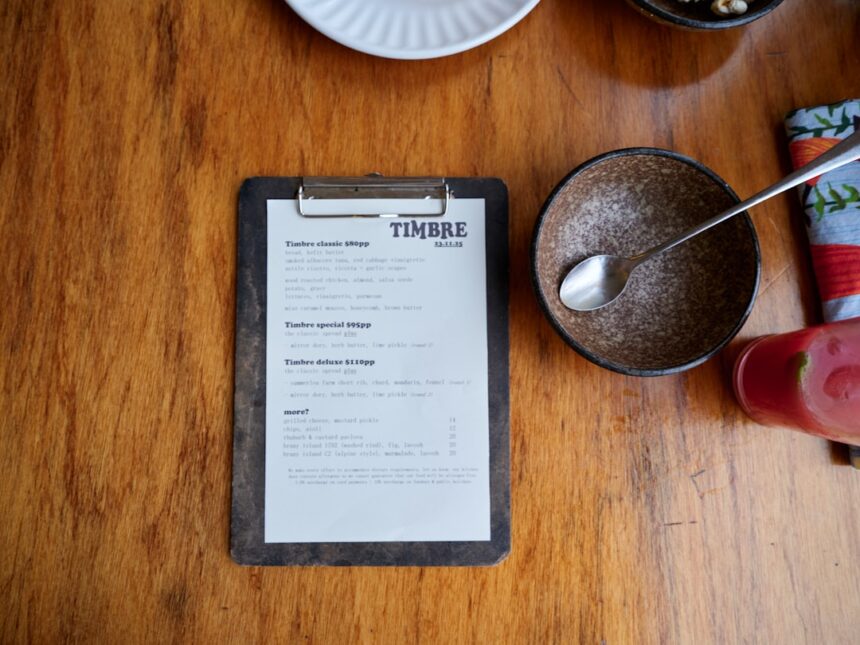
Restaurant menu with warning label highlighting high-sugar items
Large US trial shows restaurant menu warning labels cut added sugar orders by 31% without hurting customer satisfaction or business revenue. Icon-based warnings outperformed text-only labels. — Photo by Neon Wang on Unsplash (Unsplash License)
SHARE
1 min read|130 words

A new study published in The Lancet Public Health has quantified the effectiveness of different warning label designs in reducing added sugar consumption at restaurants. Among 3,998 participants, those viewing menus with warning labels ordered 31% less added sugar compared to control groups viewing standard menus without warnings.

The research revealed important distinctions in label effectiveness based on design. Icon-plus-text warnings featuring a prominent red triangle achieved a 35% reduction in added sugar orders, outperforming text-only warnings which achieved a 28% reduction. These findings suggest that visual design elements significantly enhance the behavioral impact of nutritional warnings. The data underscores the potential for menu labeling policies to serve as a practical, non-invasive public health intervention that could address rising rates of diet-related chronic diseases across American populations.

Read the full article on GMJ Newsroom.

Was this article helpful?

GMJ Brief · Key Finding

📰 Read the full article: Warning Labels on Restaurant Menus Cut Sugar Orders by 31%, Major US Trial Shows →

Share This Article
Facebook LinkedIn Bluesky Copy Link Print
GMJ
ByProf. Giorgi Pkhakadze
Follow:
Prof. Giorgi Pkhakadze, MD, MPH, PhD, is Editor-in-Chief of the Georgian Medical Journal and Chair of the Public Health Institute of Georgia (PHIG). He is Professor and Head of the Department of Social and Behavioural Sciences at David Tvildiani Medical University, and Secretary/Treasurer of the UEMS Section of Public Health. ORCID: 0000-0001-7609-4515.

Submit Your Paper →

Georgia's peer-reviewed open-access medical journal. No APC until January 2027.
Submit Manuscript →
Corrected Global Data on Substance Use Burden Across 204 Countries Reveals Shifting Patterns

Nature Medicine has published a corrected Global Burden of Disease assessment of…

Engineered Heart Muscle From Stem Cells Shows Promise in First-in-Human Trial

A first-in-human clinical trial of engineered heart muscle derived from induced pluripotent…

Most People Who Stop GLP-1 Drugs Like Ozempic Eventually Return to Treatment

A new analysis of treatment patterns shows that many patients who discontinue…

Submit Your Paper to GMJ

No APC until January 2027.
Submit Manuscript →

You Might Also Like

Medical illustration showing osteomyelitis bone infection with diagnostic imaging

Advanced Imaging and Oral Antibiotics Transform Osteomyelitis Clinical Practice

By
Prof. Giorgi Pkhakadze
29/06/2026
Psychologist demonstrating stress management techniques in clinical setting

Clinical Evidence Validates Psychologist’s Stress Management Framework

By
Prof. Giorgi Pkhakadze
23/06/2026
Various magnesium supplement bottles and capsules arranged on laboratory bench

Marketing Claims vs. Science: What Magnesium Research Really Shows

By
Prof. Giorgi Pkhakadze
02/06/2026
Medical illustration showing multiple myeloma cells and treatment timeline concepts

NEJM Editorial Challenges Traditional Early Relapse Definitions in Multiple Myeloma

By
Prof. Giorgi Pkhakadze
07/06/2026
Facebook Twitter Youtube Instagram
Company
  • Privacy Policy
  • Contact US
  • GMJ Journal
  • Submit Manuscript
  • Editorial Team
  • Register at GMJ
  • Terms of Use

Subscribe to GMJ News — Click here

Join Community
© 2026 Georgian Medical Journal (GMJ). Published by the Public Health Institute of Georgia (PHIG). All rights reserved.
Welcome Back!

Sign in to your account

Username or Email Address
Password

Lost your password?

Not a member? Sign Up