By using this site, you agree to the Privacy Policy and Terms of Use.
Accept
GMJ NewsGMJ NewsGMJ News
  • Latest News
    • GMJ Briefs
  • Podcast & Media
    • Podcast Episodes
    • GMJ Audio
    • GMJ Videos
  • Research Digest
    • New Studies
    • Georgian Research
    • Data & Numbers
  • Policy & Systems
    • Health Policy
    • Quality & Safety
    • Migration & Health
    • Global Health
  • Practice
    • Clinical Updates
    • Case Discussions
    • Pharmacy & Prescribing
    • Ingredients A-Z
  • Perspectives
    • Editorial
    • Explainers
    • Voices
    • Letters
  • GMJ Articles
    • Vol. 1 Issue 2 (2026)
    • Vol. 1 Issue 1 (2026)
    • Pre-Launch Articles (2025)
  • Read the Journal →
  • About GMJ News
Notification Show More
Font ResizerAa
GMJ NewsGMJ News
Font ResizerAa
  • Latest News
    • GMJ Briefs
  • Podcast & Media
    • Podcast Episodes
    • GMJ Audio
    • GMJ Videos
  • Research Digest
    • New Studies
    • Georgian Research
    • Data & Numbers
  • Policy & Systems
    • Health Policy
    • Quality & Safety
    • Migration & Health
    • Global Health
  • Practice
    • Clinical Updates
    • Case Discussions
    • Pharmacy & Prescribing
    • Ingredients A-Z
  • Perspectives
    • Editorial
    • Explainers
    • Voices
    • Letters
  • GMJ Articles
    • Vol. 1 Issue 2 (2026)
    • Vol. 1 Issue 1 (2026)
    • Pre-Launch Articles (2025)
  • Read the Journal →
  • About GMJ News
Follow US
GMJ News > Research Digest > New Studies > Natural Protein Scaffold Accelerates Bone Healing Through Simultaneous Blood Vessel Growth
New StudiesResearch Digest

Natural Protein Scaffold Accelerates Bone Healing Through Simultaneous Blood Vessel Growth

GMJ
Last updated: 06/07/2026 02:06
By
GMJ Research Desk
Share
6 Min Read
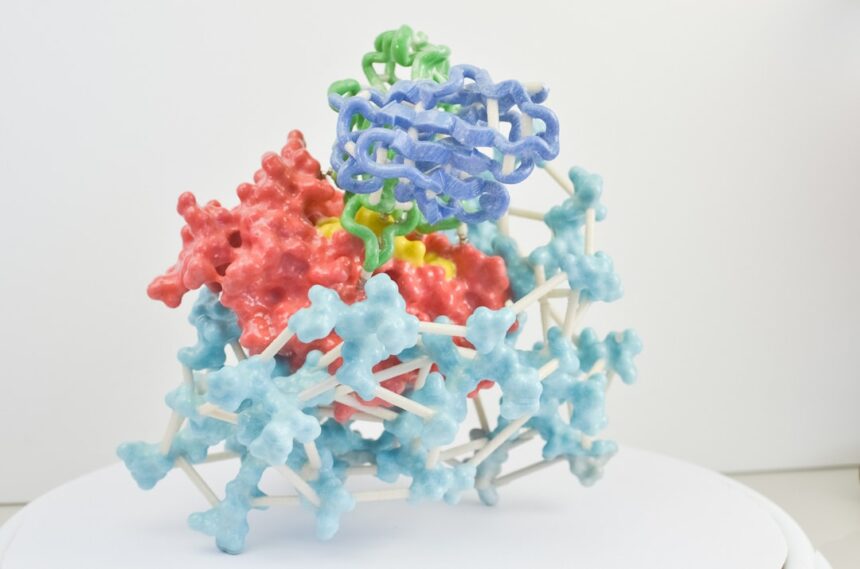
Medical illustration showing protein scaffold promoting bone and blood vessel regenerationIllustrative image · Photo by National Institute of Allergy and Infectious Diseases on Unsplash (Unsplash License)
Researchers develop natural protein scaffold that simultaneously promotes bone regeneration and blood vessel growth for severe traumatic injuries. Technology addresses critical challenge of inadequate blood supply in volumetric bone defects. — Photo by National Institute of Allergy and Infectious Diseases on Unsplash (Unsplash License)
SHARE
4 min read|717 words
✓ Medically reviewed by Prof. Giorgi Pkhakadze, MD, MPH, PhD · ORCID 0000-0001-7609-4515

🟡 Preliminary Evidence

Contents
    • Key takeaways
      • Dual Approach to Bone Regeneration
  • Revolutionary Dual-Function Technology
  • Clinical Applications for Trauma Medicine
  • Implications for Patient Care
    • What this means
  • Frequently asked questions
    • What makes this protein scaffold different from existing treatments?
    • Who would benefit most from this treatment?
    • When might this treatment become available?

Researchers have developed a natural protein scaffold that could transform treatment for severe traumatic injuries by simultaneously promoting bone regeneration and blood vessel growth. The innovation addresses a critical clinical challenge: when significant bone and blood vessels are lost in volumetric injuries, cells in the injury center cannot survive without adequate blood supply, often leading to permanent tissue loss or failed grafts.

Key takeaways

  • New protein scaffold promotes both bone healing and blood vessel formation simultaneously
  • Technology addresses volumetric bone defects where traditional treatments often fail
  • Dual approach could reduce healing time and improve outcomes for trauma patients
Critical window
Clock ticking for patients with volumetric bone gaps lacking blood supply

Dual Approach to Bone Regeneration

Traditional vs. integrated bone and vascular healing strategies

Traditional
Bone healing only
New Method
Bone + blood vessels
Outcome
Faster healing

Source: Medical Xpress, 2026 | Georgian Medical Journal News

Submit Your Paper
GMJ_Submit_Banner

Revolutionary Dual-Function Technology

The protein scaffold represents a significant advancement in regenerative medicine by addressing both skeletal and vascular regeneration simultaneously. Traditional approaches to volumetric bone defects have struggled with the fundamental problem that bone cells require immediate vascularization to survive and thrive.

🎙️ Related Podcast Episodes
🎧 #25 | WHO Warns: Childhood Hearing Loss Must Be Addressed Early · 19m

According to the research findings published in Medical Xpress, the natural protein material provides structural support while actively promoting the formation of new blood vessels. This integrated approach could significantly improve outcomes for patients with complex traumatic injuries where both bone and vascular structures are compromised.

Clinical Applications for Trauma Medicine

Volumetric bone defects present one of the most challenging scenarios in trauma surgery. When patients lose significant amounts of bone tissue along with the surrounding blood supply, conventional bone grafts often fail due to inadequate vascularization. The National Institutes of Health has identified improved vascularization as a key priority in tissue engineering research.

The new scaffold technology could be particularly valuable for military medicine and civilian trauma cases involving blast injuries, severe fractures, or tumor resections. By ensuring that new bone tissue receives adequate blood supply from the earliest stages of healing, the approach may reduce complications and accelerate recovery times. For more insights on regenerative medicine advances, visit our New Studies section.

The protein scaffold addresses the critical challenge where cells in the center of large injuries cannot survive without nearby blood supply, often leading to permanent tissue loss or failed grafts.

— Research findings (Medical Xpress, 2026)

Implications for Patient Care

The simultaneous promotion of bone and blood vessel growth could revolutionize treatment protocols for complex orthopedic injuries. Current standard care often requires multiple procedures and extended recovery periods, particularly when vascularization proves inadequate.

This integrated approach may reduce the need for multiple surgeries and decrease the risk of graft failure. The Centers for Disease Control and Prevention reports that traumatic injuries remain a leading cause of disability, making improved treatment options a significant public health priority.

What this means

For patients: Potentially faster healing and reduced need for multiple surgeries in severe bone injuries
For clinicians: New treatment option for challenging volumetric bone defects with improved success rates
For policymakers: Potential to reduce healthcare costs and disability burden from traumatic injuries

Frequently asked questions

What makes this protein scaffold different from existing treatments?

Unlike traditional bone grafts that focus solely on skeletal regeneration, this scaffold simultaneously promotes blood vessel growth. This dual approach addresses the critical problem of inadequate vascularization that often causes graft failure in large bone defects.

Who would benefit most from this treatment?

Patients with volumetric bone defects—where significant bone and blood vessels are lost—would be primary candidates. This includes trauma victims, cancer patients after tumor removal, and those with severe fractures where traditional grafts have failed.

When might this treatment become available?

The research is in early development stages and will require extensive preclinical testing and clinical trials before becoming available to patients. The timeline for clinical application typically spans several years for regenerative medicine technologies.

The development of this protein scaffold represents a promising step forward in addressing one of orthopedic surgery’s most persistent challenges. As research continues, this integrated approach to bone and vascular regeneration could significantly improve outcomes for patients facing the most severe traumatic injuries. The technology’s potential to reduce healing time and improve success rates makes it a valuable addition to the regenerative medicine toolkit.

Source: Natural protein scaffold may speed bone healing by growing blood vessels at same time

Was this article helpful?

Disclaimer. This article is health journalism intended for general information and education. It is not medical advice and is not a substitute for professional diagnosis or treatment. Always consult a qualified healthcare provider about your individual circumstances. Full disclaimer →

Related Coverage

AI Workflow Identifies Folic Acid as Potential Treatment for Diabetic Wound HealingJul 7, 2026
Scientists discover reversible molecular cause of cellular agingJul 7, 2026
Fatal Tapeworm Disease Spreads to Pacific Northwest Wild Animals for First TimeJul 7, 2026
Glucosamine Supplements May Accelerate Memory Loss in Alzheimer's Disease, New Research WarnsJul 6, 2026
Related reference
  • SAMe · Ingredient
PG
Written by
Prof. Giorgi Pkhakadze, MD, MPH, PhD
Editor-in-Chief, GMJ News
Full profile →  ·  ORCID 0000-0001-7609-4515
Medical disclaimer. This article is health journalism intended for general information. It is not medical advice and is not a substitute for consultation with a qualified healthcare professional. Always seek your physician's advice regarding any medical condition.
Medically reviewed by Prof. Giorgi Pkhakadze, MD, MPH, PhD. Spotted an error? Contact the editorial team.
Get the GMJ News digest
Evidence-based health journalism in your inbox. No spam; unsubscribe anytime.
TAGGED:bone healingprotein scaffoldregenerative medicinetrauma medicinevascular regeneration
Share This Article
Facebook LinkedIn Bluesky Copy Link Print
GMJ
ByGMJ Research Desk
Follow:
GMJ Research Desk is part of GMJ News, the newsroom of the Georgian Medical Journal (gmj.ge), published by the Public Health Institute of Georgia. Every article is editorially reviewed before publication.
Leave a Comment Leave a Comment

Leave a Reply Cancel reply

Your email address will not be published. Required fields are marked *

Submit Your Paper →

Georgia's peer-reviewed open-access medical journal. No APC until January 2027.
Submit Manuscript →
Autism Spectrum Disorder and Comorbid Schizophrenia: Clinical Practice Guidelines

New clinical practice guidelines address the complex challenges of diagnosing and treating…

AI Workflow Identifies Folic Acid as Potential Treatment for Diabetic Wound Healing

NUS researchers used AI to identify folic acid as a promising treatment…

New RSV Vaccines Transform Prevention Strategies for Older Adults

New RSV vaccines are transforming prevention strategies as public health programs expand…

Submit Your Paper to GMJ

No APC until January 2027.
Submit Manuscript →

You Might Also Like

Laboratory blood test tubes with magnesium deficiency diagnostic chart
New StudiesResearch Digest

Standard blood test measures less than 1% of body’s magnesium stores, new research reveals

By
GMJ Research Desk
24/05/2026
Medical professional examining retinal images on computer screen for HIV eye disease screening
New StudiesResearch Digest

Teleretinal Screening Shows High Accuracy in Detecting Cytomegalovirus Retinitis in HIV Patients

By
GMJ Research Desk
24/05/2026
Chart showing research gap between male and female puberty studies
New StudiesResearch Digest

Early and Late Puberty in Boys May Signal Future Health Risks, Research Shows

By
GMJ Research Desk
11/06/2026
Medical illustration showing surgical bleeding reduction with tranexamic acid treatmentIllustrative image · Photo by www.kaboompics.com on Pexels (Pexels License)
Clinical UpdatesNew StudiesPracticeResearch Digest

Major Surgery Study Shows Tranexamic Acid Cuts Blood Loss by 30% in Complex Operations

By
GMJ Practice Desk
03/07/2026
Facebook Twitter Youtube Instagram
Company
  • Privacy Policy
  • Contact US
  • GMJ Journal
  • Submit Manuscript
  • Editorial Team
  • Register at GMJ
  • Terms of Use

Subscribe to GMJ News — Click here

Join Community
© 2026 Georgian Medical Journal (GMJ). Published by the Public Health Institute of Georgia (PHIG). All rights reserved.
Welcome Back!

Sign in to your account

Username or Email Address
Password

Lost your password?

Not a member? Sign Up