By using this site, you agree to the Privacy Policy and Terms of Use.
Accept
GMJ NewsGMJ NewsGMJ News
  • Latest News
    • GMJ Briefs
  • Podcast & Media
    • Podcast Episodes
    • GMJ Audio
    • GMJ Videos
  • Research Digest
    • New Studies
    • Georgian Research
    • Data & Numbers
  • Policy & Systems
    • Health Policy
    • Quality & Safety
    • Migration & Health
    • Global Health
  • Practice
    • Clinical Updates
    • Case Discussions
    • Pharmacy & Prescribing
    • Ingredients A-Z
  • Perspectives
    • Editorial
    • Explainers
    • Voices
    • Letters
  • GMJ Articles
    • Vol. 1 Issue 2 (2026)
    • Vol. 1 Issue 1 (2026)
    • Pre-Launch Articles (2025)
  • Read the Journal →
  • About GMJ News
Notification Show More
Font ResizerAa
GMJ NewsGMJ News
Font ResizerAa
  • Latest News
    • GMJ Briefs
  • Podcast & Media
    • Podcast Episodes
    • GMJ Audio
    • GMJ Videos
  • Research Digest
    • New Studies
    • Georgian Research
    • Data & Numbers
  • Policy & Systems
    • Health Policy
    • Quality & Safety
    • Migration & Health
    • Global Health
  • Practice
    • Clinical Updates
    • Case Discussions
    • Pharmacy & Prescribing
    • Ingredients A-Z
  • Perspectives
    • Editorial
    • Explainers
    • Voices
    • Letters
  • GMJ Articles
    • Vol. 1 Issue 2 (2026)
    • Vol. 1 Issue 1 (2026)
    • Pre-Launch Articles (2025)
  • Read the Journal →
  • About GMJ News
Follow US
GMJ News > Policy & Systems > Global Health > Global Ministers Rally Behind Animal Health Funding as WOAH Warns of Critical Investment Gap
Global HealthPolicy & Systems

Global Ministers Rally Behind Animal Health Funding as WOAH Warns of Critical Investment Gap

GMJ
Last updated: 06/07/2026 02:06
By
GMJ Policy Desk
Share
5 Min Read
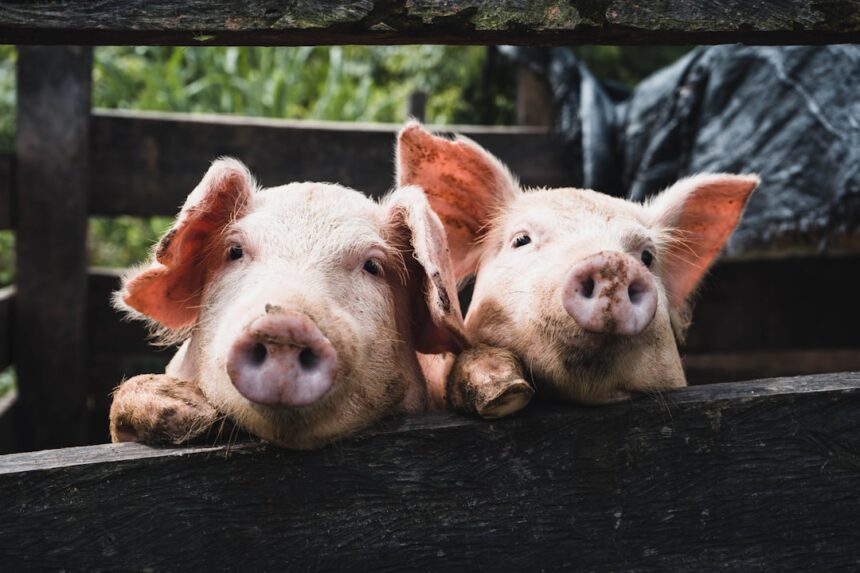
World map showing animal health funding gaps by region with statistics overlayIllustrative image · Photo by Kenneth Schipper on Unsplash (Unsplash License)
Ministers from 45 countries unite behind urgent initiative to address $29.4 billion animal health funding gap. WOAH report warns inadequate investment threatens pandemic preparedness globally. — Photo by Kenneth Schipper on Unsplash (Unsplash License)
SHARE
3 min read|585 words

Ministers from dozens of countries have united behind an urgent global initiative to increase investment in animal health services, following the release of a new World Organisation for Animal Health (WOAH) report documenting a dangerous funding shortfall that threatens pandemic preparedness and food security worldwide.

Contents
      • Global Animal Health Funding Gap by Region
  • Critical Infrastructure Deficits Expose Global Vulnerabilities
  • Ministerial Commitment Targets Surveillance Strengthening
  • Economic Impact Extends Beyond Health Sector
    • Key takeaways
  • Frequently asked questions
    • Why is animal health investment critical for preventing pandemics?
    • Which regions face the largest animal health funding gaps?
    • What specific improvements will the ministerial commitment deliver?
$29.4 billion
annual global investment gap in animal health systems, according to WOAH analysis

Global Animal Health Funding Gap by Region

Annual investment shortfall in billions USD, 2024

Sub-Saharan Africa
$12.8B
South Asia
$8.5B
Latin America
$5.2B
East Asia
$2.9B

Source: WOAH Global Animal Health Investment Report, 2024 | Georgian Medical Journal News

Critical Infrastructure Deficits Expose Global Vulnerabilities

The WOAH assessment reveals that 78% of low- and middle-income countries lack adequate veterinary surveillance systems to detect emerging disease threats. The organisation’s Director-General, Dr. Monique Éloit, warned that this gap represents “a ticking time bomb for global health security”.

Submit Your Paper
GMJ_Submit_Banner

The report emphasises that approximately 75% of emerging infectious diseases originate in animals before jumping to humans. Without robust One Health surveillance networks, the world remains vulnerable to the next pandemic outbreak, according to the analysis.

🎙️ Related Podcast Episodes
🎧 #25 | WHO Warns: Childhood Hearing Loss Must Be Addressed Early · 19m
🎧 #13 | Six Years After COVID-19: Is the World Better Prepared for the Next Pandemic? · 19m
🎧 #54 | GMJ Podcast | The Blueprint of a Medical Journal: Designing an Open-Access Scientific Platform · 19m
🎬 The Blueprint of a Medical Journal | How GMJ Was Built
🎧 #53 | GMJ Podcast | Palliative Care in Georgia — Health System Gaps, Access Barriers, and Policy Implications · 16m

Ministerial Commitment Targets Surveillance Strengthening

Ministers from 45 countries, including representatives from the World Health Organization, Food and Agriculture Organization, and WOAH, endorsed a joint declaration committing to strengthen animal health systems within their national budgets by 2027.

The declaration specifically calls for establishing early warning systems for zoonotic diseases and improving laboratory diagnostic capacity in rural areas. France’s Minister of Agriculture, Marc Fesneau, stated that the initiative represents “the most comprehensive global commitment to animal health investment in decades”.

Related initiatives include expanding global health surveillance networks and strengthening scientific collaboration on emerging disease threats.

Economic Impact Extends Beyond Health Sector

The funding shortfall affects food security for over 2.3 billion people who depend on livestock for their livelihoods, according to FAO estimates. Poor animal health systems contribute to productivity losses exceeding $300 billion annually in developing countries, the WOAH report documents.

The economic analysis shows that every dollar invested in veterinary public health generates approximately $4.50 in economic returns through prevented disease outbreaks and improved agricultural productivity.

Countries with robust animal health systems experienced 65% fewer zoonotic disease outbreaks over the past decade compared to those with inadequate veterinary infrastructure.

— Dr. Monique Éloit, WOAH Director-General (WOAH Global Health Report, 2024)

Key takeaways

  • 45 countries commit to increasing animal health investment by 2027 following WOAH warning
  • $29.4 billion annual funding gap threatens pandemic preparedness in vulnerable regions
  • 75% of emerging infectious diseases originate in animals, requiring strengthened surveillance
  • Every $1 invested in veterinary public health generates $4.50 in economic returns

Frequently asked questions

Why is animal health investment critical for preventing pandemics?

Approximately 75% of emerging infectious diseases, including COVID-19, SARS, and MERS, originate in animals before spreading to humans. Strong veterinary surveillance systems can detect these threats early, before they become global health emergencies.

Which regions face the largest animal health funding gaps?

Sub-Saharan Africa faces the largest shortfall at $12.8 billion annually, followed by South Asia at $8.5 billion. These regions also have the highest burden of zoonotic diseases and livestock-dependent populations.

What specific improvements will the ministerial commitment deliver?

The 45-country declaration focuses on establishing early warning systems for zoonotic diseases, improving laboratory diagnostic capacity in rural areas, and integrating animal health surveillance with human health systems by 2027.

The ministerial commitment represents a watershed moment for global health security, with the potential to prevent future pandemics through strengthened animal health systems. Implementation success will depend on sustained political will and the ability to translate commitments into concrete budget allocations over the coming years.

Source: Ministers from around the world unite behind global push to invest in animal health as new WOAH report warns of dangerous funding gap

Was this article helpful?

Disclaimer. This article is health journalism intended for general information and education. It is not medical advice and is not a substitute for professional diagnosis or treatment. Always consult a qualified healthcare provider about your individual circumstances. Full disclaimer →

Related Coverage

IOM Launches Global Calendar of Health and Migration Events for 2026Jul 7, 2026
WOAH Calls for Standardised Trade Rules as Countries Deploy HPAI Vaccination StrategiesJul 7, 2026
Eight Former CDC Directors Warn Against Dismantling PEPFAR ProgramJul 7, 2026
Pharmaceutical companies exploit 'innovation' claims to extend drug monopolies, new analysis revealsJul 7, 2026
PG
Written by
Prof. Giorgi Pkhakadze, MD, MPH, PhD
Editor-in-Chief, GMJ News
Full profile →  ·  ORCID 0000-0001-7609-4515
Medical disclaimer. This article is health journalism intended for general information. It is not medical advice and is not a substitute for consultation with a qualified healthcare professional. Always seek your physician's advice regarding any medical condition.
Medically reviewed by Prof. Giorgi Pkhakadze, MD, MPH, PhD. Spotted an error? Contact the editorial team.
Get the GMJ News digest
Evidence-based health journalism in your inbox. No spam; unsubscribe anytime.
TAGGED:animal healthglobal health securitypandemic preparednessWOAHzoonotic diseases
Share This Article
Facebook LinkedIn Bluesky Copy Link Print
GMJ
ByGMJ Policy Desk
Follow:
GMJ Policy Desk is part of GMJ News, the newsroom of the Georgian Medical Journal (gmj.ge), published by the Public Health Institute of Georgia. Every article is editorially reviewed before publication.
Leave a Comment Leave a Comment

Leave a Reply Cancel reply

Your email address will not be published. Required fields are marked *

Submit Your Paper →

Georgia's peer-reviewed open-access medical journal. No APC until January 2027.
Submit Manuscript →
IOM Launches Global Calendar of Health and Migration Events for 2026

The International Organization for Migration unveils its comprehensive 2026 calendar coordinating international…

WOAH Calls for Standardised Trade Rules as Countries Deploy HPAI Vaccination Strategies

WOAH issues new guidance for harmonised international trade standards as 40+ countries…

Eight Former CDC Directors Warn Against Dismantling PEPFAR Program

Eight former CDC directors warn against State Department plans to restructure PEPFAR,…

Submit Your Paper to GMJ

No APC until January 2027.
Submit Manuscript →

You Might Also Like

Infographic showing IOM's global governance structure and member country participationIllustrative image · Photo by Nothing Ahead on Pexels (Pexels License)
Global HealthPolicy & Systems

IOM Governance Structure Reinforces Global Migration Health Framework

By
GMJ Policy Desk
20/06/2026
Children in climate-affected area receiving medical care from healthcare workersIllustrative image · Photo by B. Aristotlè Guweh Jr on Pexels (Pexels License)
Global HealthPolicy & Systems

Climate Crisis Threatens 2.2 Billion Children’s Health and Wellbeing, UNICEF Reports

By
GMJ Policy Desk
21/06/2026
Children walking to damaged school building after climate disaster, symbolizing educational disruption
Global HealthPolicy & Systems

Climate Change Disrupts Education for 617 Million Children in Poverty Worldwide

By
GMJ Policy Desk
12/06/2026
Infographic showing global blood donation statistics and safety improvements by WHOIllustrative image · Photo by Nguyễn Hiệp on Unsplash (Unsplash License)
Global HealthPolicy & Systems

Global blood safety improves but access gaps persist as WHO reports 85% voluntary donations

By
GMJ Policy Desk
28/06/2026
Facebook Twitter Youtube Instagram
Company
  • Privacy Policy
  • Contact US
  • GMJ Journal
  • Submit Manuscript
  • Editorial Team
  • Register at GMJ
  • Terms of Use

Subscribe to GMJ News — Click here

Join Community
© 2026 Georgian Medical Journal (GMJ). Published by the Public Health Institute of Georgia (PHIG). All rights reserved.
Welcome Back!

Sign in to your account

Username or Email Address
Password

Lost your password?

Not a member? Sign Up