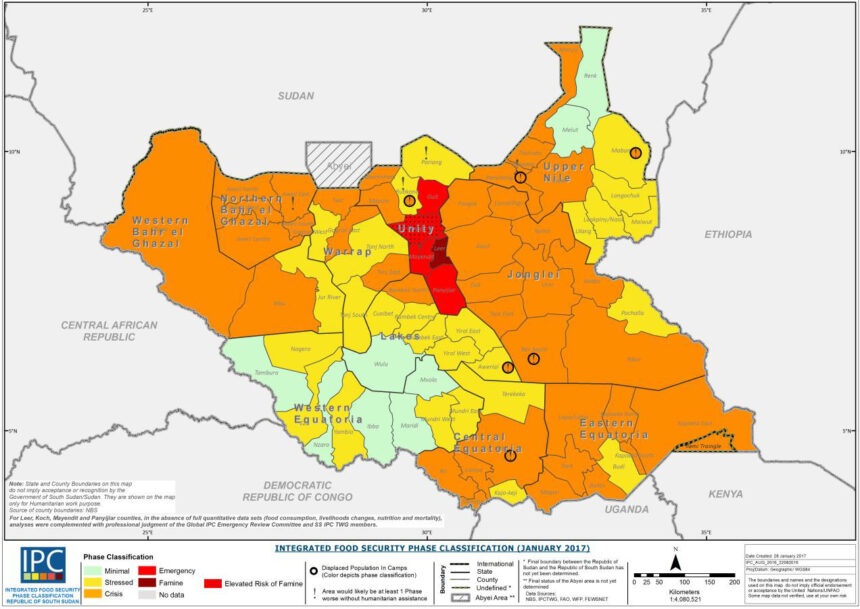
South Sudan is experiencing a severe humanitarian emergency that extends far beyond simple food shortage. With 7.8 million people—nearly two-thirds of the nation’s population—facing acute food insecurity, the crisis represents a convergence of multiple destabilizing factors. UNICEF’s latest assessment reveals that 2.2 million children have developed acute malnutrition, surpassing critical international health thresholds.
The World Health Organization has classified the situation as a Grade 3 emergency, the UN system’s highest designation. Rather than a single cause, the crisis stems from compounding challenges: ongoing conflict disrupts agricultural systems and supply chains, climate shocks devastate food production, and economic instability prevents families from purchasing available food. Health officials warn that without immediate intervention, the situation risks deteriorating into widespread famine conditions affecting vulnerable populations across the region.
Read the full article on GMJ Newsroom.
Was this article helpful?