By using this site, you agree to the Privacy Policy and Terms of Use.
Accept
GMJ NewsGMJ NewsGMJ News
  • Latest News
    • GMJ Briefs
  • Podcast & Media
    • Podcast Episodes
    • GMJ Audio
    • GMJ Videos
  • Research Digest
    • New Studies
    • Georgian Research
    • Data & Numbers
  • Policy & Systems
    • Health Policy
    • Quality & Safety
    • Migration & Health
    • Global Health
  • Practice
    • Clinical Updates
    • Case Discussions
    • Pharmacy & Prescribing
    • Ingredients A-Z
  • Perspectives
    • Editorial
    • Explainers
    • Voices
    • Letters
  • GMJ Articles
    • Vol. 1 Issue 2 (2026)
    • Vol. 1 Issue 1 (2026)
    • Pre-Launch Articles (2025)
  • Read the Journal →
  • About GMJ News
Notification Show More
Font ResizerAa
GMJ NewsGMJ News
Font ResizerAa
  • Latest News
    • GMJ Briefs
  • Podcast & Media
    • Podcast Episodes
    • GMJ Audio
    • GMJ Videos
  • Research Digest
    • New Studies
    • Georgian Research
    • Data & Numbers
  • Policy & Systems
    • Health Policy
    • Quality & Safety
    • Migration & Health
    • Global Health
  • Practice
    • Clinical Updates
    • Case Discussions
    • Pharmacy & Prescribing
    • Ingredients A-Z
  • Perspectives
    • Editorial
    • Explainers
    • Voices
    • Letters
  • GMJ Articles
    • Vol. 1 Issue 2 (2026)
    • Vol. 1 Issue 1 (2026)
    • Pre-Launch Articles (2025)
  • Read the Journal →
  • About GMJ News
Follow US
GMJ News > Practice > Clinical Updates > How Coffee Brewing Method Affects Cholesterol: The Science Behind Diterpenes and Filters
Clinical UpdatesExplainersNew StudiesPerspectivesPracticeResearch Digest

How Coffee Brewing Method Affects Cholesterol: The Science Behind Diterpenes and Filters

GMJ
Last updated: 12/07/2026 13:29
By
GMJ Practice Desk
Share
8 Min Read
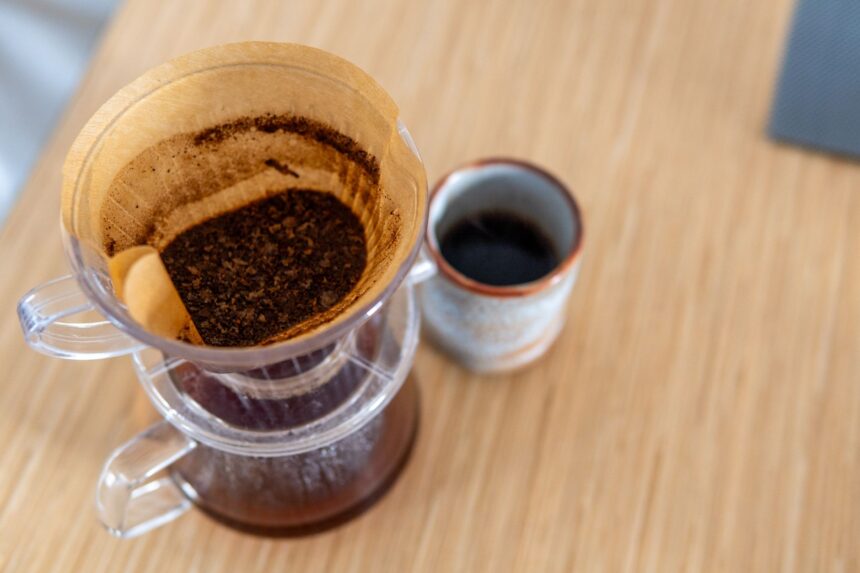
Comparative chart showing cafestol content in boiled, French press, espresso, and filtered coffee brewing methodsIllustrative image · Photo by Israyosoy S. on Pexels (Pexels License)
Coffee's effect on cholesterol depends entirely on brewing method. Unfiltered coffee—French press, espresso, Turkish—allows diterpenes (cafestol and kahweol) to reach your cup and raise LDL by 5.4 mg/dL on average. Paper-filtered methods eliminate this effect. — Photo by Israyosoy S. on Pexels (Pexels License)
SHARE
5 min read|988 words
✓ Medically reviewed by Prof. Giorgi Pkhakadze, MD, MPH, PhD · ORCID 0000-0001-7609-4515

🟢 Strong Evidence

Contents
    • Key takeaways
      • Cafestol Content by Brewing Method
  • The Molecular Mechanism: How Diterpenes Raise Cholesterol
  • Filter Material Is the Decisive Factor
  • Clinical Implications: Who Should Avoid Unfiltered Coffee
    • What this means
  • Frequently asked questions
    • Does instant coffee raise cholesterol?
    • What if I love French press coffee and have high cholesterol?
    • Are there other coffee compounds that affect cholesterol?

Coffee contains two naturally occurring compounds—cafestol and kahweol—that significantly affect blood cholesterol levels, but whether your cup raises your LDL depends almost entirely on your brewing method. According to a meta-analysis by Jee and colleagues published in the American Journal of Epidemiology (2001), unfiltered coffee raised total and LDL cholesterol in a dose-dependent manner, while filtered coffee showed essentially no effect across fourteen pooled randomized controlled trials.

Key takeaways

  • Cafestol and kahweol, lipid-soluble compounds in coffee beans, activate liver receptors that suppress cholesterol conversion to bile acids, raising blood LDL
  • Paper filters trap diterpenes effectively; metal mesh filters in French presses and espresso machines do not
  • Unfiltered coffee can raise LDL by 5.4 mg/dL on average, according to Cai and colleagues (European Journal of Clinical Nutrition, 2012), with the largest effects in unfiltered brewing methods

Cafestol Content by Brewing Method

Concentration in mg/L across common coffee preparation techniques, 2025 Swedish workplace analysis

Boiled coffee
939 mg/L
French press
~800 mg/L
Espresso
~675 mg/L
Workplace machines
176 mg/L
Filtered coffee

~0-5 mg/L

Source: Orrje et al., Nutrition, Metabolism and Cardiovascular Diseases, 2025 | GMJ News

Submit Your Paper
GMJ_Submit_Banner

The Molecular Mechanism: How Diterpenes Raise Cholesterol

Cafestol and kahweol are not oils themselves, but they are carried into brewed coffee via the coffee oil—the lipid fraction extracted from ground beans when hot water passes through. Once absorbed in the intestine and reaching the liver, cafestol binds to a nuclear receptor called FXR (farnesoid X receptor), which suppresses expression of CYP7A1, the rate-limiting enzyme responsible for converting cholesterol into bile acids.

🎙️ Related Podcast Episodes
🎧 #2 Ethical and Legal Frameworks for Including Critically Ill Patients in Clinical Research | GMJ Official Podcast · 17m

With CYP7A1 activity reduced, the liver’s capacity to clear LDL cholesterol from the bloodstream decreases, resulting in elevated circulating LDL. This mechanism has been confirmed across decades of rigorous research and is not disputed in the lipidology literature. The evidence from controlled trials shows the relationship is both dose-dependent and reproducible.

Filter Material Is the Decisive Factor

The critical variable determining diterpene concentration in your cup is filter material. Paper filters—used in drip machines and pour-over methods—mechanically trap diterpenes and other lipophilic compounds before they reach the beverage. Metal mesh filters, found in French presses, moka pots, espresso baskets, and percolators, have pore sizes that allow diterpenes to pass through freely.

A 2025 analysis by Orrje and colleagues in Nutrition, Metabolism and Cardiovascular Diseases measured cafestol across Swedish workplace coffee systems. Boiled coffee contained 939 mg/L cafestol, while workplace brewing machines (typically filter-equipped) averaged 176 mg/L. This demonstrates that even semi-industrial filtration reduces diterpene load substantially. Traditional paper-filtered home brewing reduces it nearly to zero.

Unfiltered coffee raised LDL cholesterol by an average of 5.4 mg/dL across twelve randomized controlled trials involving 1,017 subjects, with the largest effects in unfiltered brewing methods, while paper-filtered coffee showed no clinically significant effect.

— Cai and colleagues, European Journal of Clinical Nutrition (2012)

Clinical Implications: Who Should Avoid Unfiltered Coffee

For individuals with baseline LDL elevation or familial hypercholesterolaemia, the cumulative effect of regular unfiltered coffee consumption may warrant dietary adjustment. A 5.4 mg/dL rise in LDL may appear modest in isolation, but for patients already on statin therapy or managing lipid goals, even incremental increases can influence cardiovascular risk stratification.

The evidence suggests that coffee drinkers concerned about cholesterol have a straightforward intervention available: switch to paper-filtered brewing methods. Espresso, French press, and Turkish coffee retain high diterpene concentrations. Drip machines, pour-overs, and AeroPress (which uses a paper microfilter) remove them effectively. This simple change eliminates the cholesterol-raising effect while preserving the antioxidant and polyphenol benefits that make coffee consumption cardioprotective in other contexts.

What this means

For patients: If you have elevated cholesterol, choose paper-filtered coffee (drip, pour-over) or espresso machines with paper filters. Avoid French press, boiled, or Turkish coffee if LDL is a concern. You can continue drinking filtered coffee without lipid consequences.
For clinicians: When taking dietary history from patients with dyslipidaemia, ask specifically about coffee preparation method. This single question may identify a modifiable risk factor worth addressing before intensifying pharmacotherapy. Document the finding in chart notes.
For policymakers: Public health messaging on coffee and heart health should distinguish between brewing methods rather than making blanket recommendations. Educational campaigns targeting high-risk populations (e.g., those with familial hypercholesterolaemia or recurrent cardiovascular events) could highlight the filter advantage.

Frequently asked questions

Does instant coffee raise cholesterol?

Instant coffee is typically produced by first brewing coffee, then filtering and drying the liquid. The filtration step removes most diterpenes. Instant coffee therefore contains negligible amounts of cafestol and kahweol, making it cholesterol-neutral. However, read product labels to confirm no unfiltered coffee solids have been added.

What if I love French press coffee and have high cholesterol?

The evidence does not require total elimination of unfiltered coffee. A single cup of French press (approximately 200 mL) would deliver roughly 160 mg of cafestol. If you consume one cup occasionally rather than daily, the lipid impact will be considerably smaller than daily consumption. Discuss frequency and quantity with your clinician based on your individual lipid targets and cardiovascular risk.

Are there other coffee compounds that affect cholesterol?

Cafestol and kahweol are the primary diterpenes responsible for the cholesterol-raising effect. Coffee also contains chlorogenic acids, polyphenols, and other bioactive compounds with antioxidant and anti-inflammatory properties. These compounds may confer cardiovascular benefits independent of the diterpene effect. The net health impact of coffee depends on the balance between these competing effects.

The science of coffee and cholesterol illustrates a broader principle in nutritional epidemiology: food composition and preparation method matter as much as the ingredient itself. For the 2+ billion daily coffee drinkers worldwide, understanding this distinction offers a practical, evidence-based pathway to enjoying their preferred beverage without compromising lipid management. As research into coffee’s metabolic effects continues, this fundamental mechanism—and the simple solution of filtration—will likely remain central to clinical guidance.

Source: Jee et al., American Journal of Epidemiology (2001); Cai et al., European Journal of Clinical Nutrition (2012); Orrje et al., Nutrition, Metabolism and Cardiovascular Diseases (2025)

Was this article helpful?

Disclaimer. This article is health journalism intended for general information and education. It is not medical advice and is not a substitute for professional diagnosis or treatment. Always consult a qualified healthcare provider about your individual circumstances. Full disclaimer →

Related Coverage
Why Spinach Iron Doesn't Count Like Meat Iron: The Bioavailability GapJul 16, 2026
Muscle rebuilds in three months, but bone takes twice as long—and protein supplements don't speed it upJul 16, 2026
U-shaped sleep curve reveals distinct aging patterns: short sleep drives aging, long sleep signals underlying diseaseJul 15, 2026
How Brew Time Transforms Tea Chemistry: What Science Reveals About Steeping DurationJul 15, 2026
PG
Written by
Prof. Giorgi Pkhakadze, MD, MPH, PhD
Editor-in-Chief, GMJ News
Full profile →  ·  ORCID 0000-0001-7609-4515
Medical disclaimer. This article is health journalism intended for general information. It is not medical advice and is not a substitute for consultation with a qualified healthcare professional. Always seek your physician's advice regarding any medical condition.
Medically reviewed by Prof. Giorgi Pkhakadze, MD, MPH, PhD. Spotted an error? Contact the editorial team.

Get the GMJ News digest
Evidence-based health journalism in your inbox. No spam; unsubscribe anytime.
TAGGED:cardiovascular healthcholesterolcoffeeLDLNutrition
Share This Article
Facebook LinkedIn Bluesky Copy Link Print
GMJ
ByGMJ Practice Desk
Follow:
GMJ Practice Desk is part of GMJ News, the newsroom of the Georgian Medical Journal (gmj.ge), published by the Public Health Institute of Georgia. Every article is editorially reviewed before publication.
Leave a Comment Leave a Comment

Leave a Reply Cancel reply

Your email address will not be published. Required fields are marked *

Submit Your Paper →

Georgia's peer-reviewed open-access medical journal. No APC until January 2027.
Submit Manuscript →
Why Spinach Iron Doesn’t Count Like Meat Iron: The Bioavailability Gap

A cup of spinach contains 6 mg of iron but only 2–20%…

Muscle rebuilds in three months, but bone takes twice as long—and protein supplements don’t speed it up

Muscle tissue rebuilds completely every three months, while bone takes up to…

U-shaped sleep curve reveals distinct aging patterns: short sleep drives aging, long sleep signals underlying disease

A Nature study of 500,000 UK adults reveals a U-shaped relationship between…

Submit Your Paper to GMJ

No APC until January 2027.
Submit Manuscript →

You Might Also Like

Illustration showing muscle protein synthesis pathways: mechanical tension, metabolic stress, and mTOR signalling cascade
New Studies

How Muscle Really Grows: Exercise Triggers Protein Synthesis, Not Just Microscopic Tears

By
GMJ Research Desk
19/05/2026
Scientific diagram showing creatine supplementation timing and performance benefits
New StudiesResearch Digest

New Three-Day Creatine Loading Protocol Shows Promise in Small Trial

By
GMJ Research Desk
24/05/2026
International survey on cardio-oncology training presented at ESC Cardio-Oncology 2026 conferenceIllustrative image · Photo by Thirdman on Pexels (Pexels License)
Clinical UpdatesHealth PolicyPolicy & SystemsPractice

International Survey Reveals Critical Gaps in Cardio-Oncology Training Despite Rising Clinical Demand

By
GMJ Practice Desk
14/07/2026
Nurse speaking compassionately with psychiatric patient in hospital setting
Clinical UpdatesPractice

Strong nurse-patient relationships reduce psychiatric hospital stays, UK study finds

By
GMJ Practice Desk
10/06/2026
Facebook Twitter Youtube Instagram
Company
  • Privacy Policy
  • Contact US
  • GMJ Journal
  • Submit Manuscript
  • Editorial Team
  • Register at GMJ
  • Terms of Use

Subscribe to GMJ News — Click here

Join Community
© 2026 Georgian Medical Journal (GMJ). Published by the Public Health Institute of Georgia (PHIG). All rights reserved.
Welcome Back!

Sign in to your account

Username or Email Address
Password

Lost your password?

Not a member? Sign Up