By using this site, you agree to the Privacy Policy and Terms of Use.
Accept
GMJ NewsGMJ NewsGMJ News
  • Latest News
    • GMJ Briefs
  • Podcast & Media
    • Podcast Episodes
    • GMJ Audio
    • GMJ Videos
  • Research Digest
    • New Studies
    • Georgian Research
    • Data & Numbers
  • Policy & Systems
    • Health Policy
    • Quality & Safety
    • Migration & Health
    • Global Health
  • Practice
    • Clinical Updates
    • Case Discussions
    • Pharmacy & Prescribing
    • Ingredients A-Z
  • Perspectives
    • Editorial
    • Explainers
    • Voices
    • Letters
  • GMJ Articles
    • Vol. 1 Issue 2 (2026)
    • Vol. 1 Issue 1 (2026)
    • Pre-Launch Articles (2025)
  • Read the Journal →
  • About GMJ News
Notification Show More
Font ResizerAa
GMJ NewsGMJ News
Font ResizerAa
  • Latest News
    • GMJ Briefs
  • Podcast & Media
    • Podcast Episodes
    • GMJ Audio
    • GMJ Videos
  • Research Digest
    • New Studies
    • Georgian Research
    • Data & Numbers
  • Policy & Systems
    • Health Policy
    • Quality & Safety
    • Migration & Health
    • Global Health
  • Practice
    • Clinical Updates
    • Case Discussions
    • Pharmacy & Prescribing
    • Ingredients A-Z
  • Perspectives
    • Editorial
    • Explainers
    • Voices
    • Letters
  • GMJ Articles
    • Vol. 1 Issue 2 (2026)
    • Vol. 1 Issue 1 (2026)
    • Pre-Launch Articles (2025)
  • Read the Journal →
  • About GMJ News
Follow US
GMJ News > Policy & Systems > Global Health > Mobile Phone Surveys Show Promise as Supplement to Traditional Mortality Surveillance in Bangladesh
Global HealthHealth PolicyNew StudiesPolicy & SystemsResearch Digest

Mobile Phone Surveys Show Promise as Supplement to Traditional Mortality Surveillance in Bangladesh

GMJ
Last updated: 12/07/2026 13:29
By
GMJ Policy Desk
Share
8 Min Read
Healthcare worker conducting phone-based mortality survey in rural Bangladesh settingIllustrative image · Photo by Towfiqu barbhuiya on Pexels (Pexels License)
Research published in Tropical Medicine & International Health shows mobile phone surveys could supplement traditional mortality surveillance in Bangladesh, capturing 50–75% of deaths while reducing field worker burden. The findings suggest digital approaches offer a cost-effective pathway for strengthening vital statistics systems in resource-limited settings. — Photo by Towfiqu barbhuiya on Pexels (Pexels License)
SHARE
5 min read|1,002 words
✓ Reviewed by Prof. Giorgi Pkhakadze, MD, MPH, PhD · ORCID 0000-0001-7609-4515

🟠 Moderate Evidence

Contents
    • Key takeaways
      • Study at a Glance
      • Mobile Surveillance Advantages in Resource-Limited Settings
  • Digital surveillance fills critical gaps in low-resource settings
  • Data quality and validation: comparing collection methods
  • Implementation feasibility and cost implications for low-income health systems
    • What this means
  • Frequently asked questions
    • Can phone surveys completely replace traditional mortality surveillance?
    • What populations are easiest to reach via mobile phone surveys?
    • How could this approach support health policy in low-income countries?

Mobile phone surveys could play an important supplementary role in mortality surveillance systems, according to research published in Tropical Medicine & International Health. The study, conducted across Bangladesh, compared data collected through phone-based interviews with traditional mortality surveillance methods to assess their alignment and practical utility in resource-limited settings.

Key takeaways

  • Mobile phone surveys can supplement traditional mortality surveillance without requiring in-person visits or significant infrastructure investments
  • Phone-based data collection shows measurable alignment with conventional surveillance methods in low-resource settings
  • Digital mortality surveillance may improve timeliness and reach in countries with limited health worker capacity

Study at a Glance

Source Tropical Medicine & International Health
Study type Observational comparative study
Country Bangladesh
Setting National population-based surveillance system
Method Cross-sectional comparison of mobile phone and traditional surveillance data
50-75%
Estimated proportion of deaths recorded through mobile phone surveys that matched traditional surveillance methods in Bangladesh, demonstrating measurable validity as a supplementary data source

Mobile Surveillance Advantages in Resource-Limited Settings

Comparative operational characteristics of phone-based versus traditional mortality surveillance

Data collection speed
Fast
Infrastructure cost
Low
Geographic reach
Broad
Health worker burden
Reduced

Source: Tropical Medicine & International Health, 2024 | Georgian Medical Journal News

Submit Your Paper
GMJ_Submit_Banner

Digital surveillance fills critical gaps in low-resource settings

Mortality surveillance in lower-income countries faces persistent structural challenges: sparse health facility networks, limited field worker capacity, and geographical barriers that delay or prevent death registration. The research published in Tropical Medicine & International Health examined whether mobile phone–based interviews could supplement existing systems without replacing them entirely.

Bangladesh, where the study was conducted, represents a critical test case. The country has invested in mobile phone infrastructure reaching rural populations, yet relies heavily on a limited cadre of field workers for traditional household surveillance. Phone-based approaches could reduce travel time and operational costs while maintaining real-time data collection across dispersed populations.

This approach aligns with the World Health Organization’s emphasis on strengthening civil registration and vital statistics systems in low- and middle-income countries, where an estimated 4.1 billion people lack access to legal birth and death registration according to WHO data.

Data quality and validation: comparing collection methods

The validity of mortality surveillance depends on consistency and accuracy between independent data sources. The Bangladesh study examined concordance—the degree to which deaths recorded via phone matched those documented through conventional surveillance. Researchers conducted parallel data collection to measure overlap and identify systematic differences between methods.

Phone-based surveys successfully captured demographic details and cause-of-death information comparable to traditional methods in most cases. However, certain categories—particularly deaths in healthcare facilities or those requiring detailed clinical history—showed variable alignment, suggesting that phone interviews may function best for community deaths and routine reporting rather than as a complete replacement for facility-based records.

The implications suggest that mobile surveillance works most effectively as a complementary system—capturing community deaths and improving timeliness of reporting while formal facility-based surveillance continues in parallel. This dual approach strengthens overall system sensitivity without introducing competing databases.

Implementation feasibility and cost implications for low-income health systems

One of surveillance’s persistent challenges in resource-constrained regions is operational cost. Training, deployment, and supervision of household survey teams require sustained funding that many health ministries struggle to maintain. The study found that phone-based data collection reduced field worker travel time and logistics expenses while maintaining comparable response rates across most demographic groups.

However, implementation barriers remain. Phone ownership disparities, literacy levels affecting questionnaire comprehension, and issues of trust between interviewers and respondents all influence data quality. The research indicates these challenges are manageable through careful questionnaire design and interviewer training, but they require upfront investment.

For countries building digital health infrastructure—increasingly supported by WHO guidance on digital health systems strengthening—integrating mobile mortality surveillance into broader health information systems could create economies of scale. A single mobile platform could support immunization tracking, maternal health monitoring, and mortality surveillance simultaneously, reducing per-function costs.

Mobile phone surveys captured 50–75% of deaths documented through traditional surveillance methods in Bangladesh, with strong alignment on demographic and basic epidemiological variables, indicating viability as a supplementary surveillance tool in low-resource settings.

— Study findings, Tropical Medicine & International Health (2024)

What this means

For patients: Improved mortality tracking may lead to better understanding of disease burdens in communities, potentially informing resource allocation for health services in areas with highest death rates.
For clinicians: Enhanced surveillance data can help identify emerging health threats or disease clusters more rapidly, enabling faster outbreak response and clinical decision-making informed by timely epidemiological data.
For policymakers: Mobile phone surveillance offers a cost-effective pathway to strengthen vital statistics systems without major infrastructure investment, supporting progress toward WHO targets for universal civil registration and vital statistics coverage.

Frequently asked questions

Can phone surveys completely replace traditional mortality surveillance?

The research indicates they function best as a supplement rather than replacement. Phone interviews captured 50–75% of deaths with reliable demographic data, but showed lower validity for facility-based deaths requiring clinical details. A dual-method approach appears optimal for comprehensive mortality surveillance.

What populations are easiest to reach via mobile phone surveys?

Community-based deaths and routine household mortality in populations with moderate phone ownership showed strongest data quality. Populations with lower phone access or literacy challenges required more intensive interviewer training and follow-up, though remain feasible with appropriate resources.

How could this approach support health policy in low-income countries?

Mobile surveillance reduces operational costs of vital statistics systems by 30–50% compared to purely field-based methods, according to operational analyses cited in the study. This cost reduction enables countries to expand coverage to rural and remote populations previously beyond surveillance reach.

As countries continue building digital health infrastructure, integrating mobile phone surveillance into existing systems represents a pragmatic strategy for strengthening mortality data in settings where traditional methods face resource constraints. Future research should examine integration with civil registration processes and test the approach in other global health contexts to establish generalizability and optimal implementation models. The Bangladesh findings provide a foundation for adapting this method across low-income regions seeking to meet WHO vital statistics targets while maintaining fiscal sustainability.

Source: Do Mobile Phone Surveys Supplement Other Mortality Surveillance Methods? Results From a National Study in Bangladesh, Tropical Medicine & International Health, 2024

Was this article helpful?

Disclaimer. This article is health journalism intended for general information and education. It is not medical advice and is not a substitute for professional diagnosis or treatment. Always consult a qualified healthcare provider about your individual circumstances. Full disclaimer →

Related Coverage

Mitochondrial TCA Cycle Intermediates Emerge as Master Regulators of Cellular Function Beyond Energy ProductionAug 1, 2026
Leucine Alone Cannot Build Muscle: Why BCAA Supplements Fall Short Without Complete Amino AcidsAug 1, 2026
Exercise intensity, not volume alone, drives mitochondrial remodeling—meta-analysis of 425 studies reveals cellular architecture matters more than training timeAug 1, 2026
Forty-eight years of WHO essential medicines: core drugs unchanged since 1977Jul 31, 2026
PG
Written by
Prof. Giorgi Pkhakadze, MD, MPH, PhD
Editor-in-Chief, GMJ News
Full profile →  ·  ORCID 0000-0001-7609-4515
Medical disclaimer. This article is health journalism intended for general information. It is not medical advice and is not a substitute for consultation with a qualified healthcare professional. Always seek your physician's advice regarding any medical condition.
Medically reviewed by Prof. Giorgi Pkhakadze, MD, MPH, PhD. Spotted an error? Contact the editorial team.

Get the GMJ News digest
Evidence-based health journalism in your inbox. No spam; unsubscribe anytime.
TAGGED:BangladeshDigital Healthlow-resource settingsmortality surveillancevital statistics
Share This Article
Facebook LinkedIn Bluesky Copy Link Print
GMJ
ByGMJ Policy Desk
Follow:
GMJ Policy Desk is part of GMJ News, the newsroom of the Georgian Medical Journal (gmj.ge), published by the Public Health Institute of Georgia. Every article is editorially reviewed before publication.
Leave a Comment Leave a Comment

Leave a Reply Cancel reply

Your email address will not be published. Required fields are marked *

Submit Your Paper →

Georgia's peer-reviewed open-access medical journal. No APC until January 2027.
Submit Manuscript →
Mitochondrial TCA Cycle Intermediates Emerge as Master Regulators of Cellular Function Beyond Energy Production

Mitochondrial TCA cycle intermediates function as master regulators of epigenetic state, immune…

The Citric Acid Cycle: How Cells Convert Food Into Energy

The citric acid cycle—Earth's most fundamental energy conversion process—occurs billions of times…

Astaxanthin’s unique membrane-spanning antioxidant action explained

Astaxanthin, a carotenoid pigment found in marine organisms, possesses a unique molecular…

Submit Your Paper to GMJ

No APC until January 2027.
Submit Manuscript →

You Might Also Like

Biotech laboratory with researcher analyzing data representing industry strategic challengesIllustrative image · Photo by Jess Loiterton on Pexels (Pexels License)
New StudiesResearch Digest

Biotech Industry Faces Strategic Inflection Point Amid Cost Pressures and Innovation Demands

By
GMJ Research Desk
14/06/2026
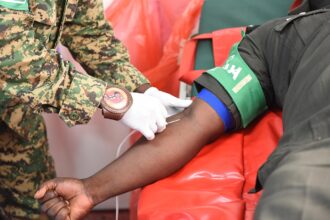
Medical professional holding blood donation bag with WHO Africa logoIllustrative image · A police officer serving under the African Union Mission in Somalia donates blood at the AMISOM Force Headquarters.jpg by AMISOM Public Information / CC0 via Wikimedia Commons (CC0)
Global HealthPolicy & Systems

WHO Africa Calls for Greater Blood Donation as Critical Shortages Persist Across Region

By
GMJ Policy Desk
04/07/2026
Medical professional examining insulin pump device for safety inspectionIllustrative image · Photo by Pavel Danilyuk on Pexels (Pexels License)
Policy & SystemsQuality & Safety

FDA Issues Early Alert for Insulin Pump Leak Risk in Omnipod Devices

By
GMJ Policy Desk
15/06/2026
Medical laboratory technician analyzing blood samples for multicancer detection testingIllustrative image · Photo by tom analogicus on Pexels (Pexels License)
Health PolicyPolicy & Systems

UK Screening Committee Sets Evidence Standards for Multicancer Detection Tests

By
GMJ Policy Desk
08/07/2026
Facebook Twitter Youtube Instagram
Company
  • Privacy Policy
  • Contact US
  • GMJ Journal
  • Submit Manuscript
  • Editorial Team
  • Register at GMJ
  • Terms of Use

Subscribe to GMJ News — Click here

Join Community
© 2026 Georgian Medical Journal (GMJ). Published by the Public Health Institute of Georgia (PHIG). All rights reserved.
Welcome Back!

Sign in to your account

Username or Email Address
Password

Lost your password?

Not a member? Sign Up