By using this site, you agree to the Privacy Policy and Terms of Use.
Accept
GMJ NewsGMJ NewsGMJ News
  • Latest News
    • GMJ Briefs
  • Podcast & Media
    • Podcast Episodes
    • GMJ Audio
    • GMJ Videos
  • Research Digest
    • New Studies
    • Georgian Research
    • Data & Numbers
  • Policy & Systems
    • Health Policy
    • Quality & Safety
    • Migration & Health
    • Global Health
  • Practice
    • Clinical Updates
    • Case Discussions
    • Pharmacy & Prescribing
    • Ingredients A-Z
  • Perspectives
    • Editorial
    • Explainers
    • Voices
    • Letters
  • GMJ Articles
    • Vol. 1 Issue 2 (2026)
    • Vol. 1 Issue 1 (2026)
    • Pre-Launch Articles (2025)
  • Read the Journal →
  • About GMJ News
Notification Show More
Font ResizerAa
GMJ NewsGMJ News
Font ResizerAa
  • Latest News
    • GMJ Briefs
  • Podcast & Media
    • Podcast Episodes
    • GMJ Audio
    • GMJ Videos
  • Research Digest
    • New Studies
    • Georgian Research
    • Data & Numbers
  • Policy & Systems
    • Health Policy
    • Quality & Safety
    • Migration & Health
    • Global Health
  • Practice
    • Clinical Updates
    • Case Discussions
    • Pharmacy & Prescribing
    • Ingredients A-Z
  • Perspectives
    • Editorial
    • Explainers
    • Voices
    • Letters
  • GMJ Articles
    • Vol. 1 Issue 2 (2026)
    • Vol. 1 Issue 1 (2026)
    • Pre-Launch Articles (2025)
  • Read the Journal →
  • About GMJ News
Follow US
GMJ News > GMJ Briefs > What Healthcare Professionals Should Know About Next-Generation Membrane Filtration Technology

What Healthcare Professionals Should Know About Next-Generation Membrane Filtration Technology

GMJ
Last updated: 28/07/2026 04:43
By
Prof. Giorgi Pkhakadze
Share
1 Min Read
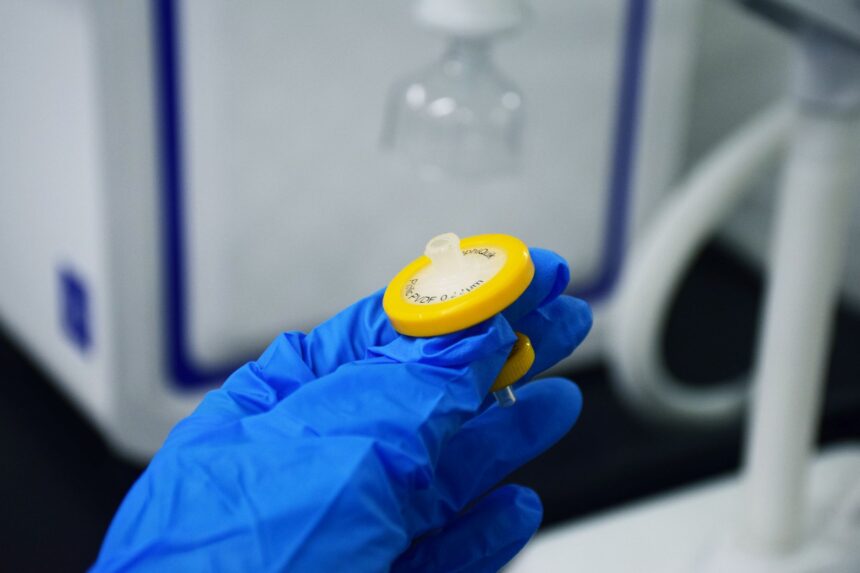
Microscopic view of uniform nanometer-scale membrane pores for water filtration
Revolutionary membrane technology uses perfectly uniform one-nanometer pores to achieve molecular-level water filtration. The nature-inspired design could transform healthcare and industrial water treatment while significantly reducing energy consumption. — Photo by RephiLe water on Pexels (Pexels License)
SHARE
1 min read|136 words

The emergence of uniform one-nanometer membrane technology introduces three essential advances in water treatment relevant to healthcare settings. First, the perfectly uniform pore structure enables molecular-level discrimination, replacing the limitations of conventional size-exclusion-only membranes and improving separation efficiency across pharmaceutical and clinical applications.

Second, the nature-inspired design achieves significant reductions in energy consumption during water treatment—a practical benefit that lowers operational costs while maintaining or improving water quality outcomes. For healthcare facilities managing substantial water treatment demands, this efficiency gain carries both economic and environmental implications.

Third, the technology’s demonstrated applicability across healthcare, pharmaceutical, and textile industries suggests scalability and versatility. Medical facility administrators and quality assurance personnel should monitor this technology’s development, as adoption could enhance compliance with water purity standards while reducing long-term treatment infrastructure costs.

Read the full article on GMJ Newsroom.

Submit Your Paper
GMJ_Submit_Banner

Was this article helpful?

GMJ Brief · Takeaway

📰 Read the full article: Revolutionary one-nanometer membrane achieves molecular-level water filtration →

Related reference
  • Iron · Ingredient
Share This Article
Facebook LinkedIn Bluesky Copy Link Print
GMJ
ByProf. Giorgi Pkhakadze
Follow:
Prof. Giorgi Pkhakadze, MD, MPH, PhD, is Editor-in-Chief of the Georgian Medical Journal and Chair of the Public Health Institute of Georgia (PHIG). He is Professor and Head of the Department of Social and Behavioural Sciences at David Tvildiani Medical University, and Secretary/Treasurer of the UEMS Section of Public Health. ORCID: 0000-0001-7609-4515.

Submit Your Paper →

Georgia's peer-reviewed open-access medical journal. No APC until January 2027.
Submit Manuscript →
Genicular Artery Embolisation Offers Alternative to Knee Replacement for Chronic Pain

Genicular artery embolisation (GAE), a minimally invasive catheter-based procedure, is emerging as…

Australian Hospital Deploys World-First Robotic Surgery Technology for Complex Procedures

Footscray Hospital in Victoria, Australia, has deployed the world's first instance of…

Celebrity Disclosure Renews Focus on Prostate Cancer Screening and Early Detection

Television presenter Jeremy Clarkson's recent disclosure of aggressive prostate cancer and remission…

Submit Your Paper to GMJ

No APC until January 2027.
Submit Manuscript →

You Might Also Like

Hospital finance executives discussing revenue cycle management reforms at healthcare conference

Healthcare Leaders Unite on Revenue Cycle Reform as Affordability Crisis Deepens

By
Prof. Giorgi Pkhakadze
04/07/2026
Amish community healthcare practices and public health policy considerations

Three Essential Lessons Healthcare Providers Must Learn From Amish Community Health Challenges

By
Prof. Giorgi Pkhakadze
07/07/2026
Medical illustration of bispecific antibody targeting cancer cells

What Clinicians Should Know About Bispecific Antibodies: Three Key Insights from ASCO 2026

By
Prof. Giorgi Pkhakadze
04/07/2026
Scientific diagram showing increased driving impairment levels when cannabis edibles are combined with alcohol

What Drivers and Law Enforcement Need to Know About Cannabis-Alcohol Impairment

By
Prof. Giorgi Pkhakadze
10/07/2026
Facebook Twitter Youtube Instagram
Company
  • Privacy Policy
  • Contact US
  • GMJ Journal
  • Submit Manuscript
  • Editorial Team
  • Register at GMJ
  • Terms of Use

Subscribe to GMJ News — Click here

Join Community
© 2026 Georgian Medical Journal (GMJ). Published by the Public Health Institute of Georgia (PHIG). All rights reserved.
Welcome Back!

Sign in to your account

Username or Email Address
Password

Lost your password?

Not a member? Sign Up