By using this site, you agree to the Privacy Policy and Terms of Use.
Accept
GMJ NewsGMJ NewsGMJ News
  • Latest News
    • GMJ Briefs
  • Podcast & Media
    • Podcast Episodes
    • GMJ Audio
    • GMJ Videos
  • Research Digest
    • New Studies
    • Georgian Research
    • Data & Numbers
  • Policy & Systems
    • Health Policy
    • Quality & Safety
    • Migration & Health
    • Global Health
  • Practice
    • Clinical Updates
    • Case Discussions
    • Pharmacy & Prescribing
    • Ingredients A-Z
  • Perspectives
    • Editorial
    • Explainers
    • Voices
    • Letters
  • Health Topics
  • GMJ Articles
    • Vol. 1 Issue 2 (2026)
    • Vol. 1 Issue 1 (2026)
    • Pre-Launch Articles (2025)
  • Read the Journal →
  • About GMJ News
Notification Show More
Font ResizerAa
GMJ NewsGMJ News
Font ResizerAa
  • Latest News
    • GMJ Briefs
  • Podcast & Media
    • Podcast Episodes
    • GMJ Audio
    • GMJ Videos
  • Research Digest
    • New Studies
    • Georgian Research
    • Data & Numbers
  • Policy & Systems
    • Health Policy
    • Quality & Safety
    • Migration & Health
    • Global Health
  • Practice
    • Clinical Updates
    • Case Discussions
    • Pharmacy & Prescribing
    • Ingredients A-Z
  • Perspectives
    • Editorial
    • Explainers
    • Voices
    • Letters
  • Health Topics
  • GMJ Articles
    • Vol. 1 Issue 2 (2026)
    • Vol. 1 Issue 1 (2026)
    • Pre-Launch Articles (2025)
  • Read the Journal →
  • About GMJ News
Follow US
GMJ News > GMJ Briefs > Third Electrode Dramatically Boosts Brain Stimulation Accuracy in New Study

Third Electrode Dramatically Boosts Brain Stimulation Accuracy in New Study

GMJ
Last updated: 13/07/2026 02:43
By
Prof. Giorgi Pkhakadze
Share
1 Min Read
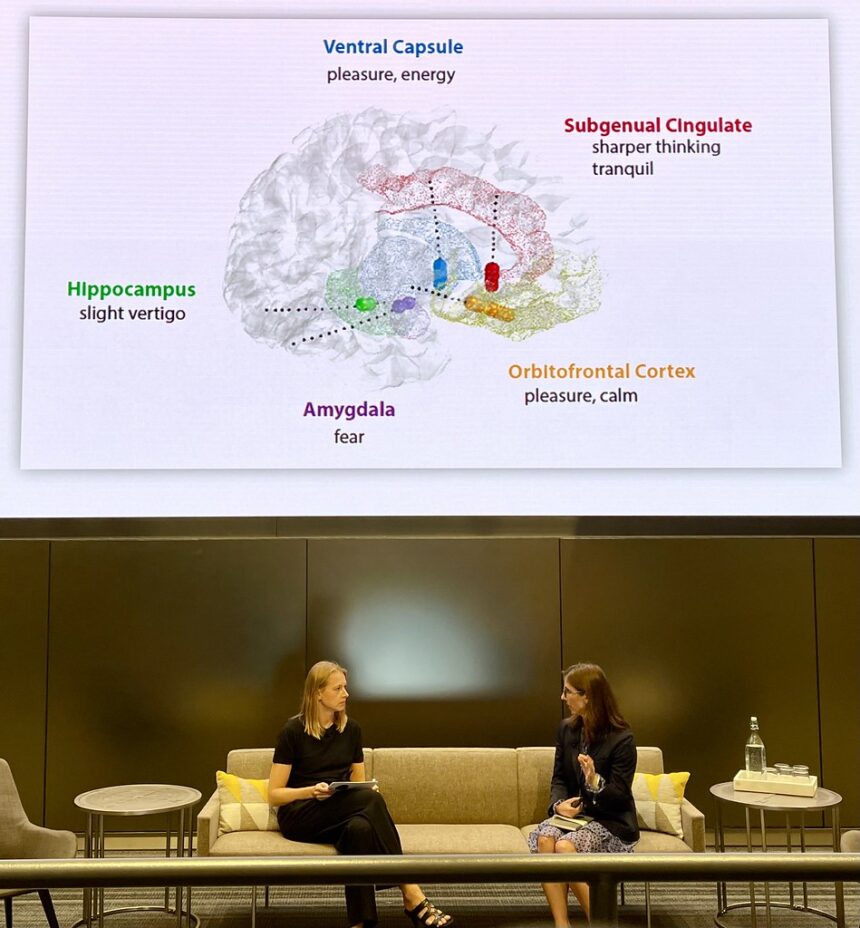
Medical illustration of enhanced deep brain stimulation electrode configuration
University of Geneva researchers demonstrate that adding a third electrode pair significantly improves precision of noninvasive deep brain stimulation in mouse studies. The advancement could expand treatment options for neurological and psychiatric disorders without requiring surgical electrode implantation. — "Precision Modulation of Brain-Circuits for Mood" by jurvetson is licensed under CC BY 2.0. To view a copy of this license, visit https://creativecommons.org/licenses/by/2.0/. (CC BY 2.0)
SHARE
1 min read|130 words

A landmark study from Swiss research institutions has quantified a significant advancement in noninvasive deep brain stimulation technology. According to preliminary findings from the University of Geneva and ETH Zurich, incorporating a third electrode pair into stimulation protocols substantially improves targeting precision compared to standard two-electrode configurations.

This enhanced spatial accuracy is critical for clinical applications, as conventional noninvasive approaches have historically struggled with collateral activation of surrounding brain tissue. The improved precision demonstrated in laboratory mouse models suggests potential for more effective therapeutic outcomes with fewer side effects.

These findings support the feasibility of developing noninvasive brain stimulation therapies that could reduce or eliminate surgical risks associated with implanted electrode systems, while maintaining or exceeding treatment efficacy for neurological and psychiatric conditions.

Read the full article on GMJ Newsroom.

Submit Your Paper
GMJ_Submit_Banner

Was this article helpful?

GMJ Brief · Key Finding

📰 Read the full article: Third Electrode Pair Improves Deep Brain Stimulation Precision in Mouse Study →

Share This Article
Facebook LinkedIn Bluesky Copy Link Print
GMJ
ByProf. Giorgi Pkhakadze
Follow:
Prof. Giorgi Pkhakadze, MD, MPH, PhD, is Editor-in-Chief of the Georgian Medical Journal and Chair of the Public Health Institute of Georgia (PHIG). He is Professor and Head of the Department of Social and Behavioural Sciences at David Tvildiani Medical University, and Secretary/Treasurer of the UEMS Section of Public Health. ORCID: 0000-0001-7609-4515.

Submit Your Paper →

Georgia's peer-reviewed open-access medical journal. No APC until January 2027.
Submit Manuscript →
Assistive Technology Access in Sri Lanka Reveals Stark Disparities Across Age, Sex, and Geography

A mixed-methods study in The Lancet Regional Asia documents how age, sex,…

Physicians as Political Voices: 250 Years of Medicine and American Democracy

A New England Journal of Medicine historical analysis examines 250 years of…

Cat Scratch Disease Returns: What Clinicians and Patients Need to Know

Cat scratch disease, caused by Bartonella henselae, presents with varied clinical manifestations…

Submit Your Paper to GMJ

No APC until January 2027.
Submit Manuscript →

You Might Also Like

Brain diagram showing word processing and filtering mechanisms

Brain’s Built-In Defense: How Your Mind Shields You From Negative Language

By
Prof. Giorgi Pkhakadze
05/07/2026
Infographic comparing ABO blood group risk in severe Plasmodium falciparum malaria, showing type O protective effect

Genetic Shield: How Blood Type O Offers Protection Against Severe Malaria

By
Prof. Giorgi Pkhakadze
07/08/2026
Pharmacy & PrescribingPractice

MHRA Recalls ChloraPrep Antiseptic Applicators Over Sterility Breach

By
Prof. Giorgi Pkhakadze
02/06/2026
Healthcare worker experiencing occupational stress in a hospital setting, illustrating the importance of occupational safety and health, burnout prevention, infection control, workplace violence prevention, and health worker wellbeing in Georgia.

Three Essential Steps to Protect Georgia’s Health Workforce

By
Prof. Giorgi Pkhakadze
04/07/2026
Facebook Twitter Youtube Instagram
Company
  • Privacy Policy
  • Contact US
  • GMJ Journal
  • Submit Manuscript
  • Editorial Team
  • Register at GMJ
  • Terms of Use

Subscribe to GMJ News — Click here

Join Community
© 2026 Georgian Medical Journal (GMJ). Published by the Public Health Institute of Georgia (PHIG). All rights reserved.
Welcome Back!

Sign in to your account

Username or Email Address
Password

Lost your password?

Not a member? Sign Up