By using this site, you agree to the Privacy Policy and Terms of Use.
Accept
GMJ NewsGMJ NewsGMJ News
  • Latest News
    • GMJ Briefs
  • Podcast & Media
    • Podcast Episodes
    • GMJ Audio
    • GMJ Videos
  • Research Digest
    • New Studies
    • Georgian Research
    • Data & Numbers
  • Policy & Systems
    • Health Policy
    • Quality & Safety
    • Migration & Health
    • Global Health
  • Practice
    • Clinical Updates
    • Case Discussions
    • Pharmacy & Prescribing
    • Ingredients A-Z
  • Perspectives
    • Editorial
    • Explainers
    • Voices
    • Letters
  • Health Topics
  • GMJ Articles
    • Vol. 1 Issue 2 (2026)
    • Vol. 1 Issue 1 (2026)
    • Pre-Launch Articles (2025)
  • Read the Journal →
  • About GMJ News
Notification Show More
Font ResizerAa
GMJ NewsGMJ News
Font ResizerAa
  • Latest News
    • GMJ Briefs
  • Podcast & Media
    • Podcast Episodes
    • GMJ Audio
    • GMJ Videos
  • Research Digest
    • New Studies
    • Georgian Research
    • Data & Numbers
  • Policy & Systems
    • Health Policy
    • Quality & Safety
    • Migration & Health
    • Global Health
  • Practice
    • Clinical Updates
    • Case Discussions
    • Pharmacy & Prescribing
    • Ingredients A-Z
  • Perspectives
    • Editorial
    • Explainers
    • Voices
    • Letters
  • Health Topics
  • GMJ Articles
    • Vol. 1 Issue 2 (2026)
    • Vol. 1 Issue 1 (2026)
    • Pre-Launch Articles (2025)
  • Read the Journal →
  • About GMJ News
Follow US
GMJ News > Practice > Clinical Updates > Creatine and Kidney Damage: What the Evidence Actually Shows
Clinical UpdatesNew StudiesPracticeResearch Digest

Creatine and Kidney Damage: What the Evidence Actually Shows

GMJ
Last updated: 12/07/2026 13:29
By
GMJ Practice Desk
Share
9 Min Read
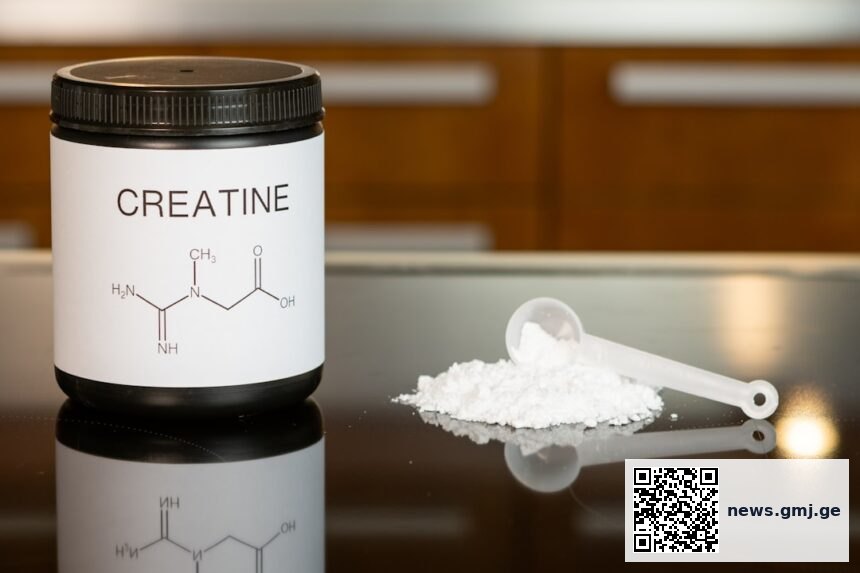
Chart showing creatinine elevation versus stable kidney function markers in creatine supplementation studyIllustrative image · Photo by Alex Saks on Unsplash (Unsplash License)
A 2025 systematic review of 21 studies and analysis of 685 clinical trials confirms that creatine supplementation does not damage kidney function, despite raising serum creatinine levels. The elevation reflects increased muscle creatine stores, not kidney dysfunction. — Photo by Alex Saks on Unsplash (Unsplash License)
SHARE
5 min read|1,084 words
✓ Reviewed by GMJ News Editorial Team

🟢 Strong Evidence

Contents
    • Key takeaways
      • Study at a Glance
      • Creatine and Kidney Function: What Changes and What Doesn’t
  • How the Misconception Began
  • What the 2025 Evidence Shows
  • Clinical Interpretation and Patient Safety
    • What this means
  • Frequently asked questions
    • Does creatine supplementation actually damage the kidneys?
    • Why do doctors see elevated creatinine on blood tests if creatine is safe?
    • Should people with kidney disease avoid creatine supplementation?

A systematic review and meta-analysis of 21 studies published in 2025 confirms what many athletes already suspect: creatine supplementation does not damage kidney function, despite raising serum creatinine levels on standard blood tests. The confusion stems from a fundamental misinterpretation of how the kidney function equation works when creatine stores increase.

Key takeaways

  • Creatine supplementation increases serum creatinine but does not impair actual kidney function, according to a 2025 systematic review of 21 studies
  • The 2025 analysis by Kreider et al. in the Journal of the International Society of Sports Nutrition reviewed 685 human clinical trials involving over 26,000 participants with no evidence of kidney damage
  • Doctors interpreting blood tests should distinguish between elevated creatinine (a mathematical artifact of increased muscle creatine stores) and actual kidney dysfunction (measured by cystatin C, proteinuria, and albuminuria)

Study at a Glance

Source Journal of the International Society of Sports Nutrition
Study type Systematic review and meta-analysis
Sample size 685 human clinical trials, 26,000+ participants
Population Individuals taking creatine supplementation
Country International (multi-centre analysis)
26,000+
participants across 685 clinical trials examined for creatine safety, with no evidence of kidney damage in the largest analysis to date

Creatine and Kidney Function: What Changes and What Doesn’t

Results from 21-study meta-analysis showing creatinine elevation versus stable kidney health markers, 2025

Serum creatinine
↑ 0.07 μmol/L
Measured GFR
No change
Cystatin C
No change
Proteinuria
No change
Albuminuria
No change

Source: 2025 Systematic Review and Meta-Analysis (21 studies) | Georgian Medical Journal News

Submit Your Paper
GMJ_Submit_Banner

How the Misconception Began

The myth that creatine damages kidneys originated from a correct observation interpreted incorrectly. Creatine is stored in skeletal muscle primarily as phosphocreatine, and it degrades spontaneously and irreversibly into creatinine at a rate of approximately 2% per day. When individuals supplement with creatine, they increase total body creatine stores, which produces more creatinine as a waste product.

On a standard metabolic panel, doctors measure serum creatinine and use it to calculate estimated glomerular filtration rate (eGFR)—the primary marker of kidney function. The equation assumes that creatinine production is relatively constant. When creatinine levels rise due to increased creatine supplementation, the mathematical formula interprets this as reduced kidney filtration capacity. However, the kidney is filtering and excreting at its normal rate; there is simply more substrate being produced.

What the 2025 Evidence Shows

The 2025 systematic review published in the Journal of the International Society of Sports Nutrition examined 21 studies investigating creatine supplementation and kidney function. Results confirmed the expected finding: creatine was associated with a small but statistically significant increase in serum creatinine (mean difference: 0.07 micromol/L). Critically, however, there were no changes in measured glomerular filtration rate, cystatin C, proteinuria, or albuminuria—the markers that actually reflect kidney health independent of creatinine metabolism.

The largest safety analysis, conducted by Kreider and colleagues in the same 2025 review for the Journal of the International Society of Sports Nutrition, examined 685 human clinical trials involving over 26,000 participants. This comprehensive analysis found no evidence of kidney damage attributable to creatine supplementation across the entire population studied. For clinicians reviewing laboratory results, this distinction is essential: creatinine elevation alone does not indicate kidney dysfunction when other renal markers remain stable.

Creatine supplementation increased serum creatinine but produced no changes in measured GFR, cystatin C, proteinuria, or albuminuria across 21 studies—confirming that elevated creatinine is a mathematical artifact, not evidence of kidney damage.

— 2025 Systematic Review and Meta-Analysis, Journal of the International Society of Sports Nutrition

Clinical Interpretation and Patient Safety

This evidence carries important implications for both patients using creatine supplements and clinicians interpreting their laboratory results. Patients who have been advised to discontinue creatine based solely on elevated serum creatinine should understand that this elevation reflects increased muscle creatine stores, not kidney dysfunction. Clinicians should avoid reflexively recommending cessation of creatine supplementation when serum creatinine rises, provided that other renal function markers (cystatin C, proteinuria, albuminuria) and measured GFR remain normal.

The evidence is particularly reassuring for individuals with pre-existing kidney disease, though those populations warrant closer monitoring. The clinical evidence base now provides clear guidance that creatine supplementation, at standard doses, does not appear to pose kidney damage risk in healthy individuals. This represents a significant shift from the precautionary stance that once dominated practice guidelines.

What this means

For patients: If your doctor notes elevated serum creatinine while taking creatine supplements, ask whether other kidney function markers (cystatin C, proteinuria, albuminuria) are normal. Elevated creatinine alone, in the context of creatine use and normal other markers, does not indicate kidney damage.
For clinicians: When reviewing laboratory results in patients taking creatine, measure cystatin C or calculate measured GFR using cystatin C-based equations to distinguish between elevated creatinine from increased muscle stores versus true renal dysfunction. Standard eGFR equations based on creatinine alone may be unreliable in this population.
For policymakers: Regulatory guidance and healthcare education should reflect the 2025 evidence that creatine supplementation, at typical doses in healthy individuals, does not impair kidney function. Patient-facing resources should be updated to reduce unnecessary anxiety and discontinuation of supplementation based on misinterpreted laboratory results.

Frequently asked questions

Does creatine supplementation actually damage the kidneys?

No. A 2025 systematic review of 21 studies and meta-analysis found no evidence that creatine supplementation damages kidney function. Although serum creatinine increases, this reflects more creatinine production from higher muscle creatine stores—not reduced kidney filtration. Markers of actual kidney health (measured GFR, cystatin C, proteinuria, albuminuria) remain unchanged.

Why do doctors see elevated creatinine on blood tests if creatine is safe?

Creatinine is a breakdown product of creatine stored in muscle. When you supplement with creatine, you store more creatine in your muscles, which produces more creatinine waste. The standard kidney function equation assumes creatinine production is constant, so it misinterprets the increase as reduced kidney function. It is not—it is simply more waste being produced at the same filtration rate.

Should people with kidney disease avoid creatine supplementation?

Individuals with pre-existing kidney disease should consult their nephrologist before using creatine, as their kidneys may have reduced filtration capacity and could be affected differently. However, the 2025 evidence shows that in healthy individuals, creatine supplementation does not cause kidney damage. Those with kidney disease represent a different population requiring individualized assessment.

The persistent myth about creatine and kidney damage highlights a broader challenge in translating biochemical data into clinical practice: accurate interpretation of laboratory values requires understanding not just the number, but the mechanism behind it. As new research continues to emerge, clinicians and patients benefit from evidence-based reassurance that standard creatine supplementation, supported by over 26,000 participants across hundreds of clinical trials, does not pose a kidney safety risk in healthy individuals.

Source: Kreider et al., Journal of the International Society of Sports Nutrition, 2025

Was this article helpful?

Disclaimer. This article is health journalism intended for general information and education. It is not medical advice and is not a substitute for professional diagnosis or treatment. Always consult a qualified healthcare provider about your individual circumstances. Full disclaimer →

Related Coverage

Bedroom Light at Night Linked to Metabolic Harm: What the Evidence ShowsAug 14, 2026
How neurotransmitters orchestrate mood, sleep, and cognition: a biochemical primerAug 14, 2026
Vitamin D's Role in Alzheimer's Tau Accumulation: New Evidence from Framingham Heart StudyAug 14, 2026
Whey protein triggers substantial insulin response despite low carbohydrate content, research showsAug 14, 2026
Explore more on this topic:🧭 Supplements & Nutraceuticals hub🧭 Leukaemia hub🧭 African Trypanosomiasis (Sleeping Sickness) hub
🔥 Most read this week
1Creatine Kidney Damage Myth Debunked by Major Safety Review of 26,000 Participants
2Why High-Dose Vitamin B12 Supplements Work Despite Poor Absorption
3Magnesium Form May Not Matter for Cognitive Benefits, New Meta-Analysis Suggests
4How Coffee Brewing Method Affects Cholesterol: The Science Behind Diterpenes and Filters
Related reference
  • Creatine · Ingredient
  • SAMe · Ingredient
PG
Editorial oversight
Prof. Giorgi Pkhakadze, MD, MPH, PhD
Editor-in-Chief, GMJ News
Full profile →  ·  ORCID 0000-0001-7609-4515
Medical disclaimer. This article is health journalism intended for general information. It is not medical advice and is not a substitute for consultation with a qualified healthcare professional. Always seek your physician's advice regarding any medical condition.
Editorial standards. This article was produced under the GMJ News editorial process, with oversight by the GMJ Editorial Board. Our editorial process. Spotted an error? Contact the editorial team.
📬 GMJ Health Digest
Evidence-based medical news, once a week. Free, no spam, unsubscribe anytime.
TAGGED:clinical biochemistrycreatineevidence-based medicinekidney functionsupplementation
Share This Article
Facebook LinkedIn Bluesky Copy Link Print
GMJ
ByGMJ Practice Desk
Follow:
GMJ Practice Desk is part of GMJ News, the newsroom of the Georgian Medical Journal (gmj.ge), published by the Public Health Institute of Georgia. Every article is editorially reviewed before publication.
Leave a Comment Leave a Comment

Leave a Reply Cancel reply

Your email address will not be published. Required fields are marked *

Submit Your Paper →

Georgia's peer-reviewed open-access medical journal. No APC until January 2027.
Submit Manuscript →
Bedroom Light at Night Linked to Metabolic Harm: What the Evidence Shows

Moderate bedroom light exposure triggers measurable metabolic harm within a single night…

How neurotransmitters orchestrate mood, sleep, and cognition: a biochemical primer

Brain function depends on chemical communication between neurons through neurotransmitters. Twelve major…

Vitamin D’s Role in Alzheimer’s Tau Accumulation: New Evidence from Framingham Heart Study

A 16-year analysis from the Framingham Heart Study finds that higher vitamin…

Submit Your Paper to GMJ

No APC until January 2027.
Submit Manuscript →

You Might Also Like

Scientific illustration showing T cells trapped in tumour stroma and release by AMD3100 drugIllustrative image · Photo by National Cancer Institute on Unsplash (Unsplash License)
Clinical UpdatesNew StudiesPracticeResearch Digest

FDA-Approved Drug Restores Immunotherapy Efficacy in Rare Liver Cancer by Releasing Trapped T Cells

By
GMJ Practice Desk
10/08/2026
Illustration of hippocampus brain region showing volume preservation through aerobic exercise in older adultsIllustrative image · Photo by Andrea Piacquadio on Pexels (Pexels License)
Clinical UpdatesNew StudiesPracticeResearch Digest

Aerobic Exercise Reverses Age-Related Hippocampal Shrinkage in Older Adults

By
GMJ Practice Desk
16/07/2026
FDA medical device safety communication regarding blood glucose monitoring equipment
Pharmacy & Prescribing

FDA Issues Safety Alert Over TRUE METRIX Blood Glucose Monitors: Risk of Inaccurate Readings

By
GMJ Practice Desk
20/05/2026
Bar chart showing glycogen depletion rates across different exercise types, with resistance training showing lowest usage
New Studies

Resistance Training Uses Less Muscle Glycogen Than Previously Thought, Meta-Analysis Reveals

By
GMJ Research Desk
22/05/2026
Facebook Twitter Youtube Instagram
Company
  • Privacy Policy
  • Contact US
  • GMJ Journal
  • Submit Manuscript
  • Editorial Team
  • Register at GMJ
  • Terms of Use

Subscribe to GMJ News — Click here

Join Community
© 2026 Georgian Medical Journal (GMJ). Published by the Public Health Institute of Georgia (PHIG). All rights reserved.
Welcome Back!

Sign in to your account

Username or Email Address
Password

Lost your password?

Not a member? Sign Up