Updated 13/09/2026
🟠 Moderate Evidence
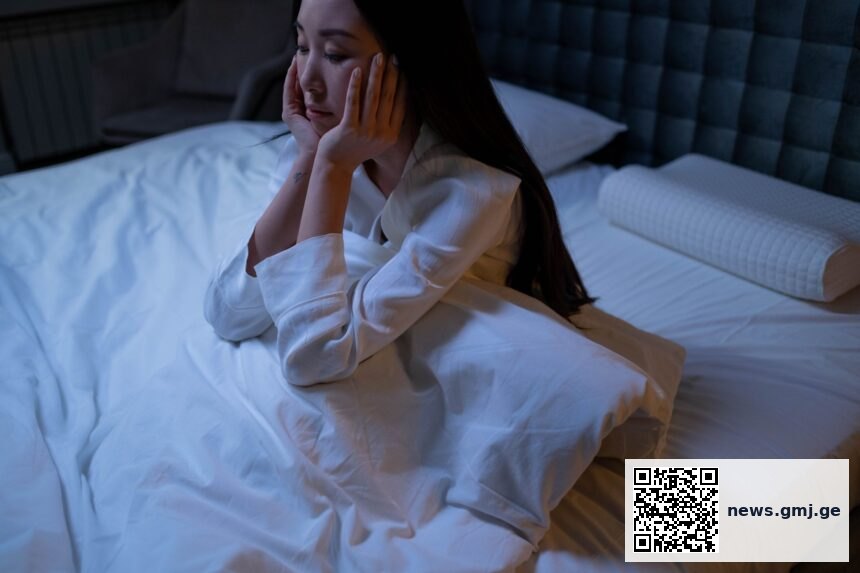
A single night of moderate ambient light in the bedroom—equivalent to a hallway nightlight or bedside lamp—triggers measurable changes in insulin sensitivity and heart rate variability, according to research published in the Proceedings of the National Academy of Sciences. Population-level evidence suggests that cumulative bedroom light exposure over years may increase type 2 diabetes risk threefold in older adults, raising questions about how standard home environments affect cardiometabolic health.
Key takeaways
- Moderate bedroom light (100 lux) disrupts insulin sensitivity, heart rate, and autonomic nervous system balance after a single night
- Long-term bedroom light exposure of 5 lux or more was associated with a 3.74-fold increased diabetes incidence in a 42-month Japanese cohort study
- Most people believe their bedrooms are dark enough, but metabolic evidence suggests the threshold for measurable harm is substantially lower than typical home lighting
Study at a Glance
| Primary source | Proceedings of the National Academy of Sciences |
| Study design | Controlled laboratory experiment + population cohort follow-up |
| Laboratory sample | N = 20 healthy adults (one night each condition) |
| Cohort sample | N = 678 elderly Japanese adults without baseline diabetes |
| Follow-up duration | Median 42 months |
Bedroom Light Intensity: Context and Risk Thresholds
Light levels in common environments and diabetes risk thresholds, lux scale

Source: Mason et al., PNAS 2022; Obayashi et al., Sleep Medicine 2020 | Georgian Medical Journal News
Single-Night Effect: The Immediate Metabolic Response
Researchers at Northwestern University conducted a controlled laboratory study in which 20 healthy adults slept under two different light conditions on separate nights, according to Mason and colleagues’ 2022 publication in the Proceedings of the National Academy of Sciences. One night involved sleeping in a dimly lit room (less than 3 lux—essentially darkness), while the other involved sleeping under moderate ambient light equivalent to approximately 100 lux, roughly the brightness of a hallway nightlight or a bedside lamp left on.
The results were striking for a single night of exposure. The 100 lux condition produced measurable unfavorable changes by the next morning: insulin resistance increased, nighttime heart rate elevated, and heart rate variability decreased—a sign of heightened sympathetic nervous system activation, which indicates a stressed physiological state. These findings suggest that even one night of moderately lit sleep disrupts metabolic regulation and autonomic nervous system balance in ways typically associated with cardiovascular risk.
Population Evidence: Long-Term Diabetes Risk
Whether single-night metabolic disturbances translate into chronic disease risk remained an open question—until population-level data provided an answer. Obayashi and colleagues examined the HEIJO-KYO cohort of 678 elderly Japanese adults with no diabetes at baseline, according to their 2020 study published in Sleep Medicine. Bedroom light intensity was measured objectively over consecutive nights, and participants were followed for a median of 42 months.
Over that period, 19 participants developed type 2 diabetes. The 128 participants whose bedrooms averaged 5 lux or more had an incidence rate ratio of 3.74 (95% confidence interval 1.55 to 9.05) compared with the 550 participants whose bedrooms averaged below 5 lux. When the risk threshold was lowered to 3 lux, the relationship remained statistically significant at 2.74 times increased incidence. This suggests a dose-response relationship: even modest ambient light during sleep accumulates metabolic consequences over years.
The Gap Between Perception and Measurement
A critical observation underlies these findings: most people subjectively believe their bedrooms are dark enough. Yet objective light measurement reveals a discrepancy between perception and reality. A hallway nightlight registers approximately 5 lux—the threshold at which the Obayashi cohort showed significantly elevated diabetes risk. Most standard bedroom environments, including those with door gaps, window light leakage, or devices left on, easily exceed this level.
For clinical and public health contexts, this raises a practical question about sleep environment standards. Current sleep hygiene guidance often emphasizes darkness but may not quantify the precise light intensity that triggers measurable metabolic harm. The evidence suggests that thresholds below what most people consider adequately dark already produce detectable adverse effects on cardiometabolic markers—both acutely and chronically.
A single night under 100 lux (nightlight brightness) produces measurable insulin resistance, elevated heart rate, and reduced heart rate variability. Over 42 months, cumulative bedroom light exposure of 5 lux or more was associated with a 3.74-fold increase in type 2 diabetes incidence in older Japanese adults without baseline diabetes.
— Mason et al., Northwestern University (Proceedings of the National Academy of Sciences, 2022) and Obayashi et al. (Sleep Medicine, 2020)
What this means
Frequently asked questions
Is the light effect stronger in older adults than younger people?
The Obayashi cohort consisted of elderly Japanese participants (average age approximately 68 years). The Mason laboratory study was conducted in 20 healthy younger adults. The metabolic effects appeared consistent across both groups, but age-stratified comparisons were not explicitly reported. Older adults may have increased vulnerability due to age-related changes in circadian regulation and metabolic control.
Does blue light matter differently than other wavelengths?
Neither study explicitly distinguished between blue light and other wavelengths. The Mason study used standard room lighting without spectral analysis; the Obayashi study measured total light intensity. Blue light has been shown in other research to have stronger circadian suppression effects, but the metabolic impact of specific wavelengths during sleep remains understudied in population samples.
Can someone achieve too-dark sleeping conditions?
There is no evidence of harm from sleeping in complete darkness. The relevant comparison in both studies was between dim light (below 3 lux) and moderate light (100 lux or 5 lux). Complete darkness (0 lux) did not appear in either study and has no documented metabolic downsides for sleep quality or circadian health.
The evidence linking bedroom light to cardiometabolic disruption bridges laboratory physiology and population epidemiology—a design combination that strengthens confidence in the finding. Future research should examine whether light-reduction interventions prevent diabetes and other metabolic disease in at-risk populations, and whether effects vary by age, sex, and genetic susceptibility. In the meantime, the threshold for ‘dark enough’ appears to be darker than most people’s current sleep environments—with measurable health consequences for those who sleep under ambient light.
Source: Mason et al., Proceedings of the National Academy of Sciences, 2022 and Obayashi et al., Sleep Medicine, 2020
🗺️ Find certified Georgian healthcare providers: sheniekimi.ge — Georgia Health Map · 998 clinics · 6,600+ doctors · 2,296 pharmacies
Was this article helpful?
Disclaimer. This article is health journalism intended for general information and education. It is not medical advice and is not a substitute for professional diagnosis or treatment. Always consult a qualified healthcare provider about your individual circumstances. Full disclaimer →
Related Coverage

Editorial standards. This article was produced under the GMJ News editorial process, with oversight by the GMJ Editorial Board. Our editorial process. Spotted an error? Contact the editorial team.