By using this site, you agree to the Privacy Policy and Terms of Use.
Accept
GMJ NewsGMJ NewsGMJ News
  • Latest News
    • GMJ Briefs
  • Podcast & Media
    • Podcast Episodes
    • GMJ Audio
    • GMJ Videos
  • Research Digest
    • New Studies
    • Georgian Research
    • Data & Numbers
  • Policy & Systems
    • Health Policy
    • Quality & Safety
    • Migration & Health
    • Global Health
  • Practice
    • Clinical Updates
    • Case Discussions
    • Pharmacy & Prescribing
    • Ingredients A-Z
  • Perspectives
    • Editorial
    • Explainers
    • Voices
    • Letters
  • Health Topics
  • GMJ Articles
    • Vol. 1 Issue 2 (2026)
    • Vol. 1 Issue 1 (2026)
    • Pre-Launch Articles (2025)
  • Read the Journal →
  • About GMJ News
Notification Show More
Font ResizerAa
GMJ NewsGMJ News
Font ResizerAa
  • Latest News
    • GMJ Briefs
  • Podcast & Media
    • Podcast Episodes
    • GMJ Audio
    • GMJ Videos
  • Research Digest
    • New Studies
    • Georgian Research
    • Data & Numbers
  • Policy & Systems
    • Health Policy
    • Quality & Safety
    • Migration & Health
    • Global Health
  • Practice
    • Clinical Updates
    • Case Discussions
    • Pharmacy & Prescribing
    • Ingredients A-Z
  • Perspectives
    • Editorial
    • Explainers
    • Voices
    • Letters
  • Health Topics
  • GMJ Articles
    • Vol. 1 Issue 2 (2026)
    • Vol. 1 Issue 1 (2026)
    • Pre-Launch Articles (2025)
  • Read the Journal →
  • About GMJ News
Follow US
GMJ News > GMJ Briefs > What Taiwan’s Lung Cancer Screening Success Means for Global Healthcare Systems

What Taiwan’s Lung Cancer Screening Success Means for Global Healthcare Systems

GMJ
Last updated: 07/08/2026 19:06
By
Prof. Giorgi Pkhakadze
Share
1 Min Read
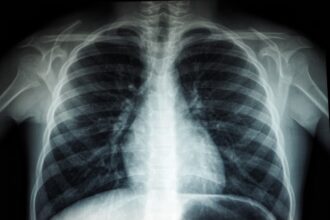
Medical chart showing lung cancer stage distribution trends in Taiwan screening study
Taiwan study reveals 68% increase in early-stage lung cancer diagnoses among never-smoking women, linked to expanded self-initiated CT screening access. Mortality declined 15% despite higher overall incidence. — Photo by Anna Shvets on Pexels (Pexels License)
SHARE
1 min read|141 words

Healthcare systems worldwide can learn valuable lessons from Taiwan’s experience with opportunistic lung cancer screening. A 15-year national registry analysis reveals three critical takeaways: self-initiated low-dose CT screening successfully shifted diagnoses toward earlier, more treatable stages; this model achieved a 68% increase in early-stage detection among never-smoking women; and importantly, these earlier diagnoses translated into measurable mortality benefits with a 15% decline overall.

Unlike formal, centralized screening programs, Taiwan’s approach leveraged patient-driven access through private healthcare providers, creating an opportunistic model that appears both effective and sustainable. The data from over 200,000 lung cancer cases demonstrates that expanded screening access does not simply increase incidence—it genuinely improves outcomes. For health administrators considering screening initiatives, Taiwan’s experience suggests that combining accessibility with individual decision-making can achieve both detection and survival improvements, offering a replicable framework for implementation.

Read the full article on GMJ Newsroom.

Was this article helpful?

GMJ Brief · Takeaway

📰 Read the full article: Self-initiated CT screening linked to early lung cancer detection in Taiwan →

Related reference
  • Lung Cancer · Condition
Share This Article
Facebook LinkedIn Bluesky Copy Link Print
GMJ
ByProf. Giorgi Pkhakadze
Follow:
Prof. Giorgi Pkhakadze, MD, MPH, PhD, is Editor-in-Chief of the Georgian Medical Journal and Chair of the Public Health Institute of Georgia (PHIG). He is Professor and Head of the Department of Social and Behavioural Sciences at David Tvildiani Medical University, and Secretary/Treasurer of the UEMS Section of Public Health. ORCID: 0000-0001-7609-4515.

Submit Your Paper →

Georgia's peer-reviewed open-access medical journal. No APC until January 2027.
Submit Manuscript →
Hospital-Acquired Infections Rising in UK: Latest Surveillance Data Shows Increases in Dangerous Pathogens

New UK Health Security Agency surveillance data for Q1 2026 reveal trends…

US 988 Crisis Line Relaunches LGBTQ+ Hotline Without Original Founding Partner

The Trump administration is relaunching a specialized LGBTQ+ crisis line option under…

Nigeria’s Polio Campaign Reaches 33,000 Settlements, Vaccinating 1.2 Million Children in May 2026

Nigeria's polio elimination campaign reached 33,000 settlements and vaccinated 1.2 million children…

Submit Your Paper to GMJ

No APC until January 2027.
Submit Manuscript →

You Might Also Like

Medical illustration of implantable cardioverter defibrillator placement in chest

Announcement: Eriksen’s Cardiac Device Successfully Activates During Football Match Collapse

By
Prof. Giorgi Pkhakadze
13/07/2026
Brain diagram showing stroke-related inflammation crossing between hemispheres causing bilateral pain

Breakthrough: Scientists Identify Inflammatory Pathway Behind Bilateral Post-Stroke Pain

By
Prof. Giorgi Pkhakadze
17/06/2026
Healthcare surveillance monitoring pneumococcal disease trends in Belgium

What Belgian Pneumococcal Data Means for European Public Health Policy and Surveillance

By
Prof. Giorgi Pkhakadze
08/07/2026
Medical illustration showing colorectal tissue with immune cells and molecular patterns

Molecular Biomarkers Enable Early Prediction of Colorectal Cancer Risk

By
Prof. Giorgi Pkhakadze
09/07/2026
Facebook Twitter Youtube Instagram
Company
  • Privacy Policy
  • Contact US
  • GMJ Journal
  • Submit Manuscript
  • Editorial Team
  • Register at GMJ
  • Terms of Use

Subscribe to GMJ News — Click here

Join Community
© 2026 Georgian Medical Journal (GMJ). Published by the Public Health Institute of Georgia (PHIG). All rights reserved.
Welcome Back!

Sign in to your account

Username or Email Address
Password

Lost your password?

Not a member? Sign Up