By using this site, you agree to the Privacy Policy and Terms of Use.
Accept
GMJ NewsGMJ NewsGMJ News
  • Latest News
    • GMJ Briefs
  • The Wire
  • Health Topics
  • Podcast & Media
    • GMJ Audio
    • GMJ Videos
    • Podcast & Media
    • Podcast Episodes
  • GMJ Articles
    • Vol. 1 Issue 3 (2026)
    • Public Health Dictionary — Supplement Edition
    • IAP Legacy Series
    • Read Full Journal (gmj.ge) →
    • Pre-Launch Articles (2025)
    • Vol. 1 Issue 1 (2026)
    • Vol. 1 Issue 2 (2026)
  • Perspectives
    • Editorial
    • Explainers
    • Letters
    • Voices
  • Policy & Systems
    • Global Health
    • Health Policy
    • Migration & Health
    • Quality & Safety
    • Work & Health
  • Dictionary
    • Our Story: 20 Years in the Making
    • Browse A–Z
    • About the Project
    • Contribute a Term
  • Practice
    • Case Discussions
    • Clinical Updates
    • Pharmacy & Prescribing
  • Research Digest
    • Data & Numbers
    • Georgian Research
    • New Studies
  • Read the Journal →
Notification Show More
Font ResizerAa
GMJ NewsGMJ News
Font ResizerAa
  • Latest News
  • The Wire
  • Health Topics
  • Podcast & Media
  • GMJ Articles
  • Perspectives
  • Policy & Systems
  • Dictionary
  • Practice
  • Research Digest
  • Read the Journal →
  • Latest News
    • GMJ Briefs
  • The Wire
  • Health Topics
  • Podcast & Media
    • GMJ Audio
    • GMJ Videos
    • Podcast & Media
    • Podcast Episodes
  • GMJ Articles
    • Vol. 1 Issue 3 (2026)
    • Public Health Dictionary — Supplement Edition
    • IAP Legacy Series
    • Read Full Journal (gmj.ge) →
    • Pre-Launch Articles (2025)
    • Vol. 1 Issue 1 (2026)
    • Vol. 1 Issue 2 (2026)
  • Perspectives
    • Editorial
    • Explainers
    • Letters
    • Voices
  • Policy & Systems
    • Global Health
    • Health Policy
    • Migration & Health
    • Quality & Safety
    • Work & Health
  • Dictionary
    • Our Story: 20 Years in the Making
    • Browse A–Z
    • About the Project
    • Contribute a Term
  • Practice
    • Case Discussions
    • Clinical Updates
    • Pharmacy & Prescribing
  • Research Digest
    • Data & Numbers
    • Georgian Research
    • New Studies
  • Read the Journal →
Follow US
GMJ News > GMJ Briefs > Three Critical Mechanisms: How Diabetes Damages the Brain

Three Critical Mechanisms: How Diabetes Damages the Brain

GMJ
Last updated: 09/08/2026 22:52
By
Prof. Giorgi Pkhakadze, MD, MPH, PhD
Share
1 Min Read
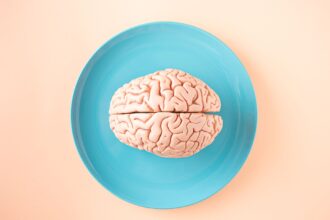
Brain imaging showing grey matter atrophy in diabetes-related cognitive decline
Mounting evidence reveals that diabetes and dementia share bidirectional pathophysiological pathways involving impaired glucose metabolism, chronic inflammation, and vascular dysfunction. Emerging research suggests select diabetes medications may confer neuroprotective benefits, opening new avenues for cognitive preservation in aging populations. — "Diabetes Testing Strips" by bodytel is licensed under CC BY-ND 2.0. To view a copy of this license, visit https://creativecommons.org/licenses/by-nd/2.0/. (CC BY-ND 2.0)
SHARE
1 min read|112 words

Understanding the pathways through which diabetes accelerates cognitive decline is essential for prevention. First, impaired glucose metabolism and insulin resistance starve neurons of adequate energy, compromising their capacity for normal function and plasticity. Second, chronic hyperglycaemia triggers sustained neuroinflammation and damages the cerebrovascular system, disrupting the blood-brain barrier and reducing cerebral perfusion—consequences that elevate vascular dementia risk and may accelerate Alzheimer pathology. Third, metabolic dysfunction promotes amyloid-β accumulation, a hallmark of Alzheimer disease. These interconnected mechanisms suggest that aggressive glycaemic management during midlife represents a critical window for neuroprotection. Clinicians should counsel patients that tight glucose control and emerging neuroprotective medications offer evidence-based strategies to preserve cognitive health into late life.

Was this article helpful?

GMJ Brief · Takeaway

📰 Read the full article: Diabetes and Dementia: New Evidence Reveals Bidirectional Risk and Potential Neuroprotection →

Related reference
  • Alzheimer Disease · Condition
  • Insulin · Drug
Share This Article
Facebook Whatsapp Whatsapp LinkedIn Telegram Bluesky Copy Link Print
GMJ
ByProf. Giorgi Pkhakadze, MD, MPH, PhD
Follow:
MD, MPH, PhD. Editor-in-Chief, Georgian Medical Journal (GMJ). Professor and Head, School of Public Health, David Tvildiani Medical University (DTMU), Tbilisi, Georgia. Chair, Public Health Institute of Georgia (PHIG). President, Accréditation Sans Frontières (ASF), Paris. Secretary/Treasurer, UEMS Section of Public Health. WHO Consultant, Health and Migration, Geneva. Former Member, UN Secretary-General's Independent Accountability Panel for Every Woman, Every Child, Every Adolescent (IAP-EWEC, 2016–2021). ORCID: 0000-0001-7609-4515.

Submit Your Paper →

Georgia's peer-reviewed open-access medical journal. No APC until January 2027.
Submit Manuscript →
A 10-Second Daily Finger Exercise May Support Cognitive Function, New Research Suggests

Emerging research suggests a simple 10-second daily finger exercise may support cognitive…

Lemierre’s Syndrome: A Rare but Life-Threatening Complication of Throat Infection

Lemierre's syndrome is a rare but potentially fatal thrombophlebitis of the internal…

Why fructose fails to satisfy hunger like glucose: new neurobiology reveals brain’s sugar selectivity

A 2026 study reveals that glucose and fructose activate different hunger-control pathways…

Submit Your Paper to GMJ

No APC until January 2027.
Submit Manuscript →

You Might Also Like

Child on trampoline with safety netting and protective padding

Announcement: Trampoline Injuries Rise Among Children: A Case for Vigilance and Prevention

By
Prof. Giorgi Pkhakadze, MD, MPH, PhD
26/08/2026
Illustration showing clinical differences between AI systems and mental health professionals in diagnosis and therapy

Clinicians Sound Alarm: AI Chatbots Cannot Replace Mental Health Treatment

By
Prof. Giorgi Pkhakadze, MD, MPH, PhD
18/08/2026
Global HealthPolicy & Systems

Sierra Leone Launches Triple Zeros Initiative to Eliminate Preventable Maternal and Child Deaths

By
Prof. Giorgi Pkhakadze, MD, MPH, PhD
02/06/2026
Illustration of menstrual cycle phases and nasal spray brain penetration variation

Why Women May Need Cycle-Adjusted Dosing Strategies for Nasal Spray Medications

By
Prof. Giorgi Pkhakadze, MD, MPH, PhD
11/08/2026
Facebook Twitter Youtube Instagram
Company
  • Privacy Policy
  • Accreditation Canada in Georgia
  • GMJ Journal
  • Submit Manuscript
  • Editorial Team
  • Register at GMJ

Subscribe to GMJ News — Click here

Join Community
© 2026 Georgian Medical Journal (GMJ). Published by the Public Health Institute of Georgia (PHIG). All rights reserved.
Welcome Back!

Sign in to your account

Username or Email Address
Password

Lost your password?