By using this site, you agree to the Privacy Policy and Terms of Use.
Accept
GMJ NewsGMJ NewsGMJ News
  • Latest News
    • GMJ Briefs
  • Podcast & Media
    • Podcast Episodes
    • GMJ Audio
    • GMJ Videos
  • Research Digest
    • New Studies
    • Georgian Research
    • Data & Numbers
  • Policy & Systems
    • Health Policy
    • Quality & Safety
    • Migration & Health
    • Global Health
  • Practice
    • Clinical Updates
    • Case Discussions
    • Pharmacy & Prescribing
    • Ingredients A-Z
  • Perspectives
    • Editorial
    • Explainers
    • Voices
    • Letters
  • GMJ Articles
    • Vol. 1 Issue 2 (2026)
    • Vol. 1 Issue 1 (2026)
    • Pre-Launch Articles (2025)
  • Read the Journal →
  • About GMJ News
Notification Show More
Font ResizerAa
GMJ NewsGMJ News
Font ResizerAa
  • Latest News
    • GMJ Briefs
  • Podcast & Media
    • Podcast Episodes
    • GMJ Audio
    • GMJ Videos
  • Research Digest
    • New Studies
    • Georgian Research
    • Data & Numbers
  • Policy & Systems
    • Health Policy
    • Quality & Safety
    • Migration & Health
    • Global Health
  • Practice
    • Clinical Updates
    • Case Discussions
    • Pharmacy & Prescribing
    • Ingredients A-Z
  • Perspectives
    • Editorial
    • Explainers
    • Voices
    • Letters
  • GMJ Articles
    • Vol. 1 Issue 2 (2026)
    • Vol. 1 Issue 1 (2026)
    • Pre-Launch Articles (2025)
  • Read the Journal →
  • About GMJ News
Follow US
GMJ News > GMJ Briefs > Storm Systems Reshape Dengue Risk: Climate-Informed Preparedness Essential

Storm Systems Reshape Dengue Risk: Climate-Informed Preparedness Essential

GMJ
Last updated: 17/07/2026 21:52
By
Prof. Giorgi Pkhakadze
Share
1 Min Read
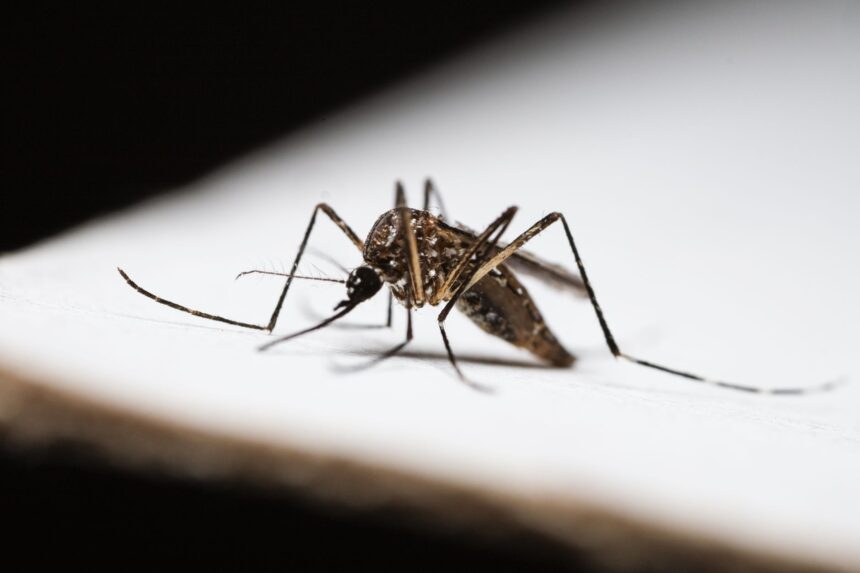
Aedes albopictus mosquito and typhoon weather pattern overlay showing transmission amplification
Field experiments in Guangzhou show that tropical cyclones increase dengue-transmitting mosquito flight distance by 63% and human contact rates by 30%, driving outbreaks that cost millions. Enhanced vector control during cyclone forecasts could avert tens of thousands of cases. — Photo by Ignacio Vazquez on Pexels (Pexels License)
SHARE
1 min read|122 words

Tropical cyclones significantly amplify dengue transmission through mechanisms that extend far beyond rainfall and flooding, according to integrated field research published in BMJ Global Health. Scientists conducting mark-release-recapture experiments in Guangzhou, China discovered that typhoons increase Aedes albopictus mosquito flight distance by 63% and boost human-mosquito contact rates by 30.1%. These behavioral shifts during cyclone events create ideal conditions for rapid disease spread. Typhoon Kalmaegi in 2014 was associated with an estimated 5,131 excess dengue cases in Guangzhou, translating to US$1.93 million in preventable healthcare costs. The findings underscore the urgent need for climate-informed outbreak prediction systems and proactive vector control strategies in cyclone-prone regions. Early intervention during tropical cyclone forecasts could avert tens of thousands of cases and substantially reduce economic burden on health systems.

Was this article helpful?

GMJ Brief · Announcement

📰 Read the full article: Tropical Cyclones Dramatically Amplify Dengue Transmission, Study Finds →

Share This Article
Facebook LinkedIn Bluesky Copy Link Print
GMJ
ByProf. Giorgi Pkhakadze
Follow:
Prof. Giorgi Pkhakadze, MD, MPH, PhD, is Editor-in-Chief of the Georgian Medical Journal and Chair of the Public Health Institute of Georgia (PHIG). He is Professor and Head of the Department of Social and Behavioural Sciences at David Tvildiani Medical University, and Secretary/Treasurer of the UEMS Section of Public Health. ORCID: 0000-0001-7609-4515.

Submit Your Paper →

Georgia's peer-reviewed open-access medical journal. No APC until January 2027.
Submit Manuscript →
Why Food Labels Alone Won’t Stop Child Obesity in Latin America—Evidence From Ecuador

Latin American countries have implemented front-of-package warning labels and advertising restrictions, yet…

Special Operations Forces Show Persistent Health Burden From Combat Trauma, New Study Reveals

Active-duty U.S. special operations forces personnel show persistent health problems across behavioral,…

Why Adolescent Obesity Is Rising in the Digital Age—and How Digital Tools Can Help

Global adolescent obesity is rising due to digital food marketing and structural…

Submit Your Paper to GMJ

No APC until January 2027.
Submit Manuscript →

You Might Also Like

Global HealthPolicy & Systems

WHO Declares International Emergency as Ebola Crosses DRC-Uganda Border

By
Prof. Giorgi Pkhakadze
31/05/2026
World map highlighting climate coalition nations discussing fossil fuel phase-out strategies

Netherlands and Colombia Launch Independent Climate Coalition to Advance Fossil Fuel Phase-Out

By
Prof. Giorgi Pkhakadze
25/06/2026
Diagram showing hematopoietic stem cell differentiation into various blood cell types

What You Need to Know About Your Blood Cell Production and Health

By
Prof. Giorgi Pkhakadze
27/06/2026
Scientific illustration of gut-brain axis showing bacterial communication pathways

Three Critical Facts About Your Gut Microbiome’s Impact on Health

By
Prof. Giorgi Pkhakadze
24/06/2026
Facebook Twitter Youtube Instagram
Company
  • Privacy Policy
  • Contact US
  • GMJ Journal
  • Submit Manuscript
  • Editorial Team
  • Register at GMJ
  • Terms of Use

Subscribe to GMJ News — Click here

Join Community
© 2026 Georgian Medical Journal (GMJ). Published by the Public Health Institute of Georgia (PHIG). All rights reserved.
Welcome Back!

Sign in to your account

Username or Email Address
Password

Lost your password?

Not a member? Sign Up