By using this site, you agree to the Privacy Policy and Terms of Use.
Accept
GMJ NewsGMJ NewsGMJ News
  • Latest News
    • GMJ Briefs
  • Podcast & Media
    • Podcast Episodes
    • GMJ Audio
    • GMJ Videos
  • Research Digest
    • New Studies
    • Georgian Research
    • Data & Numbers
  • Policy & Systems
    • Health Policy
    • Quality & Safety
    • Migration & Health
    • Global Health
  • Practice
    • Clinical Updates
    • Case Discussions
    • Pharmacy & Prescribing
    • Ingredients A-Z
  • Perspectives
    • Editorial
    • Explainers
    • Voices
    • Letters
  • GMJ Articles
    • Vol. 1 Issue 2 (2026)
    • Vol. 1 Issue 1 (2026)
    • Pre-Launch Articles (2025)
  • Read the Journal →
  • About GMJ News
Notification Show More
Font ResizerAa
GMJ NewsGMJ News
Font ResizerAa
  • Latest News
    • GMJ Briefs
  • Podcast & Media
    • Podcast Episodes
    • GMJ Audio
    • GMJ Videos
  • Research Digest
    • New Studies
    • Georgian Research
    • Data & Numbers
  • Policy & Systems
    • Health Policy
    • Quality & Safety
    • Migration & Health
    • Global Health
  • Practice
    • Clinical Updates
    • Case Discussions
    • Pharmacy & Prescribing
    • Ingredients A-Z
  • Perspectives
    • Editorial
    • Explainers
    • Voices
    • Letters
  • GMJ Articles
    • Vol. 1 Issue 2 (2026)
    • Vol. 1 Issue 1 (2026)
    • Pre-Launch Articles (2025)
  • Read the Journal →
  • About GMJ News
Follow US
GMJ News > GMJ Briefs > Three Critical Facts About Your Gut Microbiome’s Impact on Health

Three Critical Facts About Your Gut Microbiome’s Impact on Health

GMJ
Last updated: 24/06/2026 15:56
By
Prof. Giorgi Pkhakadze
Share
1 Min Read
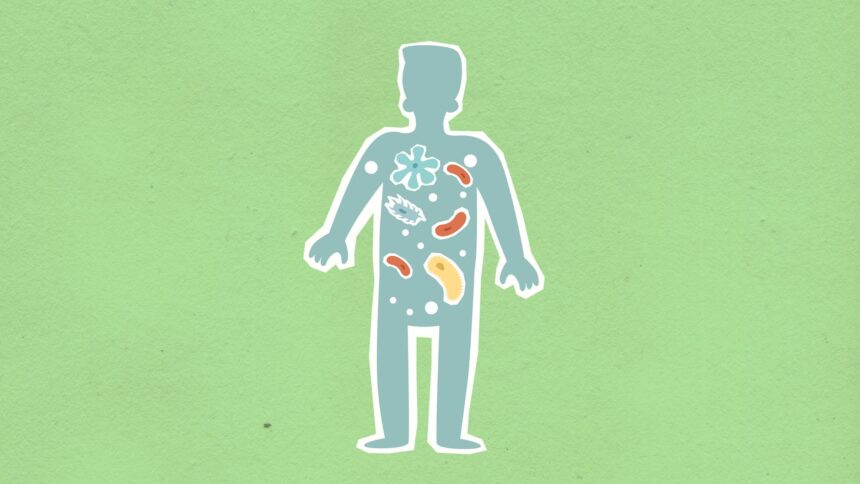
Scientific illustration of gut-brain axis showing bacterial communication pathways
The human gut microbiome actively communicates with the brain, immune system, and metabolism through complex biochemical pathways. Research reveals 100 trillion gut microbes produce neurotransmitters and metabolites that influence mental health, immune function, and disease risk far beyond digestion. — Photo: Monstera Production / Pexels
SHARE
1 min read|150 words

Medical research has identified three essential facts about gut microbiome function that every individual should understand for optimal health management. First, the 100 trillion microorganisms in your digestive system actively produce neurotransmitters and brain chemicals that directly influence mood, anxiety levels, and cognitive performance through established neural pathways.

Second, scientific evidence demonstrates clear connections between microbiome imbalances and major health conditions, including mental health disorders, autoimmune diseases, and metabolic dysfunction. These associations suggest that gut health serves as a foundation for overall physiological wellbeing.

Third, lifestyle factors including dietary choices and stress management can rapidly reshape your bacterial ecosystem within days, offering practical intervention opportunities. This means that targeted nutritional strategies and stress reduction techniques can potentially influence brain chemistry and disease risk through microbiome modification.

Understanding these connections empowers individuals to make informed decisions about gut health maintenance and its broader health implications.

Submit Your Paper
GMJ_Submit_Banner

Read the full article on GMJ Newsroom.

Was this article helpful?

GMJ Brief · Takeaway

📰 Read the full article: Gut Microbiome Shapes Mental Health and Disease Risk Through Bidirectional Brain Communication →

Share This Article
Facebook LinkedIn Bluesky Copy Link Print
GMJ
ByProf. Giorgi Pkhakadze
Follow:
Prof. Giorgi Pkhakadze, MD, MPH, PhD, is Editor-in-Chief of the Georgian Medical Journal and Chair of the Public Health Institute of Georgia (PHIG). He is Professor and Head of the Department of Social and Behavioural Sciences at David Tvildiani Medical University, and Secretary/Treasurer of the UEMS Section of Public Health. ORCID: 0000-0001-7609-4515.

Submit Your Paper →

Georgia's peer-reviewed open-access medical journal. No APC until January 2027.
Submit Manuscript →
Republican Opposition to Opioid Treatment Medications Sparks Policy Debate

Republican federal actions and proposals targeting opioid treatment medications have sparked debate…

NHS workforce planning faces strategic uncertainty as UK prioritises domestic medical graduates

NHS workforce planning faces uncertainty as new legislation prioritises UK medical graduates…

Maternal mortality crisis deepens for Sudanese refugee women in Central African Republic

Pregnant Sudanese refugee women in Central African Republic face 138 times higher…

Submit Your Paper to GMJ

No APC until January 2027.
Submit Manuscript →

You Might Also Like

Brain neurotransmitter diagram showing chemical signaling pathways

Brain’s Chemical Messengers Drive Daily Mental Performance

By
Prof. Giorgi Pkhakadze
24/05/2026
Chart comparing preclinical and clinical evidence for apigenin sleep and longevity effects

Clinical Trial Shortfall: Only 6 Human Studies on Apigenin’s Effects on Sleep and Aging

By
Prof. Giorgi Pkhakadze
07/06/2026

EBOLA OUTBREAK – DRC/UGANDA CROSS-BORDER TRANSMISSION CONFIRMED

By
Prof. Giorgi Pkhakadze
31/05/2026

🚨 Class 3 Medicines Recall: Orbit Pharma Limited, Cyclizine Lactate 50 mg/ml Solution for injection, EL(26)A/29

By
Prof. Giorgi Pkhakadze
17/06/2026
Facebook Twitter Youtube Instagram
Company
  • Privacy Policy
  • Contact US
  • GMJ Journal
  • Submit Manuscript
  • Editorial Team
  • Register at GMJ
  • Terms of Use

Subscribe to GMJ News — Click here

Join Community
© 2026 Georgian Medical Journal (GMJ). Published by the Public Health Institute of Georgia (PHIG). All rights reserved.
Welcome Back!

Sign in to your account

Username or Email Address
Password

Lost your password?

Not a member? Sign Up