By using this site, you agree to the Privacy Policy and Terms of Use.
Accept
GMJ NewsGMJ NewsGMJ News
  • Latest News
    • GMJ Briefs
  • Podcast & Media
    • Podcast Episodes
    • GMJ Audio
    • GMJ Videos
  • Research Digest
    • New Studies
    • Georgian Research
    • Data & Numbers
  • Policy & Systems
    • Health Policy
    • Quality & Safety
    • Migration & Health
    • Global Health
  • Practice
    • Clinical Updates
    • Case Discussions
    • Pharmacy & Prescribing
    • Ingredients A-Z
  • Perspectives
    • Editorial
    • Explainers
    • Voices
    • Letters
  • Health Topics
  • GMJ Articles
    • Vol. 1 Issue 2 (2026)
    • Vol. 1 Issue 1 (2026)
    • Pre-Launch Articles (2025)
  • Read the Journal →
  • About GMJ News
Notification Show More
Font ResizerAa
GMJ NewsGMJ News
Font ResizerAa
  • Latest News
    • GMJ Briefs
  • Podcast & Media
    • Podcast Episodes
    • GMJ Audio
    • GMJ Videos
  • Research Digest
    • New Studies
    • Georgian Research
    • Data & Numbers
  • Policy & Systems
    • Health Policy
    • Quality & Safety
    • Migration & Health
    • Global Health
  • Practice
    • Clinical Updates
    • Case Discussions
    • Pharmacy & Prescribing
    • Ingredients A-Z
  • Perspectives
    • Editorial
    • Explainers
    • Voices
    • Letters
  • Health Topics
  • GMJ Articles
    • Vol. 1 Issue 2 (2026)
    • Vol. 1 Issue 1 (2026)
    • Pre-Launch Articles (2025)
  • Read the Journal →
  • About GMJ News
Follow US
GMJ News > GMJ Briefs > New Protein Benchmark: 1.2–1.6 g/kg/day Across the Lifespan

New Protein Benchmark: 1.2–1.6 g/kg/day Across the Lifespan

GMJ
Last updated: 03/08/2026 13:29
By
Prof. Giorgi Pkhakadze
Share
1 Min Read
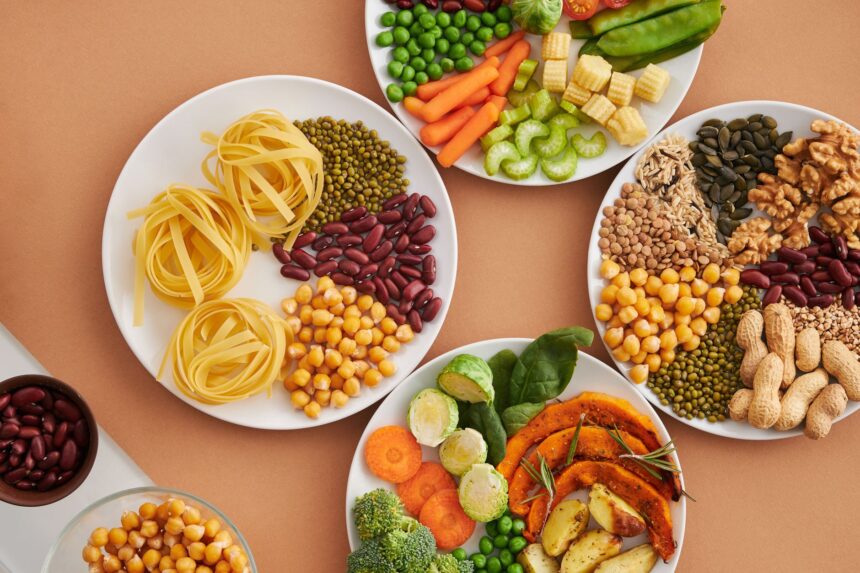
Infographic showing 7 core changes in 2025–2030 White House Dietary Guidelines including whole food focus, protein targets, and ultra-processed food reduction
The White House has released its 2025–2030 Dietary Guidelines, prioritizing minimally processed, nutrient-dense foods and introducing explicit protein intake targets of 1.2–1.6 g/kg/day. The updated guidance reaffirms animal-sourced proteins, endorses full-fat dairy, and identifies ultra-processed foods as a primary driver of chronic metabolic disease. — Photo by Vanessa Loring on Pexels (Pexels License)
SHARE
1 min read|122 words

The 2025–2030 Dietary Guidelines introduce an explicit protein intake recommendation of 1.2–1.6 g/kg/day, with emphasis on distributed protein intake across daily meals. This represents one of the first times federal guidelines have provided a specific, lifespan-spanning protein target, reflecting emerging evidence on protein’s role in metabolic health and disease prevention.

The guidelines simultaneously reaffirm animal-sourced proteins—including meat, poultry, eggs, seafood, and full-fat dairy—as nutrient-dense choices, reversing prior recommendations that systematically discouraged animal protein consumption. Ultra-processed foods are identified as the primary dietary contributor to chronic metabolic disease. The policy update also elevates the evidentiary standard, now prioritizing randomized controlled trials over observational data for nutritional recommendations, strengthening the scientific foundation of federal guidance.

Read the full article on GMJ Newsroom.

Was this article helpful?

GMJ Brief · Key Finding

📰 Read the full article: White House Updates Dietary Guidelines: Emphasis on Whole Foods and Protein Over Processing →

Share This Article
Facebook LinkedIn Bluesky Copy Link Print
GMJ
ByProf. Giorgi Pkhakadze
Follow:
Prof. Giorgi Pkhakadze, MD, MPH, PhD, is Editor-in-Chief of the Georgian Medical Journal and Chair of the Public Health Institute of Georgia (PHIG). He is Professor and Head of the Department of Social and Behavioural Sciences at David Tvildiani Medical University, and Secretary/Treasurer of the UEMS Section of Public Health. ORCID: 0000-0001-7609-4515.

Submit Your Paper →

Georgia's peer-reviewed open-access medical journal. No APC until January 2027.
Submit Manuscript →
How Alzheimer’s Spreads Through the Brain: Scientists Identify a Protein Culprit

Researchers have identified a common brain protein that transports toxic Tau proteins…

Buruli ulcer in Africa: balancing innovation with pragmatic care delivery

A new Nature Reviews analysis examines how sub-Saharan Africa can balance cutting-edge…

Informal healthcare providers drive untracked antibiotic use across low- and middle-income countries

A scoping review in BMJ Global Health reveals that informal healthcare providers…

Submit Your Paper to GMJ

No APC until January 2027.
Submit Manuscript →

You Might Also Like

Chart showing pediatric creatine trials timeline, 2004–2025, with safety and efficacy endpoints

High-Dose Creatine in Pediatric Brain Injury: Clinical Trial Shows Zero Adverse Events

By
Prof. Giorgi Pkhakadze
08/08/2026
Medical chart showing PCOS symptoms affecting metabolic and reproductive systems

What PCOS Patients and Providers Need to Know About the Proposed Name Change

By
Prof. Giorgi Pkhakadze
19/07/2026
Clinical UpdatesGlobal HealthPolicy & SystemsPractice

UN-backed Ebola Treatment Centres Launch in DRC as Cases Surge to Record Levels

By
Prof. Giorgi Pkhakadze
04/08/2026
Pharmacy & PrescribingPolicy & SystemsPracticeQuality & Safety

FDA Alert: Unique Pharmaceutical Recalls Cetirizine Tablets Over Ranitidine Cross-Contamination

By
Prof. Giorgi Pkhakadze
21/07/2026
Facebook Twitter Youtube Instagram
Company
  • Privacy Policy
  • Contact US
  • GMJ Journal
  • Submit Manuscript
  • Editorial Team
  • Register at GMJ
  • Terms of Use

Subscribe to GMJ News — Click here

Join Community
© 2026 Georgian Medical Journal (GMJ). Published by the Public Health Institute of Georgia (PHIG). All rights reserved.
Welcome Back!

Sign in to your account

Username or Email Address
Password

Lost your password?

Not a member? Sign Up