By using this site, you agree to the Privacy Policy and Terms of Use.
Accept
GMJ NewsGMJ NewsGMJ News
  • Latest News
    • GMJ Briefs
  • Podcast & Media
    • Podcast Episodes
    • GMJ Audio
    • GMJ Videos
  • Research Digest
    • New Studies
    • Georgian Research
    • Data & Numbers
  • Policy & Systems
    • Health Policy
    • Quality & Safety
    • Migration & Health
    • Global Health
  • Practice
    • Clinical Updates
    • Case Discussions
    • Pharmacy & Prescribing
    • Ingredients A-Z
  • Perspectives
    • Editorial
    • Explainers
    • Voices
    • Letters
  • GMJ Articles
    • Vol. 1 Issue 2 (2026)
    • Vol. 1 Issue 1 (2026)
    • Pre-Launch Articles (2025)
  • Read the Journal →
  • About GMJ News
Notification Show More
Font ResizerAa
GMJ NewsGMJ News
Font ResizerAa
  • Latest News
    • GMJ Briefs
  • Podcast & Media
    • Podcast Episodes
    • GMJ Audio
    • GMJ Videos
  • Research Digest
    • New Studies
    • Georgian Research
    • Data & Numbers
  • Policy & Systems
    • Health Policy
    • Quality & Safety
    • Migration & Health
    • Global Health
  • Practice
    • Clinical Updates
    • Case Discussions
    • Pharmacy & Prescribing
    • Ingredients A-Z
  • Perspectives
    • Editorial
    • Explainers
    • Voices
    • Letters
  • GMJ Articles
    • Vol. 1 Issue 2 (2026)
    • Vol. 1 Issue 1 (2026)
    • Pre-Launch Articles (2025)
  • Read the Journal →
  • About GMJ News
Follow US
GMJ News > GMJ Briefs > Beyond Sedation: How Glycine Activates Your Brain’s Natural Sleep Switch

Beyond Sedation: How Glycine Activates Your Brain’s Natural Sleep Switch

GMJ
Last updated: 28/07/2026 09:30
By
Prof. Giorgi Pkhakadze
Share
1 Min Read
Diagram of glycine thermoregulatory pathway: NMDA receptor → suprachiasmatic nucleus → medial preoptic area → peripheral vasodilation → core temperature drop
Glycine triggers sleep by lowering core body temperature through activation of the suprachiasmatic nucleus and peripheral vasodilation—the same thermoregulatory cascade that naturally precedes sleep onset. Animal studies and human trials confirm this mechanism, showing reduced sleep-onset latency at a cost of nine cents per dose. — Photo by bruce mars on Unsplash (Unsplash License)
SHARE
1 min read|116 words

Glycine doesn’t work like traditional sedatives. Instead, this amino acid triggers a sophisticated thermoregulatory cascade by activating your brain’s circadian clock—the suprachiasmatic nucleus—to lower core body temperature, the same physiological signal that naturally precedes sleep onset.

Research from Stanford University has mapped this mechanism with precision: a 3-gram dose of glycine binds to NMDA receptors and activates peripheral vasodilation, allowing heat loss through the skin. Clinical trials confirm that this temperature-driven pathway reduces sleep-onset latency and improves next-day alertness without the sedative hangover associated with conventional sleep aids.

At approximately 9 cents per dose, glycine represents one of the most cost-effective and mechanism-based approaches to sleep initiation available. Read the full article on GMJ Newsroom.

Was this article helpful?

GMJ Brief · Announcement

📰 Read the full article: How glycine lowers core body temperature to trigger sleep—a thermostat mechanism →

Related reference
  • Glycine · Ingredient
  • SAMe · Ingredient
Share This Article
Facebook LinkedIn Bluesky Copy Link Print
GMJ
ByProf. Giorgi Pkhakadze
Follow:
Prof. Giorgi Pkhakadze, MD, MPH, PhD, is Editor-in-Chief of the Georgian Medical Journal and Chair of the Public Health Institute of Georgia (PHIG). He is Professor and Head of the Department of Social and Behavioural Sciences at David Tvildiani Medical University, and Secretary/Treasurer of the UEMS Section of Public Health. ORCID: 0000-0001-7609-4515.

Submit Your Paper →

Georgia's peer-reviewed open-access medical journal. No APC until January 2027.
Submit Manuscript →
L-Theanine Improves Task Accuracy Without Expected Brain Wave Changes, Research Shows

L-theanine marketing claims about alpha brain wave enhancement lack experimental support in…

Astrocytes Reshape Understanding of Brain Control: Beyond Neurons to Cellular Regulation

Astrocytes, comprising roughly 50% of brain cells, are now recognised as active…

How the immune system learns to remember threats: the science of innate and adaptive immunity

The immune system operates in two coordinated layers: an immediate innate response…

Submit Your Paper to GMJ

No APC until January 2027.
Submit Manuscript →

You Might Also Like

FDA approval document for teplizumab pediatric diabetes treatment

Landmark FDA Approval: Teplizumab Becomes First Immunotherapy for Pediatric Type 1 Diabetes

By
Prof. Giorgi Pkhakadze
06/07/2026
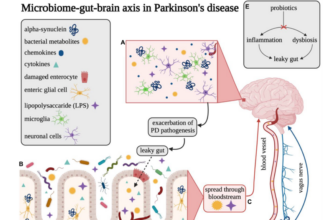
Scientific illustration of gut microbiome bacteria and brain connection for Parkinson's disease research

Microbiome Analysis May Enable Early Detection of Parkinson’s Disease Risk

By
Prof. Giorgi Pkhakadze
21/06/2026
Chart showing decline in US prescription drug shortages by category with cancer medications highlighted

What Healthcare Leaders Need to Know About Persistent Drug Shortage Patterns

By
Prof. Giorgi Pkhakadze
24/07/2026
Medical researcher examining blood samples for biological age testing in laboratory setting

Stanford Develops Blood Test to Measure Biological Age Across 11 Organ Systems

By
Prof. Giorgi Pkhakadze
07/07/2026
Facebook Twitter Youtube Instagram
Company
  • Privacy Policy
  • Contact US
  • GMJ Journal
  • Submit Manuscript
  • Editorial Team
  • Register at GMJ
  • Terms of Use

Subscribe to GMJ News — Click here

Join Community
© 2026 Georgian Medical Journal (GMJ). Published by the Public Health Institute of Georgia (PHIG). All rights reserved.
Welcome Back!

Sign in to your account

Username or Email Address
Password

Lost your password?

Not a member? Sign Up