By using this site, you agree to the Privacy Policy and Terms of Use.
Accept
GMJ NewsGMJ NewsGMJ News
  • Latest News
    • GMJ Briefs
  • Podcast & Media
    • Podcast Episodes
    • GMJ Audio
    • GMJ Videos
  • Research Digest
    • New Studies
    • Georgian Research
    • Data & Numbers
  • Policy & Systems
    • Health Policy
    • Quality & Safety
    • Migration & Health
    • Global Health
  • Practice
    • Clinical Updates
    • Case Discussions
    • Pharmacy & Prescribing
    • Ingredients A-Z
  • Dictionary
    • Browse A–Z
    • About the Project
    • Contribute a Term
  • Perspectives
    • Editorial
    • Explainers
    • Voices
    • Letters
  • Health Topics
  • GMJ Articles
    • Vol. 1 Issue 2 (2026)
    • Vol. 1 Issue 1 (2026)
    • Pre-Launch Articles (2025)
  • Read the Journal →
  • About GMJ News
Notification Show More
Font ResizerAa
GMJ NewsGMJ News
Font ResizerAa
  • Latest News
    • GMJ Briefs
  • Podcast & Media
    • Podcast Episodes
    • GMJ Audio
    • GMJ Videos
  • Research Digest
    • New Studies
    • Georgian Research
    • Data & Numbers
  • Policy & Systems
    • Health Policy
    • Quality & Safety
    • Migration & Health
    • Global Health
  • Practice
    • Clinical Updates
    • Case Discussions
    • Pharmacy & Prescribing
    • Ingredients A-Z
  • Dictionary
    • Browse A–Z
    • About the Project
    • Contribute a Term
  • Perspectives
    • Editorial
    • Explainers
    • Voices
    • Letters
  • Health Topics
  • GMJ Articles
    • Vol. 1 Issue 2 (2026)
    • Vol. 1 Issue 1 (2026)
    • Pre-Launch Articles (2025)
  • Read the Journal →
  • About GMJ News
Follow US
GMJ News > GMJ Briefs > The Jejunum’s Hidden Power: 95% of Your Dietary Macronutrients

The Jejunum’s Hidden Power: 95% of Your Dietary Macronutrients

GMJ
Last updated: 10/08/2026 15:30
By
Prof. Giorgi Pkhakadze
Share
1 Min Read
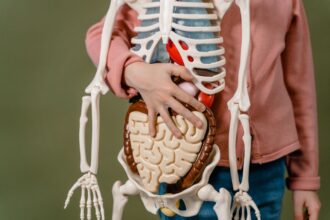
Diagram of gastrointestinal tract showing nutrient absorption by segment: stomach, duodenum, jejunum, ileum, and colon
The human gastrointestinal tract divides into five specialized absorption zones, each extracting specific nutrients through distinct biochemical mechanisms. From the stomach's acid-catalyzed protein breakdown to the jejunum's macronutrient extraction to the colon's water recovery, this seven-meter system demonstrates remarkable molecular compartmentalization that determines nutritional status. — Photo by Atlantic Ambience on Pexels (Pexels License)
SHARE
1 min read|110 words

A single section of your small intestine—the jejunum—is responsible for absorbing 95 percent of all dietary macronutrients your body requires. This extraordinary efficiency is made possible by an expansive villous surface area spanning 30 to 40 square meters, equipped with specialized transport mechanisms at the molecular level. The jejunum’s dominance in macronutrient extraction demonstrates the remarkable specialization within the gastrointestinal tract. While other segments handle minerals, vitamins, and water recovery, the jejunum focuses exclusively on proteins, carbohydrates, and lipids—the macronutrient classes that comprise the bulk of dietary energy and structural components. This concentration of absorptive capacity in a single location represents an evolutionary optimization that ensures maximum nutrient extraction efficiency.

Was this article helpful?
GMJ Brief · Key Finding

📰 Read the full article: How the gut absorbs nutrients: a seven-meter journey from mouth to colon →

Share This Article
Facebook LinkedIn Bluesky Copy Link Print
GMJ
ByProf. Giorgi Pkhakadze
Follow:
Prof. Giorgi Pkhakadze, MD, MPH, PhD, is Editor-in-Chief of the Georgian Medical Journal and Chair of the Public Health Institute of Georgia (PHIG). He is Professor and Head of the Department of Social and Behavioural Sciences at David Tvildiani Medical University, and Secretary/Treasurer of the UEMS Section of Public Health. ORCID: 0000-0001-7609-4515.

Submit Your Paper →

Georgia's peer-reviewed open-access medical journal. No APC until January 2027.
Submit Manuscript →
Ethiopia Study Reveals Stakeholder Concerns Over Novel Malaria Treatments

A qualitative study in Ethiopia reveals that health workers and patients view…

Sitafloxacin monotherapy matches doxycycline-rifampicin for brucellosis treatment in landmark trial

A multicenter randomized trial in The Lancet Regional Health – Western Pacific…

Ultra-processed foods linked to higher kidney cancer risk in large US study

A prospective analysis of over 300,000 US adults found that higher consumption…

Submit Your Paper to GMJ

No APC until January 2027.
Submit Manuscript →

You Might Also Like

Laboratory researcher preparing nasal spray for brain aging study

Preclinical Data: Two Nasal Spray Doses Sustain Cognitive Improvements for Months

By
Prof. Giorgi Pkhakadze
06/07/2026
Brain scan and gut microbiome illustration showing intermittent fasting effects

How Intermittent Fasting Simultaneously Reshapes Brain Function and Gut Bacteria

By
Prof. Giorgi Pkhakadze
15/06/2026
Infographic showing physiological systems damaged by sleep deprivation across hormonal, metabolic, muscular, and appetite regulation pathways

Key Finding: Sleep Deprivation Damages Multiple Body Systems Simultaneously, Six Studies Show

By
Prof. Giorgi Pkhakadze
15/08/2026
Hospital medication dispensing system highlighting patient safety protocols

Medical Errors Now Third Leading Cause of Death in the US, Claims 250,000 Lives Annually

By
Prof. Giorgi Pkhakadze
22/07/2026
Facebook Twitter Youtube Instagram
Company
  • Privacy Policy
  • Contact US
  • GMJ Journal
  • Submit Manuscript
  • Editorial Team
  • Register at GMJ
  • Terms of Use

Subscribe to GMJ News — Click here

Join Community
© 2026 Georgian Medical Journal (GMJ). Published by the Public Health Institute of Georgia (PHIG). All rights reserved.
Welcome Back!

Sign in to your account

Username or Email Address
Password

Lost your password?