By using this site, you agree to the Privacy Policy and Terms of Use.
Accept
GMJ NewsGMJ NewsGMJ News
  • Latest News
  • Research Digest
    • New Studies
    • Georgian Research
    • Data & Numbers
  • Policy & Systems
    • Health Policy
    • Quality & Safety
    • Migration & Health
    • Global Health
  • Practice
    • Clinical Updates
    • Case Discussions
    • Pharmacy & Prescribing
  • Perspectives
    • Editorial
    • Explainers
    • Voices
    • Letters
  • Podcast & Media
    • Podcast Episodes
    • Video
    • Infographics
  • GMJ Articles
    • Vol. 1 Issue 2 (2026)
    • Vol. 1 Issue 1 (2026)
    • Pre-Launch Articles (2025)
  • Read the Journal →
Notification Show More
Font ResizerAa
GMJ NewsGMJ News
Font ResizerAa
  • Latest News
  • Research Digest
    • New Studies
    • Georgian Research
    • Data & Numbers
  • Policy & Systems
    • Health Policy
    • Quality & Safety
    • Migration & Health
    • Global Health
  • Practice
    • Clinical Updates
    • Case Discussions
    • Pharmacy & Prescribing
  • Perspectives
    • Editorial
    • Explainers
    • Voices
    • Letters
  • Podcast & Media
    • Podcast Episodes
    • Video
    • Infographics
  • GMJ Articles
    • Vol. 1 Issue 2 (2026)
    • Vol. 1 Issue 1 (2026)
    • Pre-Launch Articles (2025)
  • Read the Journal →
Follow US
GMJ News > Research Digest > New Studies > Heart Shows Aging Signs by Age 40, While Brain Remains Resilient Until 60s, Cell Study Reveals
New StudiesResearch Digest

Heart Shows Aging Signs by Age 40, While Brain Remains Resilient Until 60s, Cell Study Reveals

GMJ
Last updated: 05/24/2026 02:49
By
GMJ News Desk
Share
6 Min Read
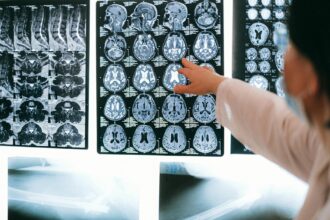
Scientific chart showing organ aging timeline from 30s to 60s with heart, kidneys, and brain progression
New Cell study reveals heart and kidneys show aging by age 40, while brain remains resilient until 60s. Age 55 identified as critical turning point for multiple organ systems. — Photo: MART PRODUCTION / Pexels
SHARE

A comprehensive study published in Cell in 2025 reveals that human aging follows a predictable organ-specific timeline, with the heart and kidneys showing measurable decline by the early 40s while the brain maintains resilience until the 60s. The research challenges the conventional view of aging as a uniform process across all body systems.

Contents
      • Organ Aging Timeline: When Different Systems Begin to Decline
  • Heart and Kidneys Lead Age-Related Decline
  • Midlife Convergence Creates Critical Aging Window
  • Brain Demonstrates Remarkable Age Resistance
    • Key takeaways
  • Frequently asked questions
    • Why does the heart age faster than the brain?
    • Can lifestyle changes slow organ-specific aging?
    • What makes age 55 such a critical turning point?
Age 55
Critical turning point when cardiovascular, blood, and muscle systems show synchronized molecular aging

Organ Aging Timeline: When Different Systems Begin to Decline

Age ranges when measurable aging changes first appear, based on 2025 Cell study

Reproductive (30s)
30-35
Heart & Kidneys (40s)
38-42
Liver & Lungs (50s)
45-50
Multiple Systems

55

Brain & Nervous
60-65

Source: Cell, 2025 | Georgian Medical Journal News

Heart and Kidneys Lead Age-Related Decline

The Cell study identified the cardiovascular and renal systems as the earliest major organs to show measurable age-related changes. By the late 30s to early 40s, cardiac tissue begins losing elasticity while kidney filtration efficiency starts to decline.

Submit Your Paper
GMJ_Submit_Banner

“The heart becomes among the first major organs to show measurable age-related changes, with cardiac tissue losing elasticity by the late 30s,” according to the study’s molecular analysis. Liver metabolism also begins to slow during this period, altering the body’s ability to process fats and toxins effectively.

These findings align with clinical observations showing increased cardiovascular risk factors emerging in the fifth decade of life, even in otherwise healthy individuals.

Midlife Convergence Creates Critical Aging Window

The research revealed age 55 as a pivotal moment when multiple organ systems experience synchronized molecular aging. At this stage, changes in heart muscle stiffness, blood oxygen transport capacity, and muscle fiber composition converge to accelerate physical decline.

By age 50, the gastrointestinal system becomes increasingly prone to inflammation and microbiome shifts, directly influencing nutrient absorption and immune function. The study authors noted that lung and digestive tract regenerative capacity also shows marked reduction during this midlife period.

This systematic aging pattern explains why many individuals experience noticeable health changes during their early 50s, even without specific disease diagnoses. The research provides a molecular basis for age-related health screening recommendations.

Brain Demonstrates Remarkable Age Resistance

Contrary to popular beliefs about cognitive decline, the study found that brain and nervous system aging occurs significantly later than other organs. Measurable neurological aging typically doesn’t manifest until the 60s, making the brain one of the most age-resistant organ systems.

This finding from Cell challenges assumptions about inevitable cognitive decline in middle age. The research suggests that many perceived cognitive changes in the 40s and 50s may be related to cardiovascular health rather than direct brain aging.

The delayed brain aging timeline has important implications for health policy and workplace age discrimination, suggesting cognitive capacity remains largely intact well into the sixth decade of life.

Age 55 represents a critical turning point when cardiovascular, hematologic, and musculoskeletal systems show synchronized molecular aging, with the greatest number of organ systems displaying coordinated decline.

— Cell Research Team, 2025 Study (Cell, 2025)

Key takeaways

  • Heart and kidney aging begins measurably in the late 30s to early 40s
  • Age 55 marks the critical convergence point for multiple organ system decline
  • Brain aging occurs significantly later, typically not until the 60s
  • Reproductive system shows the earliest aging signs, beginning around age 30

Frequently asked questions

Why does the heart age faster than the brain?

The heart experiences constant mechanical stress and metabolic demands that accelerate cellular damage accumulation. Brain tissue has superior protective mechanisms and lower metabolic stress, allowing it to maintain function longer.

Can lifestyle changes slow organ-specific aging?

Yes, targeted interventions can influence aging timelines. Cardiovascular exercise particularly benefits heart and kidney aging, while cognitive stimulation supports brain health maintenance.

What makes age 55 such a critical turning point?

Multiple organ systems reach threshold levels of accumulated cellular damage simultaneously around age 55, creating a cascade effect where declining systems impact each other’s function.

Understanding organ-specific aging timelines enables more precise preventive healthcare strategies and realistic health expectations across different life stages. The research provides a roadmap for targeted interventions that could potentially extend healthy organ function and improve quality of life outcomes.

Source: When different organs begin to show signs of aging


TAGGED:agingbrain healthcardiovascular healthlongevity researchorgan systems
Share This Article
Facebook Copy Link Print
Leave a Comment Leave a Comment

Leave a Reply Cancel reply

Your email address will not be published. Required fields are marked *

Submit Your Paper →

Georgia's peer-reviewed open-access medical journal. No APC until January 2027.
Submit Manuscript →
Brain Signal After Exercise May Determine Fitness Gains, Study Finds

New research identifies SF1 neurons in the brain that activate for one…

Largest Genetic Study Reveals Any Level of Alcohol Consumption Increases Dementia Risk

Genetic analysis of 2.4 million participants reveals any level of alcohol consumption…

Disrupted Circadian Rhythms Trigger Gut Barrier Breakdown and Digestive Dysfunction

New research reveals that disrupted circadian rhythms fundamentally alter gut function, weakening…

Submit Your Paper to GMJ

No APC until January 2027.
Submit Manuscript →

You Might Also Like

Medical chart showing health risk factors including mental health conditions and socioeconomic status
New Studies

Mental Health Conditions and Low Income Create Dual Health Risks, Danish Study Reveals

By
GMJ News Desk
Medical illustration showing myelin sheath damage from vitamin B12 deficiency
New Studies

B12 Deficiency Damages Nerves Before Blood Tests Show Abnormalities, Studies Find

By
GMJ News Desk
Diagram showing nine interconnected metabolic pathways from glucose to ATP production
New Studies

Nine-Step Metabolism Map: Simplified Biochemical Pathways for Medical Education

By
GMJ News Desk
Diagram showing inflammatory reflex pathway from brain through vagus nerve to spleen and immune response
New StudiesResearch Digest

Brain-Immune Connection: How the Inflammatory Reflex Controls Disease

By
GMJ News Desk
Facebook Twitter Youtube Instagram
Company
  • Privacy Policy
  • Contact US
  • GMJ Journal
  • Submit Manuscript
  • Editorial Team
  • Register at GMJ
  • Terms of Use

Sign Up For Free

Subscribe to our newsletter and don't miss out on our programs, webinars and trainings.

[mc4wp_form]

Join Community
Made by ThemeRuby using the Foxiz theme. Powered by WordPress
© 2026 Georgian Medical Journal (GMJ). Published by the Public Health Institute of Georgia (PHIG). All rights reserved.
Welcome Back!

Sign in to your account

Username or Email Address
Password

Lost your password?

Not a member? Sign Up