
Updated 13/09/2026
Photo: New UPMC East: Emergency patient room, by daveynin (Flickr), cropped for layout · Licensed CC BY 2.0 · Source
Plain-language summary of research published in the Georgian Medical Journal. Written for the general public by the GMJ News editorial team.
A 17-year-old boy was sent home twice with a diagnosis of food intoxication before anyone thought to check his heart. A case report in the Georgian Medical Journal documents how advanced, previously undiagnosed dilated cardiomyopathy hid behind ordinary-looking stomach symptoms — and argues, soberly, for what population-level screening could have changed.

Two Visits, One Missed Diagnosis
The patient presented to the Emergency Department with epigastric pain and vomiting, attributed to dietary indiscretion. An identical presentation just two days earlier had already been managed as food intoxication and the patient discharged without any cardiac investigation. On this second admission, examination found pallor, muffled heart sounds, and a resting heart rate of 178 beats per minute — signs that point toward the heart, not the stomach.
What the Workup Finally Found
Blood tests showed elevated liver enzymes, low sodium, low calcium, and significant hypoxaemia — a constellation more consistent with organ strain than simple food poisoning. ECG findings prompted echocardiography, which revealed a severely dilated left ventricle with an ejection fraction of just 16% (normal is roughly 55–70%), consistent with advanced dilated cardiomyopathy. A family history subsequently emerged of a sibling’s premature cardiac death, raising strong suspicion of an inherited cardiomyopathy running in the family.
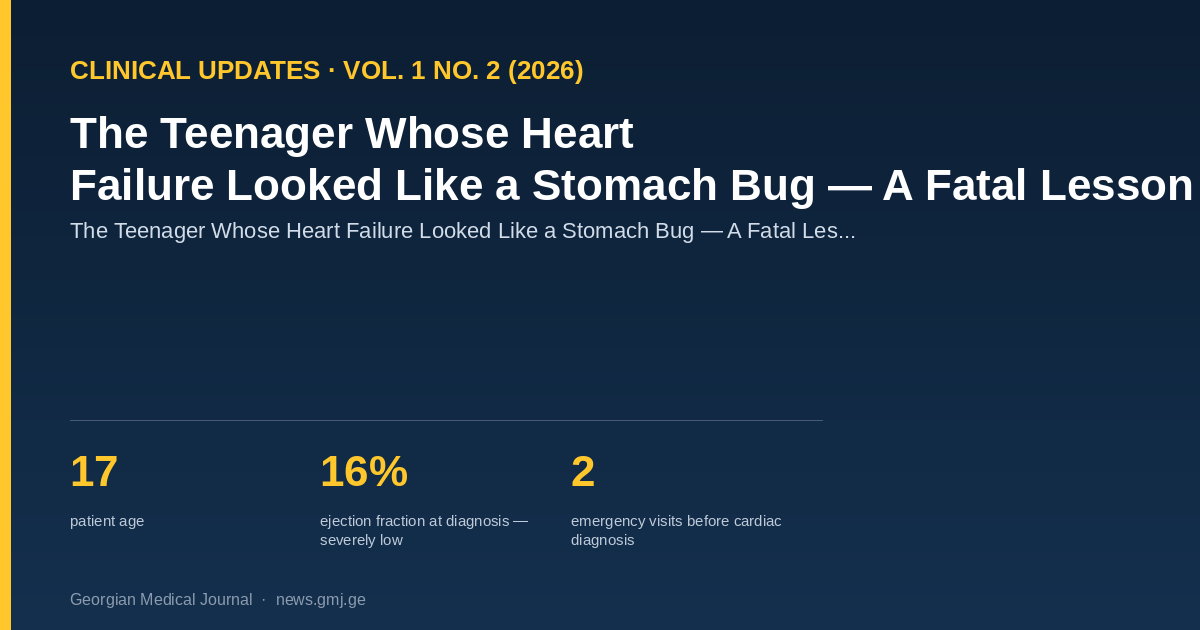
At a glance — the headline figures.
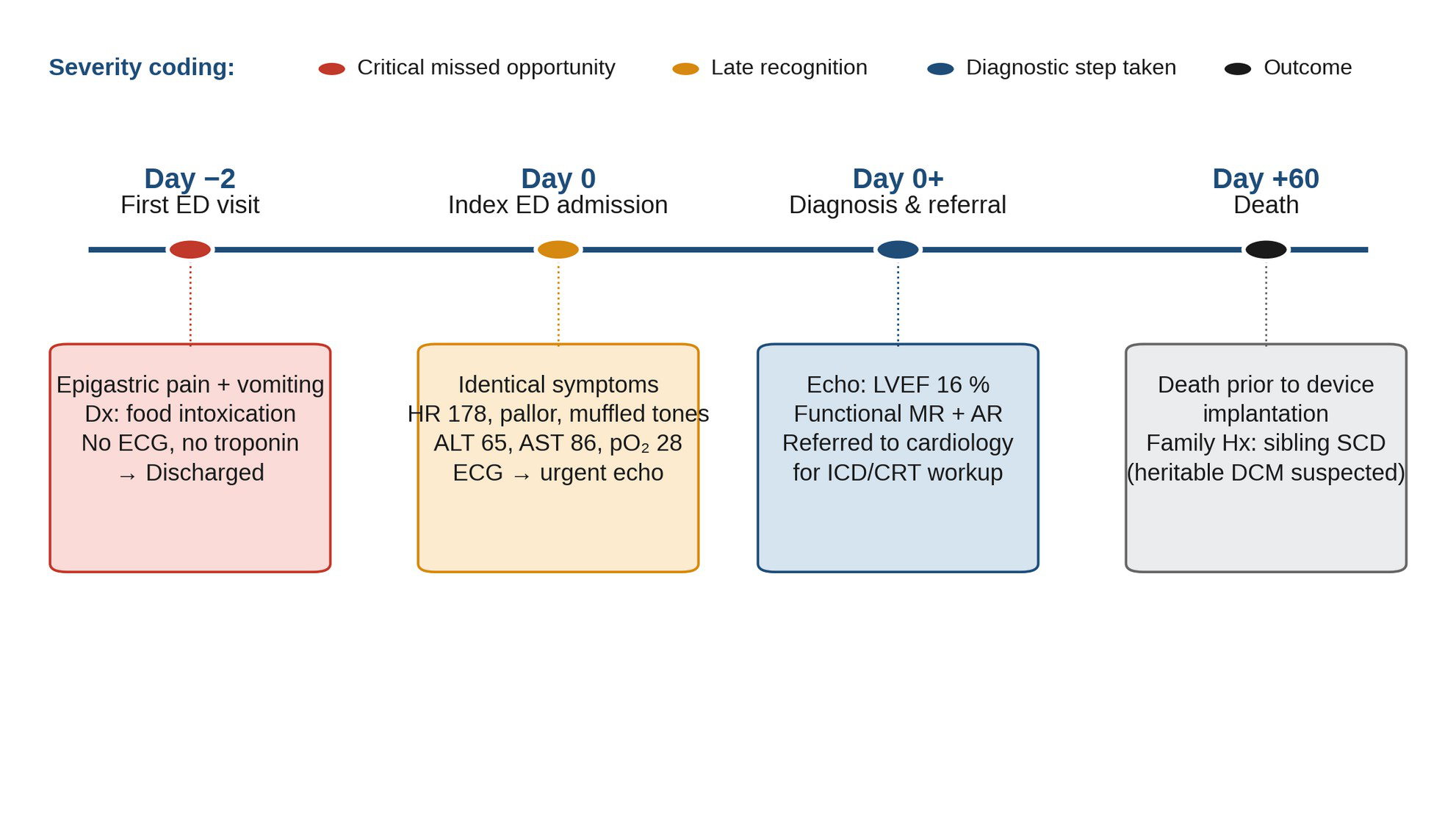
Timeline from initial presentation to diagnosis, illustrating the diagnostic delay in this case. Figure from the case report. Source: Georgian Medical Journal, Vol. 1 No. 2 (2026), DOI: 10.66636/gmj.v1.i2.a122.
The patient was referred for cardiology care but died two months later, before device implantation could take place. The report’s core clinical message is stated plainly by the authors: epigastric pain and vomiting in an adolescent can be the sole presenting feature of advanced heart failure, and a low threshold for ECG and echocardiography — alongside vigilant vital-sign interpretation — is essential to avoiding this kind of diagnostic delay. The authors go further, arguing this case supports population-level cardiac screening incorporating ECG and echocardiography as a preventive strategy against sudden cardiac death in children and adolescents more broadly.
🗺️ Find certified Georgian healthcare providers: sheniekimi.ge — Georgia Health Map · 998 clinics · 6,600+ doctors · 2,296 pharmacies
Read the Original Research
Original article: The Teenager Whose Heart Failure Looked Like a Stomach Bug — A Fatal Lesson for Paediatric Screening
Published in: Georgian Medical Journal, Vol. 1 No. 2 (2026)
DOI: 10.66636/gmj.v1.i2.a122
📄 Read the full article at gmj.ge →
Georgian Medical Journal (GMJ) · ISSN 3088-4322 · gmj.ge · Open Access CC BY 4.0 · Published by the Public Health Institute of Georgia (PHIG). This summary is an independent editorial product of GMJ News; for clinical decisions, consult the original peer-reviewed article and a qualified professional.
Was this article helpful?
Disclaimer. This article is health journalism intended for general information and education. It is not medical advice and is not a substitute for professional diagnosis or treatment. Always consult a qualified healthcare provider about your individual circumstances. Full disclaimer →
Related Coverage




Editorial standards. This article was produced under the GMJ News editorial process, with oversight by the GMJ Editorial Board. Our editorial process. Spotted an error? Contact the editorial team.