By using this site, you agree to the Privacy Policy and Terms of Use.
Accept
GMJ NewsGMJ NewsGMJ News
  • Latest News
    • GMJ Briefs
  • Podcast & Media
    • Podcast Episodes
    • GMJ Audio
    • GMJ Videos
  • Research Digest
    • New Studies
    • Georgian Research
    • Data & Numbers
  • Policy & Systems
    • Health Policy
    • Quality & Safety
    • Migration & Health
    • Global Health
  • Practice
    • Clinical Updates
    • Case Discussions
    • Pharmacy & Prescribing
    • Ingredients A-Z
  • Perspectives
    • Editorial
    • Explainers
    • Voices
    • Letters
  • GMJ Articles
    • Vol. 1 Issue 2 (2026)
    • Vol. 1 Issue 1 (2026)
    • Pre-Launch Articles (2025)
  • Read the Journal →
  • About GMJ News
Notification Show More
Font ResizerAa
GMJ NewsGMJ News
Font ResizerAa
  • Latest News
    • GMJ Briefs
  • Podcast & Media
    • Podcast Episodes
    • GMJ Audio
    • GMJ Videos
  • Research Digest
    • New Studies
    • Georgian Research
    • Data & Numbers
  • Policy & Systems
    • Health Policy
    • Quality & Safety
    • Migration & Health
    • Global Health
  • Practice
    • Clinical Updates
    • Case Discussions
    • Pharmacy & Prescribing
    • Ingredients A-Z
  • Perspectives
    • Editorial
    • Explainers
    • Voices
    • Letters
  • GMJ Articles
    • Vol. 1 Issue 2 (2026)
    • Vol. 1 Issue 1 (2026)
    • Pre-Launch Articles (2025)
  • Read the Journal →
  • About GMJ News
Follow US
GMJ News > GMJ Briefs > Sleep Amplifies Brain’s Waste Removal by 60 Percent, New Study Reveals

Sleep Amplifies Brain’s Waste Removal by 60 Percent, New Study Reveals

GMJ
Last updated: 10/06/2026 11:46
By
Prof. Giorgi Pkhakadze
Share
1 Min Read
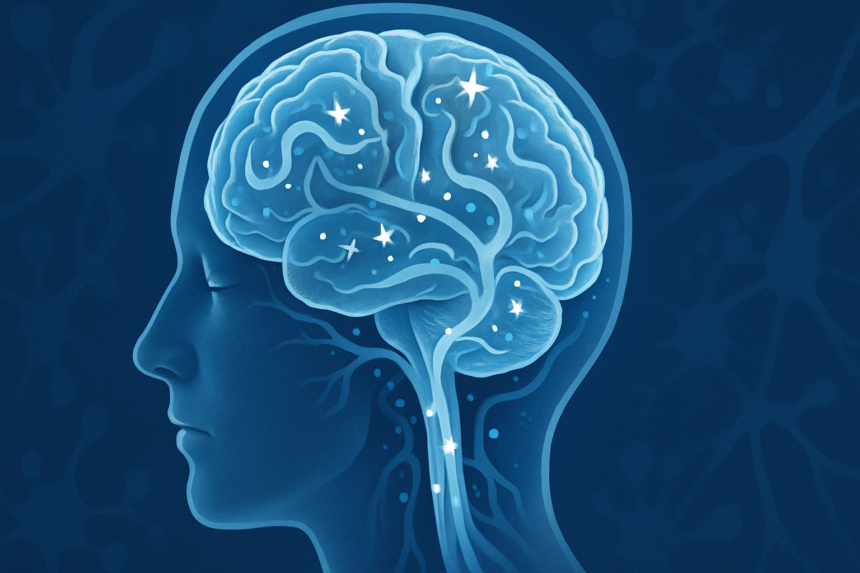
Diagram showing brain's glymphatic system with cerebrospinal fluid flow and astrocyte network
New research reveals how the brain's glymphatic system, astrocytes, and immune cells work continuously to remove toxic proteins and prevent neurodegeneration. Sleep increases waste clearance by 60%, highlighting the critical role of rest in maintaining cognitive health.
SHARE
1 min read|139 words

A striking new finding demonstrates that the brain’s glymphatic clearance system increases by 60 percent during sleep compared to wakefulness—highlighting sleep’s critical role in maintaining cognitive health. This dramatic efficiency boost occurs when brain cells physically shrink during sleep phases, creating wider channels for cerebrospinal fluid to flush away toxic proteins including amyloid plaques and tau aggregates.

Research published in Communications Biology shows that this nightly cleanup process is essential for preventing neurodegenerative diseases. The data directly correlates chronic sleep deprivation with elevated dementia risk, suggesting that inadequate rest compromises the brain’s ability to remove harmful proteins.

With aging and vascular dysfunction progressively impairing glymphatic function, the implications are significant. This 60 percent differential underscores why sleep quality should be prioritized as a fundamental component of brain health maintenance and neurodegeneration prevention strategies.

Read the full article on GMJ Newsroom.

Submit Your Paper
GMJ_Submit_Banner

Was this article helpful?

GMJ Brief · Key Finding

📰 Read the full article: Brain’s Hidden Cleanup System Works Around the Clock to Prevent Neurodegeneration →

Share This Article
Facebook LinkedIn Bluesky Copy Link Print
GMJ
ByProf. Giorgi Pkhakadze
Follow:
Prof. Giorgi Pkhakadze, MD, MPH, PhD, is Editor-in-Chief of the Georgian Medical Journal and Chair of the Public Health Institute of Georgia (PHIG). He is Professor and Head of the Department of Social and Behavioural Sciences at David Tvildiani Medical University, and Secretary/Treasurer of the UEMS Section of Public Health. ORCID: 0000-0001-7609-4515.

Submit Your Paper →

Georgia's peer-reviewed open-access medical journal. No APC until January 2027.
Submit Manuscript →
Gut microbiome screening could predict Parkinson’s disease risk years before symptoms emerge

New research published in Nature Medicine reveals that gut microbiome analysis could…

Genetic-Environmental Interactions Accelerate Brain Aging in Latin America

New research reveals how poverty and pollution accelerate brain aging by up…

Brain Scans Reveal No Widespread Inflammation in Long COVID Patients, Challenging Previous Theories

New brain imaging study finds no widespread inflammation in long COVID patients,…

Submit Your Paper to GMJ

No APC until January 2027.
Submit Manuscript →

You Might Also Like

Global HealthPolicy & Systems

WHO Declares International Emergency as Congo Ebola Outbreak Spreads Across Borders

By
Prof. Giorgi Pkhakadze
31/05/2026

PHEIC Declaration: Ebola Outbreak Cross-Border Transmission DRC-Uganda

By
Prof. Giorgi Pkhakadze
31/05/2026
Global HealthPolicy & Systems

US Funding Cuts Hamper International Ebola Response as Congo Outbreak Spreads

By
Prof. Giorgi Pkhakadze
26/05/2026
Global HealthPolicy & Systems

US aid cuts hamper Ebola outbreak detection and response in DRC, experts warn

By
Prof. Giorgi Pkhakadze
26/05/2026
Facebook Twitter Youtube Instagram
Company
  • Privacy Policy
  • Contact US
  • GMJ Journal
  • Submit Manuscript
  • Editorial Team
  • Register at GMJ
  • Terms of Use

Subscribe to GMJ News — Click here

Join Community
© 2026 Georgian Medical Journal (GMJ). Published by the Public Health Institute of Georgia (PHIG). All rights reserved.
Welcome Back!

Sign in to your account

Username or Email Address
Password

Lost your password?

Not a member? Sign Up