By using this site, you agree to the Privacy Policy and Terms of Use.
Accept
GMJ NewsGMJ NewsGMJ News
  • Latest News
    • GMJ Briefs
  • Podcast & Media
    • Podcast Episodes
    • GMJ Audio
    • GMJ Videos
  • Research Digest
    • New Studies
    • Georgian Research
    • Data & Numbers
  • Policy & Systems
    • Health Policy
    • Quality & Safety
    • Migration & Health
    • Global Health
  • Practice
    • Clinical Updates
    • Case Discussions
    • Pharmacy & Prescribing
    • Ingredients A-Z
  • Perspectives
    • Editorial
    • Explainers
    • Voices
    • Letters
  • GMJ Articles
    • Vol. 1 Issue 2 (2026)
    • Vol. 1 Issue 1 (2026)
    • Pre-Launch Articles (2025)
  • Read the Journal →
  • About GMJ News
Notification Show More
Font ResizerAa
GMJ NewsGMJ News
Font ResizerAa
  • Latest News
    • GMJ Briefs
  • Podcast & Media
    • Podcast Episodes
    • GMJ Audio
    • GMJ Videos
  • Research Digest
    • New Studies
    • Georgian Research
    • Data & Numbers
  • Policy & Systems
    • Health Policy
    • Quality & Safety
    • Migration & Health
    • Global Health
  • Practice
    • Clinical Updates
    • Case Discussions
    • Pharmacy & Prescribing
    • Ingredients A-Z
  • Perspectives
    • Editorial
    • Explainers
    • Voices
    • Letters
  • GMJ Articles
    • Vol. 1 Issue 2 (2026)
    • Vol. 1 Issue 1 (2026)
    • Pre-Launch Articles (2025)
  • Read the Journal →
  • About GMJ News
Follow US
GMJ News > Policy & Systems > Global Health > Animal health receives just 0.6% of global health spending despite mounting disease crises
Global HealthPolicy & Systems

Animal health receives just 0.6% of global health spending despite mounting disease crises

GMJ
Last updated: 28/05/2026 11:47
By
GMJ Policy Desk
Share
7 Min Read
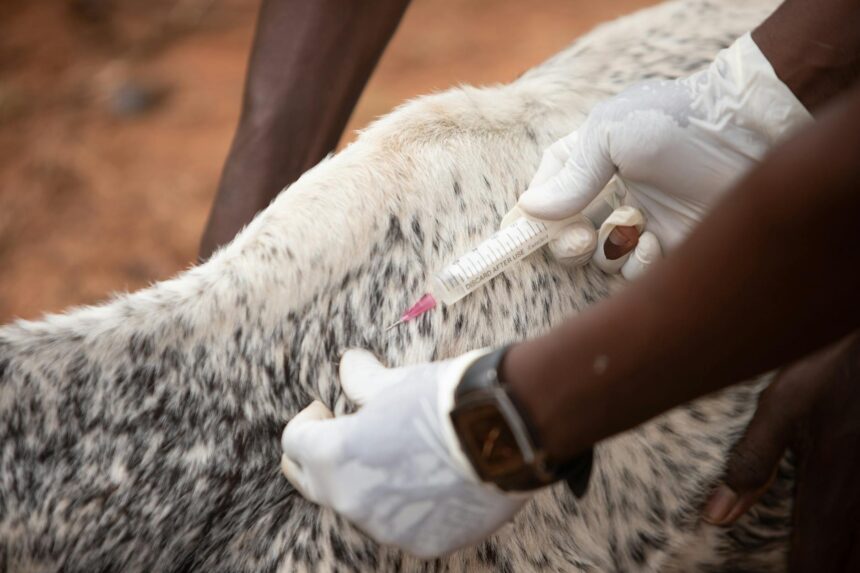
Infographic showing animal health funding represents tiny fraction of global health spending
Animal health receives just 0.6% of global health spending despite mounting disease crises that pose significant risks to human populations. A new WOAH report reveals critical funding gaps threatening pandemic preparedness. — Photo: Life In Lens / Pexels
SHARE
🎧 Listen to this article6:11 min · 731 words · GMJ Audio
4 min read|731 words

Animal health receives as little as 0.6 percent of global health spending despite mounting disease threats that pose significant risks to human populations, according to a new report from the World Organisation for Animal Health (WOAH). The stark disparity in funding allocation comes as the world grapples with increasing zoonotic disease outbreaks and antimicrobial resistance challenges that transcend species boundaries.

Contents
      • Global health spending distribution reveals massive animal health funding gap
  • Funding disparity threatens global health security
  • Economic consequences of neglecting animal health
  • Antimicrobial resistance compounds the crisis
    • Key takeaways
  • Frequently asked questions
    • Why is animal health funding important for human health?
    • How does underfunding animal health contribute to antimicrobial resistance?
    • What would improved animal health funding achieve?
0.6%
Share of global health spending allocated to animal health, according to WOAH’s 2024 report

Global health spending distribution reveals massive animal health funding gap

Percentage of total global health expenditure by sector, 2024

Human health
95%
Environmental health
4%
Plant health
2%
Animal health

0.6%

Source: World Organisation for Animal Health, 2024 | Georgian Medical Journal News

Funding disparity threatens global health security

The World Organisation for Animal Health report highlights a critical gap in global health financing that undermines efforts to prevent pandemic threats at their source. Animal health systems remain chronically underfunded compared to human health infrastructure.

Submit Your Paper
GMJ_Submit_Banner

The funding imbalance is particularly concerning given recent disease outbreaks including avian influenza, African swine fever, and foot-and-mouth disease that have caused economic losses globally. Related research on global health challenges continues to emphasize the interconnected nature of human, animal, and environmental health.

🎙️ Related Podcast Episodes
🎧 #8 | WHO Food Safety Surveillance: Strengthening Global Systems to Detect and Prevent Foodborne Diseases · 19m
🎧 #30 | GMJ Podcast | Global Health: Why Health Systems Matter · 15m
🎧 #21 | WHO Issues New Guidance on Novel Snakebite Treatments · 14m
🎧 #16 | WHO Prequalifies New Oral Polio Vaccine to Strengthen Global Eradication Efforts · 20m
🎧 #12 | WHO and Global Regulators Promote Antibiotic Labelling to Combat Antimicrobial Resistance · 19m

The WOAH report calls for a fundamental shift in how the international community approaches health investment, advocating for integrated One Health approaches that recognize the interdependence of human, animal, and environmental health systems.

Economic consequences of neglecting animal health

Animal disease outbreaks have significant economic impacts on the global economy through livestock losses, trade restrictions, and market disruptions, according to the WOAH report.

African swine fever has killed hundreds of millions of pigs worldwide since 2018, causing severe protein shortages and food price inflation in affected regions. Similarly, highly pathogenic avian influenza outbreaks have necessitated the culling of millions of poultry, disrupting protein supply chains and threatening food security for vulnerable populations.

The WOAH report emphasizes that investing in animal health infrastructure, surveillance systems, and veterinary capacity building would provide substantial returns on investment by preventing costly disease outbreaks.

Antimicrobial resistance compounds the crisis

The underfunding of animal health systems also hampers global efforts to combat antimicrobial resistance (AMR), according to the WOAH report. Poor animal health infrastructure often leads to inappropriate use of antibiotics in livestock, contributing to the development and spread of drug-resistant pathogens.

The World Health Organization has identified AMR as one of the top 10 global public health threats. Without adequate investment in animal health surveillance and diagnostic capacity, monitoring and controlling AMR remains extremely challenging, according to the WOAH report.

Veterinary diagnostic capabilities in many regions remain severely limited, forcing practitioners to rely on empirical antibiotic treatment rather than targeted therapy based on susceptibility testing, the WOAH report notes. Research featured in recent studies continues to demonstrate the urgent need for coordinated action across human and animal health sectors.

Animal health receives just 0.6% of global health spending despite the critical role of animals in disease emergence and antimicrobial resistance development

— World Organisation for Animal Health, Global Health Spending Report (2024)

Key takeaways

  • Animal health receives only 0.6% of global health spending, according to the WOAH report
  • Animal disease outbreaks cause significant economic losses through livestock deaths, trade restrictions, and market disruptions
  • Inadequate animal health funding undermines global efforts to combat antimicrobial resistance and pandemic preparedness

Frequently asked questions

Why is animal health funding important for human health?

Animal health surveillance and response systems help detect and contain disease threats before they become human health crises, according to the WOAH report.

How does underfunding animal health contribute to antimicrobial resistance?

Poor animal health infrastructure leads to inappropriate antibiotic use in livestock due to limited diagnostic capacity, contributing to the development of drug-resistant pathogens that can affect both animals and humans, according to the WOAH report.

What would improved animal health funding achieve?

Increased investment would strengthen disease surveillance systems, improve veterinary capacity, and enhance early detection of disease outbreaks, according to the WOAH report.

The WOAH report’s findings underscore the urgent need for a paradigm shift in global health financing that recognizes animal health as a critical component of pandemic preparedness and global health security. As the world continues to grapple with emerging disease threats, addressing this funding disparity will be essential for building resilient health systems capable of protecting both animal and human populations from future health crises.

Source: Animal health receives as little as 0.6 percent of global health spending despite mounting disease crises, new report warns

Was this article helpful?

Disclaimer. This article is health journalism intended for general information and education. It is not medical advice and is not a substitute for professional diagnosis or treatment. Always consult a qualified healthcare provider about your individual circumstances. Full disclaimer →

Related Coverage

International Survey Reveals Critical Gaps in Cardio-Oncology Training Despite Rising Clinical DemandJul 14, 2026
UK Guidance on Inadvertent Vaccination in Pregnancy: What Healthcare Providers Need to KnowJul 14, 2026
UK Charity Maggie's to Open Two New Cancer Care Centres in Coventry and BirminghamJul 14, 2026
Beyond the Breakthrough: Pancreatic Cancer Researchers Warn Real Work Is Just BeginningJul 14, 2026
Related reference
  • Iron · Ingredient
PG
Written by
Prof. Giorgi Pkhakadze, MD, MPH, PhD
Editor-in-Chief, GMJ News
Full profile →  ·  ORCID 0000-0001-7609-4515
Medical disclaimer. This article is health journalism intended for general information. It is not medical advice and is not a substitute for consultation with a qualified healthcare professional. Always seek your physician's advice regarding any medical condition.
Medically reviewed by Prof. Giorgi Pkhakadze, MD, MPH, PhD. Spotted an error? Contact the editorial team.
Get the GMJ News digest
Evidence-based health journalism in your inbox. No spam; unsubscribe anytime.
TAGGED:animal healthglobal health spendingpandemic preparednessWOAH reportzoonotic diseases
Share This Article
Facebook LinkedIn Bluesky Copy Link Print
GMJ
ByGMJ Policy Desk
Follow:
GMJ Policy Desk is part of GMJ News, the newsroom of the Georgian Medical Journal (gmj.ge), published by the Public Health Institute of Georgia. Every article is editorially reviewed before publication.
Leave a Comment Leave a Comment

Leave a Reply Cancel reply

Your email address will not be published. Required fields are marked *

Submit Your Paper →

Georgia's peer-reviewed open-access medical journal. No APC until January 2027.
Submit Manuscript →
The Optimal Height for Elite Soccer Players: What Sports Science Reveals

Elite soccer demonstrates position-specific height selection rather than universal stature advantage. Analysis…

International Survey Reveals Critical Gaps in Cardio-Oncology Training Despite Rising Clinical Demand

An international survey presented at ESC Cardio-Oncology 2026 has identified substantial deficiencies…

UK Guidance on Inadvertent Vaccination in Pregnancy: What Healthcare Providers Need to Know

UK health authorities have published guidance for healthcare professionals managing inadvertent live…

Submit Your Paper to GMJ

No APC until January 2027.
Submit Manuscript →

You Might Also Like

Infographic showing wildlife deaths from lead ammunition poisoning with statistics and affected species
Global HealthPolicy & Systems

WOAH Calls for Global Phase-Out of Lead Hunting Ammunition to Protect Wildlife and Human Health

By
GMJ Policy Desk
29/05/2026
UK Health Security Agency surveillance data showing low COVID-19 activity summer 2026Illustrative image · Photo by Atypeek Dgn on Pexels (Pexels License)
Global HealthPolicy & Systems

UK COVID-19 Activity Remains Low as Summer Season Begins, Official Surveillance Shows

By
GMJ Policy Desk
01/07/2026
Laboratory illustration of antibodies neutralizing henipavirus particlesIllustrative image · Photo by Iván Díaz on Unsplash (Unsplash License)
New StudiesResearch Digest

Breakthrough Antibody Cocktail Shows Promise Against Deadly Henipavirus Infections

By
GMJ Research Desk
06/07/2026
WHO filovirus disease clinical management guidelines for all Ebola and Marburg virus speciesIllustrative image · Photo by Markus Spiske on Unsplash (Unsplash License)
Global HealthHealth PolicyPolicy & Systems

WHO releases first comprehensive clinical guidelines for Ebola and Marburg virus management

By
GMJ Policy Desk
10/07/2026
Facebook Twitter Youtube Instagram
Company
  • Privacy Policy
  • Contact US
  • GMJ Journal
  • Submit Manuscript
  • Editorial Team
  • Register at GMJ
  • Terms of Use

Subscribe to GMJ News — Click here

Join Community
© 2026 Georgian Medical Journal (GMJ). Published by the Public Health Institute of Georgia (PHIG). All rights reserved.
Welcome Back!

Sign in to your account

Username or Email Address
Password

Lost your password?

Not a member? Sign Up