By using this site, you agree to the Privacy Policy and Terms of Use.
Accept
GMJ NewsGMJ NewsGMJ News
  • Latest News
    • GMJ Briefs
  • Podcast & Media
    • Podcast Episodes
    • GMJ Audio
    • GMJ Videos
  • Research Digest
    • New Studies
    • Georgian Research
    • Data & Numbers
  • Policy & Systems
    • Health Policy
    • Quality & Safety
    • Migration & Health
    • Global Health
  • Practice
    • Clinical Updates
    • Case Discussions
    • Pharmacy & Prescribing
    • Ingredients A-Z
  • Perspectives
    • Editorial
    • Explainers
    • Voices
    • Letters
  • GMJ Articles
    • Vol. 1 Issue 2 (2026)
    • Vol. 1 Issue 1 (2026)
    • Pre-Launch Articles (2025)
  • Read the Journal →
  • About GMJ News
Notification Show More
Font ResizerAa
GMJ NewsGMJ News
Font ResizerAa
  • Latest News
    • GMJ Briefs
  • Podcast & Media
    • Podcast Episodes
    • GMJ Audio
    • GMJ Videos
  • Research Digest
    • New Studies
    • Georgian Research
    • Data & Numbers
  • Policy & Systems
    • Health Policy
    • Quality & Safety
    • Migration & Health
    • Global Health
  • Practice
    • Clinical Updates
    • Case Discussions
    • Pharmacy & Prescribing
    • Ingredients A-Z
  • Perspectives
    • Editorial
    • Explainers
    • Voices
    • Letters
  • GMJ Articles
    • Vol. 1 Issue 2 (2026)
    • Vol. 1 Issue 1 (2026)
    • Pre-Launch Articles (2025)
  • Read the Journal →
  • About GMJ News
Follow US
GMJ News > GMJ Briefs > What You Need to Know About AI-Powered Bone Loss Detection

What You Need to Know About AI-Powered Bone Loss Detection

GMJ
Last updated: 01/07/2026 16:00
By
Prof. Giorgi Pkhakadze
Share
1 Min Read
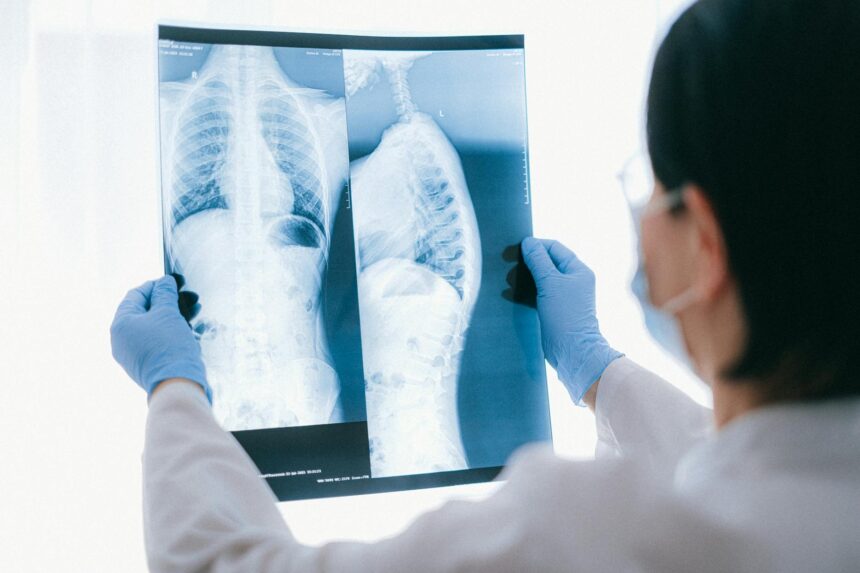
Medical professional reviewing chest X-ray with AI analysis highlighting bone density patterns
New AI technology can detect early bone loss from routine chest X-rays, potentially identifying millions of at-risk patients who fall outside current osteoporosis screening guidelines. The approach could transform preventive care for younger adults, men, and other underserved populations. — Photo: Anna Shvets / Pexels
SHARE
1 min read|143 words

Understanding how new artificial intelligence technology is transforming osteoporosis screening is essential for both healthcare providers and patients. This innovation analyzes chest X-rays routinely ordered for other conditions, identifying bone loss without requiring additional appointments or specialized imaging studies.

The practical advantage is significant: the system integrates seamlessly into existing clinical workflows while targeting traditionally underscreened populations. Men, younger adults, and individuals with normal body weight—groups often excluded from current screening guidelines—can now benefit from early detection.

Experts emphasize three critical implications: first, routine chest imaging gains new diagnostic value; second, opportunistic screening reaches previously missed at-risk patients; and third, early identification enables preventive interventions before fractures occur. For healthcare systems and patients seeking comprehensive preventive care, this technology represents a meaningful advancement in identifying silent bone loss before it becomes a clinical emergency.

Read the full article on GMJ Newsroom.

Submit Your Paper
GMJ_Submit_Banner

Was this article helpful?

GMJ Brief · Takeaway

📰 Read the full article: AI Tool Detects Silent Bone Loss from Routine Chest X-rays Before Fractures Strike →

Related reference
  • Osteoporosis · Condition
Share This Article
Facebook LinkedIn Bluesky Copy Link Print
GMJ
ByProf. Giorgi Pkhakadze
Follow:
Prof. Giorgi Pkhakadze, MD, MPH, PhD, is Editor-in-Chief of the Georgian Medical Journal and Chair of the Public Health Institute of Georgia (PHIG). He is Professor and Head of the Department of Social and Behavioural Sciences at David Tvildiani Medical University, and Secretary/Treasurer of the UEMS Section of Public Health. ORCID: 0000-0001-7609-4515.

Submit Your Paper →

Georgia's peer-reviewed open-access medical journal. No APC until January 2027.
Submit Manuscript →
Trump Administration Removes Job Protections for Thousands of Federal Health Workers

Thousands of federal health workers at HHS agencies including CDC, FDA, and…

Rare Lymphatic-Urinary Fistula Causes Milky Urine in NEJM Case Report

A rare case of chyluria caused by a lymphatic-urinary fistula demonstrates how…

Gene Therapy Shows Promise for Inherited Cholesterol Disorder in First-in-Human Trial

First-in-human gene therapy trial shows preliminary safety and efficacy for treating homozygous…

Submit Your Paper to GMJ

No APC until January 2027.
Submit Manuscript →

You Might Also Like

Global map showing youth mortality rates by region with data visualization

Youth Deaths Now Represent One-Third of Under-25 Mortality: A Three-Decade Shift

By
Prof. Giorgi Pkhakadze
19/06/2026
Infographic showing malnutrition statistics among Ecuadorian children by ethnicity

Ecuador’s Hidden Crisis: Nearly 3 in 4 Children Face Overlapping Malnutrition

By
Prof. Giorgi Pkhakadze
07/06/2026
Medical illustration showing muscle metabolism activation for diabetes treatment

Alternative to Appetite Suppressants: New Diabetes Pill Targets Muscle Metabolism

By
Prof. Giorgi Pkhakadze
15/06/2026
Medical illustration showing hepatitis B virus and treatment breakthrough concept

What You Need to Know About GSK’s Experimental Hepatitis B Breakthrough

By
Prof. Giorgi Pkhakadze
28/06/2026
Facebook Twitter Youtube Instagram
Company
  • Privacy Policy
  • Contact US
  • GMJ Journal
  • Submit Manuscript
  • Editorial Team
  • Register at GMJ
  • Terms of Use

Subscribe to GMJ News — Click here

Join Community
© 2026 Georgian Medical Journal (GMJ). Published by the Public Health Institute of Georgia (PHIG). All rights reserved.
Welcome Back!

Sign in to your account

Username or Email Address
Password

Lost your password?

Not a member? Sign Up