Updated 13/09/2026
Cognitive performance depends critically on the availability and metabolism of specific amino acids, which act as building blocks for neurotransmitters and modulators of synaptic function. Emerging neuroscience demonstrates that seven key amino acids—β-alanine, L-arginine, L-histidine, L-leucine, L-serine, and L-tryptophan—exert measurable effects on memory, mood, alertness, and brain energy metabolism, suggesting that dietary intake of these compounds directly influences mental health outcomes.
Key takeaways
- L-tryptophan metabolism generates serotonin and melatonin, directly linking dietary intake to mood and sleep regulation
- L-arginine acts as a precursor for nitric oxide, enhancing synaptic plasticity and neurotransmitter regulation
- L-histidine’s conversion to histamine influences alertness and circadian rhythm control
- L-leucine modulates hunger signaling and brain energy availability, linking metabolic states to cognitive performance
- Dietary sources including meat, dairy, legumes, and nuts provide all essential amino acids needed for optimal neural function
Amino acids and their primary neurological functions
Key roles in neurotransmission, synaptic plasticity, and cognitive regulation
Neurobiological roles of amino acids in cognitive function | Georgian Medical Journal News

The neurotransmitter pathway: How dietary amino acids become brain chemicals
L-tryptophan serves as the sole dietary precursor for serotonin and melatonin synthesis, two molecules central to emotional regulation and sleep architecture. When dietary L-tryptophan crosses the blood-brain barrier, it is enzymatically converted through the kynurenine pathway to serotonin in the raphe nucleus and to melatonin in the pineal gland. This conversion links dietary intake directly to mood stability and circadian function—deficiency in L-tryptophan availability has been associated with mood disorders and sleep disturbance in clinical settings.
Similarly, L-serine functions as a precursor for D-serine, a co-agonist at NMDA receptors, which are essential for long-term potentiation and synaptic plasticity. Without adequate L-serine, the brain cannot mount the molecular changes required for memory consolidation and learning. This underscores why protein malnutrition is associated with cognitive decline in vulnerable populations.
Clinical updates on nutritional neuroscience increasingly emphasize the relationship between amino acid bioavailability and cognitive outcomes, particularly in aging and neurodegenerative disease prevention.
Modulation of arousal and metabolic state: L-histidine, L-arginine, and brain energy
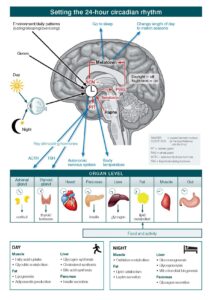
L-histidine’s conversion to histamine influences the sleep-wake cycle through histamine receptor signaling in the hypothalamus and basal forebrain. Histamine levels peak during wakefulness and fall during sleep, making L-histidine intake relevant to circadian alignment and alertness maintenance. Disruption of this pathway, whether through dietary insufficiency or genetic polymorphisms affecting histamine metabolism, can contribute to sleep disorders and cognitive fatigue.
L-arginine operates as a substrate for nitric oxide (NO) synthesis via endothelial and neuronal NO synthase. Nitric oxide acts as a retrograde messenger in synapses, enhancing synaptic plasticity and regulating both glutamate and dopamine neurotransmission. L-arginine deficiency impairs vascular endothelial function in cerebral blood vessels, reducing cerebral blood flow and oxygen delivery to neural tissue—a mechanism implicated in cognitive decline in aging and stroke risk.
L-leucine exerts a distinct metabolic effect: as a branched-chain amino acid, it activates the mTOR pathway, a master regulator of cellular energy sensing. In neurons, this activation links metabolic state (fed vs. fasted) to cognitive resource allocation. L-leucine also influences orexin and neuropeptide Y signaling, coupling hunger state to cognitive arousal and attention.
Cognitive function across domains—memory, mood, alertness, and metabolic awareness—depends critically on the steady availability and appropriate metabolism of seven key amino acids, each serving distinct neurochemical roles in neurotransmission, synaptic plasticity, and brain energy homeostasis.
— Amino acid neurobiology, emerging clinical evidence
Dietary sources and practical implications for cognitive health
All essential amino acids required for optimal neural function are available from dietary protein sources: meats (beef, poultry, fish), dairy products (milk, cheese, yogurt), legumes (beans, lentils, chickpeas), and nuts (almonds, walnuts, peanuts). Animal-based sources provide all nine essential amino acids in complete profiles, while plant-based sources require combination strategies to ensure amino acid completeness. A balanced diet with diverse protein sources ensures adequate supply of these neurologically active compounds.
The evidence linking amino acid metabolism to cognitive outcomes has several implications: first, for individuals seeking to optimize mental performance, consuming protein-rich meals distributed across the day maintains stable amino acid bioavailability in blood and cerebrospinal fluid. Second, populations at risk of protein malnutrition—elderly individuals, those with restrictive diets, or people recovering from illness—may face cognitive consequences that are partly nutritionally reversible. Third, certain neuropsychiatric conditions (depression, sleep disorders, attention deficits) may benefit from targeted amino acid supplementation, though clinical evidence for specific amino acids remains emerging.
Explainers on nutritional psychiatry are increasingly accessible to clinicians and the public, reflecting growing recognition that brain chemistry begins at the dinner table.
What this means
Frequently asked questions
Does taking amino acid supplements improve cognitive function if diet is already adequate?
For individuals consuming sufficient protein from food sources, supplemental amino acids show limited additional benefit for cognitive performance in research settings. However, targeted supplementation may be warranted in specific contexts—such as L-tryptophan for mood disorders or L-serine for neurodegenerative disease prevention—though clinical evidence remains preliminary. Consultation with a healthcare provider is recommended before starting any supplement regimen.
Which foods are the best sources of these cognitive-supporting amino acids?
Complete protein sources containing all essential amino acids include poultry, fish, eggs, dairy (milk, yogurt, cheese), beef, and pork. Plant-based sources such as lentils, chickpeas, beans, nuts, and seeds provide varying amino acid profiles; combining legumes with whole grains (rice and beans, hummus and bread) creates complete protein. A balanced approach including both animal and plant proteins ensures broad micronutrient intake alongside amino acids.
Can amino acid deficiency alone cause cognitive decline or mental health disorders?
Severe amino acid deficiency (as seen in protein-energy malnutrition) is associated with cognitive impairment and mood disturbance. However, in well-nourished populations, cognitive decline typically involves multiple factors—genetics, sleep quality, physical activity, stress, other nutrient deficiencies—rather than amino acids alone. Addressing amino acid availability through adequate protein intake is a necessary but often insufficient intervention for cognitive or mental health optimization.
The emerging field of nutritional neuroscience demonstrates that brain chemistry and cognitive performance are not separate from diet—they are downstream consequences of it. As understanding of amino acid metabolism in neural pathways deepens, dietary guidance for cognitive health, mood stability, and age-related cognitive preservation will increasingly rely on mechanistic knowledge of how specific amino acids support synaptic function and neurotransmitter synthesis. Public health approaches to cognitive aging and mental health prevention should prioritize accessible protein-adequate nutrition as a foundational intervention.
Source: Amino acid neurobiology and cognitive function infographic
🗺️ Find certified Georgian healthcare providers: sheniekimi.ge — Georgia Health Map · 998 clinics · 6,600+ doctors · 2,296 pharmacies
Was this article helpful?
Disclaimer. This article is health journalism intended for general information and education. It is not medical advice and is not a substitute for professional diagnosis or treatment. Always consult a qualified healthcare provider about your individual circumstances. Full disclaimer →
Related Coverage

Editorial standards. This article was produced under the GMJ News editorial process, with oversight by the GMJ Editorial Board. Our editorial process. Spotted an error? Contact the editorial team.