Updated 13/09/2026
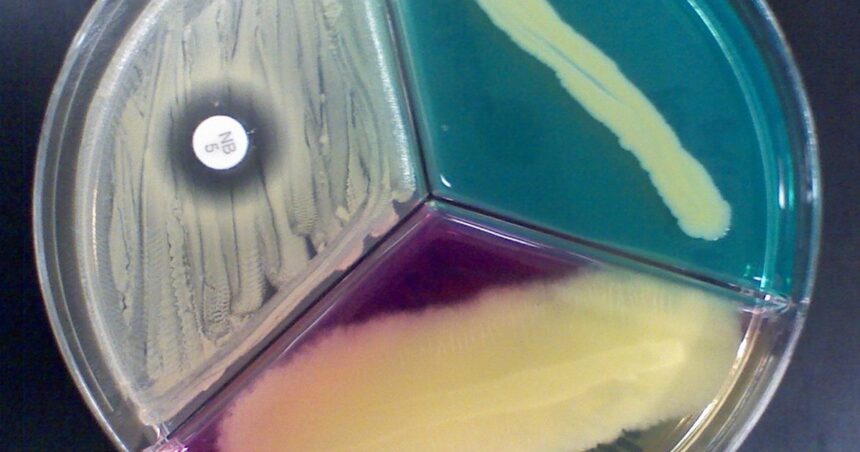
Photo: Staphylococcus xylosus, by If you dream it… (Flickr), cropped for layout · Licensed CC BY 2.0 · Source
Plain-language summary of research published in the Georgian Medical Journal. Written for the general public by the GMJ News editorial team.
Antimicrobial resistance and biofilm-associated persistence are increasingly limiting what antibiotics alone can do against severe surgical wound infections. A case series from Tbilisi’s Eliava Phage Therapy Center, published in the Georgian Medical Journal, documents three patients where an old idea — bacteriophage therapy — was combined with modern surgical and antibiotic care to treat infections that were otherwise winning.

Three Genuinely Severe Infections
This retrospective case series, following CARE 2017 reporting guidelines, covered three adult patients with post-amputation necrotic wound infection, Fournier gangrene, and post-sternotomy mediastinitis respectively — three different, all serious, surgical infection sites. Cultured pathogens were Pseudomonas aeruginosa in two cases and methicillin-sensitive Staphylococcus aureus in the third.
An Integrated Regimen, Tracked by a Simple Marker
Treatment combined staged surgical debridement, culture-directed systemic antibiotics, daily local application of a polyvalent bacteriophage preparation (10 mL/day), and antiseptic wound care. Wound exudate pH was measured daily with simple calibrated indicator strips — a low-cost way to track the wound microenvironment day to day without waiting for lab cultures.
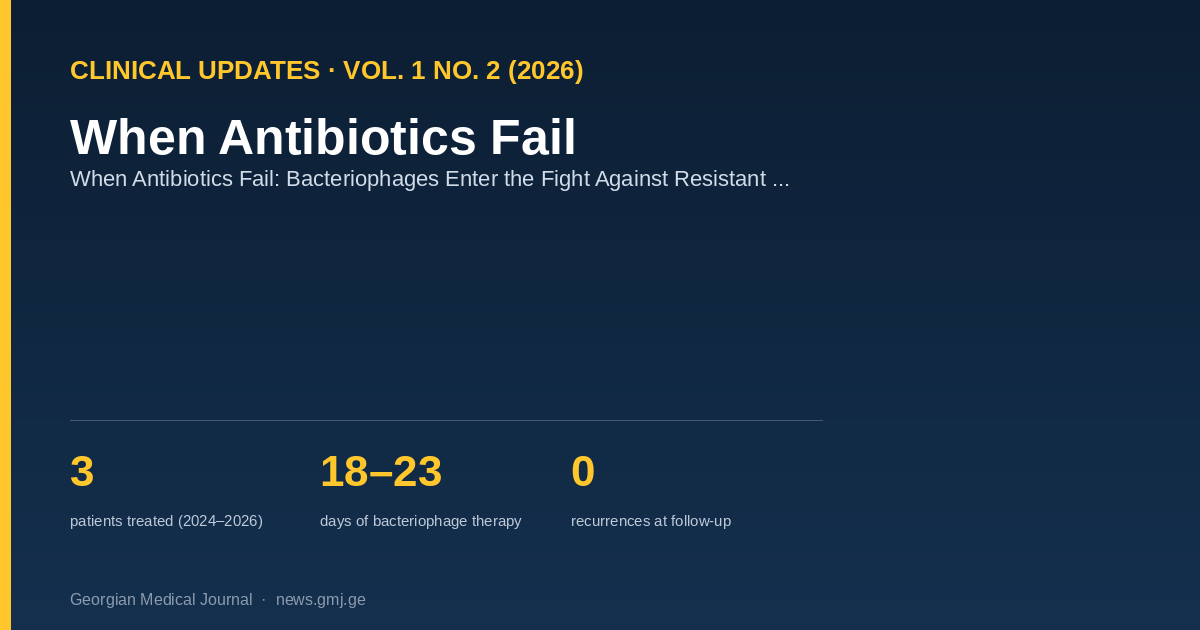
At a glance — the headline figures.
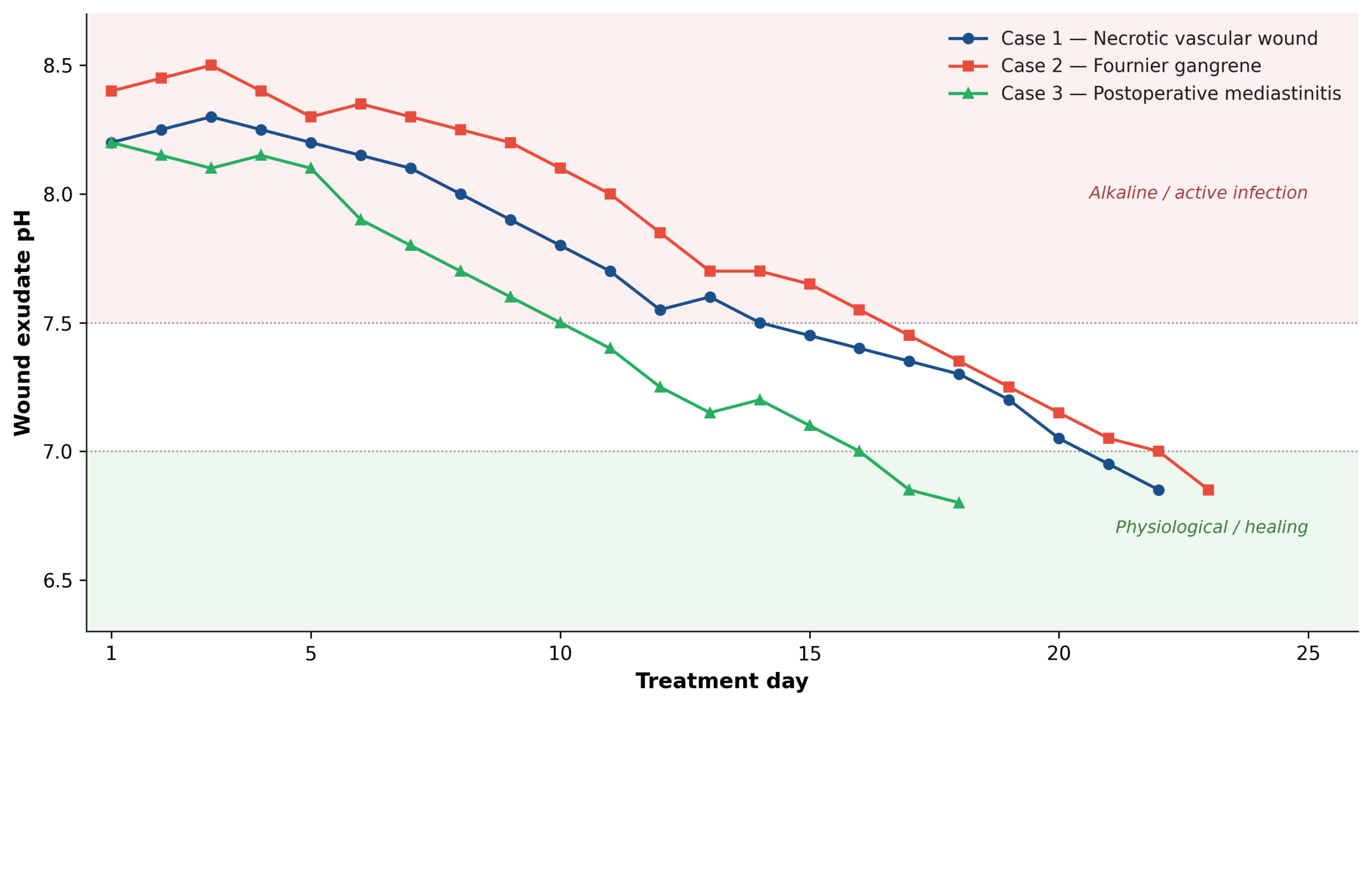
Wound exudate pH trends across treatment days for the three cases, showing normalisation coinciding with clinical improvement. Figure from the case series. Source: Georgian Medical Journal, Vol. 1 No. 2 (2026), DOI: 10.66636/gmj.v1.i2.a117.
Initial wound pH ranged from 7.8 to 8.5 during active infection — notably alkaline — and declined to 6.5–7.0 during clinical recovery in all three cases, tracking the transition from infected to healing tissue. Bacteriophage was administered for 18 to 23 days; all three patients achieved infection control and healthy granulation, with no recurrence at follow-up, and two underwent successful secondary reconstruction.
The authors frame wound pH normalisation as a potentially useful, genuinely low-cost adjunctive marker of treatment response — something that could help clinicians track progress in resource-limited settings without relying entirely on repeat cultures. As a three-patient case series, this establishes association rather than proof of causation; the authors explicitly call for prospective controlled studies to confirm the approach and standardise protocols for wider use.
🗺️ Find certified Georgian healthcare providers: sheniekimi.ge — Georgia Health Map · 998 clinics · 6,600+ doctors · 2,296 pharmacies
Read the Original Research
Original article: When Antibiotics Fail: Bacteriophages Enter the Fight Against Resistant Wound Infections
Published in: Georgian Medical Journal, Vol. 1 No. 2 (2026)
DOI: 10.66636/gmj.v1.i2.a117
📄 Read the full article at gmj.ge →
Georgian Medical Journal (GMJ) · ISSN 3088-4322 · gmj.ge · Open Access CC BY 4.0 · Published by the Public Health Institute of Georgia (PHIG). This summary is an independent editorial product of GMJ News; for clinical decisions, consult the original peer-reviewed article and a qualified professional.
Was this article helpful?
Disclaimer. This article is health journalism intended for general information and education. It is not medical advice and is not a substitute for professional diagnosis or treatment. Always consult a qualified healthcare provider about your individual circumstances. Full disclaimer →
Related Coverage

Editorial standards. This article was produced under the GMJ News editorial process, with oversight by the GMJ Editorial Board. Our editorial process. Spotted an error? Contact the editorial team.