By using this site, you agree to the Privacy Policy and Terms of Use.
Accept
GMJ NewsGMJ NewsGMJ News
  • Latest News
    • GMJ Briefs
  • Podcast & Media
    • Podcast Episodes
    • GMJ Audio
    • GMJ Videos
  • Research Digest
    • New Studies
    • Georgian Research
    • Data & Numbers
  • Policy & Systems
    • Health Policy
    • Quality & Safety
    • Migration & Health
    • Global Health
  • Practice
    • Clinical Updates
    • Case Discussions
    • Pharmacy & Prescribing
    • Ingredients A-Z
  • Perspectives
    • Editorial
    • Explainers
    • Voices
    • Letters
  • GMJ Articles
    • Vol. 1 Issue 2 (2026)
    • Vol. 1 Issue 1 (2026)
    • Pre-Launch Articles (2025)
  • Read the Journal →
  • About GMJ News
Notification Show More
Font ResizerAa
GMJ NewsGMJ News
Font ResizerAa
  • Latest News
    • GMJ Briefs
  • Podcast & Media
    • Podcast Episodes
    • GMJ Audio
    • GMJ Videos
  • Research Digest
    • New Studies
    • Georgian Research
    • Data & Numbers
  • Policy & Systems
    • Health Policy
    • Quality & Safety
    • Migration & Health
    • Global Health
  • Practice
    • Clinical Updates
    • Case Discussions
    • Pharmacy & Prescribing
    • Ingredients A-Z
  • Perspectives
    • Editorial
    • Explainers
    • Voices
    • Letters
  • GMJ Articles
    • Vol. 1 Issue 2 (2026)
    • Vol. 1 Issue 1 (2026)
    • Pre-Launch Articles (2025)
  • Read the Journal →
  • About GMJ News
Follow US
GMJ News > GMJ Briefs > 13 Degrees: The Temperature Gap Explaining Why Collagen Supplements Often Fail

13 Degrees: The Temperature Gap Explaining Why Collagen Supplements Often Fail

GMJ
Last updated: 31/07/2026 17:30
By
Prof. Giorgi Pkhakadze
Share
1 Min Read
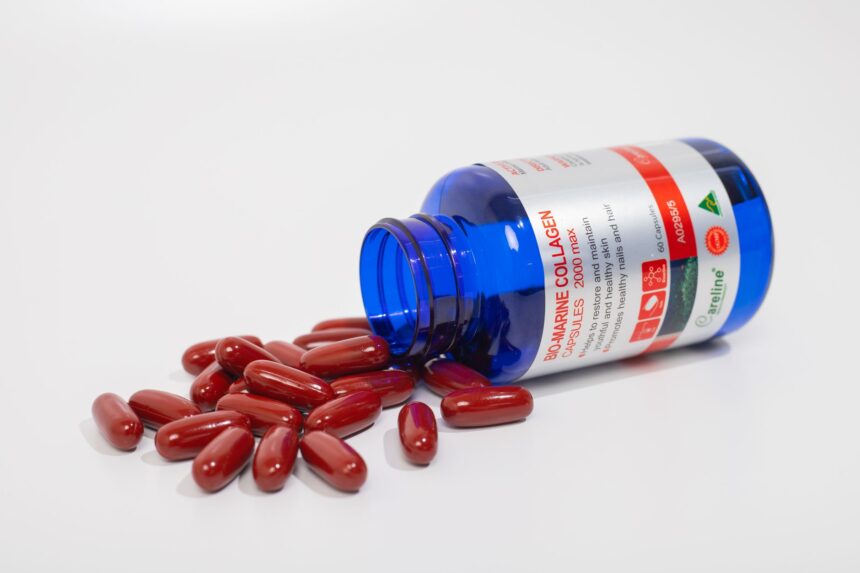
Diagram showing collagen triple helix formation and the role of vitamin C in hydroxylation modification
Vitamin C is not optional in collagen formation—it is catalytic. Your body continuously synthesizes collagen, but the newly formed protein cannot stabilize without a vitamin C–dependent enzymatic modification. Most collagen supplements fail to include adequate vitamin C, potentially explaining variable efficacy. — Photo by Hoàng Ngọc Long on Pexels (Pexels License)
SHARE
1 min read|133 words

A striking 13-degree temperature differential underscores the absolute necessity of vitamin C in collagen biology. Unhydroxylated collagen—collagen synthesized without adequate vitamin C—denatures at approximately 24°C. Human body temperature, however, maintains a constant 37°C. This means unmodified collagen cannot survive in your body; it literally melts under normal physiological conditions. The hydroxylation process, catalyzed by the enzyme prolyl hydroxylase and dependent on vitamin C as a cofactor, enables the chemical modifications that stabilize collagen’s triple-helix structure. When vitamin C is present, collagen remains stable at body temperature. This biochemical reality, documented in research spanning decades, reveals a fundamental flaw in many supplement formulations: they neglect to account for the continuous vitamin C consumption required throughout the hydroxylation cycle. Without adequate co-administration of vitamin C, collagen supplements cannot achieve their intended biological function.

Was this article helpful?

GMJ Brief · Key Finding

📰 Read the full article: Why Vitamin C Is Essential for Collagen Formation—and Why Supplements Often Miss the Mark →

Related reference
  • Vitamin C · Ingredient
Share This Article
Facebook LinkedIn Bluesky Copy Link Print
GMJ
ByProf. Giorgi Pkhakadze
Follow:
Prof. Giorgi Pkhakadze, MD, MPH, PhD, is Editor-in-Chief of the Georgian Medical Journal and Chair of the Public Health Institute of Georgia (PHIG). He is Professor and Head of the Department of Social and Behavioural Sciences at David Tvildiani Medical University, and Secretary/Treasurer of the UEMS Section of Public Health. ORCID: 0000-0001-7609-4515.

Submit Your Paper →

Georgia's peer-reviewed open-access medical journal. No APC until January 2027.
Submit Manuscript →
Personalised Squat Biomechanics: How Individual Posture Determines Safe Exercise Form

Effective squat technique depends on individual postural alignment and structural constraints, not…

Cardiorespiratory Fitness: A Stronger Predictor of Longevity Than Blood Pressure or Cholesterol

Maximal oxygen uptake (VO₂max) emerges as a stronger predictor of long-term health…

The Master Clock: How Your Brain’s Circadian Rhythm Controls Sleep, Hunger, and Mood

Your brain contains a master clock—the suprachiasmatic nucleus—that controls every major physiological…

Submit Your Paper to GMJ

No APC until January 2027.
Submit Manuscript →

You Might Also Like

SITUATION BRIEF: Ebola Outbreak – DRC/Uganda Cross-Border Transmission with WHO PHEIC Declaration

By
Prof. Giorgi Pkhakadze
31/05/2026
Bar chart comparing mobility limitations rates across racial and ethnic groups in Hawaiʻi, showing Native Hawaiians with highest rates

New Research Reveals Native Hawaiian Health Disparity in Physical Mobility

By
Prof. Giorgi Pkhakadze
17/07/2026
UK pharmaceutical manufacturing facility with MHRA regulatory approval documentation

Largest Approval Batch in 18 Months: UK MHRA Grants 47 Pharmaceutical Licences

By
Prof. Giorgi Pkhakadze
26/06/2026
Global HealthPolicy & Systems

WHO Declares International Health Emergency as Ebola Spreads from DRC to Uganda

By
Prof. Giorgi Pkhakadze
31/05/2026
Facebook Twitter Youtube Instagram
Company
  • Privacy Policy
  • Contact US
  • GMJ Journal
  • Submit Manuscript
  • Editorial Team
  • Register at GMJ
  • Terms of Use

Subscribe to GMJ News — Click here

Join Community
© 2026 Georgian Medical Journal (GMJ). Published by the Public Health Institute of Georgia (PHIG). All rights reserved.
Welcome Back!

Sign in to your account

Username or Email Address
Password

Lost your password?

Not a member? Sign Up