By using this site, you agree to the Privacy Policy and Terms of Use.
Accept
GMJ NewsGMJ NewsGMJ News
  • Latest News
    • GMJ Briefs
  • Podcast & Media
    • Podcast Episodes
    • GMJ Audio
    • GMJ Videos
  • Research Digest
    • New Studies
    • Georgian Research
    • Data & Numbers
  • Policy & Systems
    • Health Policy
    • Quality & Safety
    • Migration & Health
    • Global Health
  • Practice
    • Clinical Updates
    • Case Discussions
    • Pharmacy & Prescribing
    • Ingredients A-Z
  • Perspectives
    • Editorial
    • Explainers
    • Voices
    • Letters
  • Health Topics
  • GMJ Articles
    • Vol. 1 Issue 2 (2026)
    • Vol. 1 Issue 1 (2026)
    • Pre-Launch Articles (2025)
  • Read the Journal →
  • About GMJ News
Notification Show More
Font ResizerAa
GMJ NewsGMJ News
Font ResizerAa
  • Latest News
    • GMJ Briefs
  • Podcast & Media
    • Podcast Episodes
    • GMJ Audio
    • GMJ Videos
  • Research Digest
    • New Studies
    • Georgian Research
    • Data & Numbers
  • Policy & Systems
    • Health Policy
    • Quality & Safety
    • Migration & Health
    • Global Health
  • Practice
    • Clinical Updates
    • Case Discussions
    • Pharmacy & Prescribing
    • Ingredients A-Z
  • Perspectives
    • Editorial
    • Explainers
    • Voices
    • Letters
  • Health Topics
  • GMJ Articles
    • Vol. 1 Issue 2 (2026)
    • Vol. 1 Issue 1 (2026)
    • Pre-Launch Articles (2025)
  • Read the Journal →
  • About GMJ News
Follow US
GMJ News > GMJ Briefs > Announcement: Bones as Metabolic Organs: How Mechanical Loading Triggers Glucose Control

Announcement: Bones as Metabolic Organs: How Mechanical Loading Triggers Glucose Control

GMJ
Last updated: 13/08/2026 11:30
By
Prof. Giorgi Pkhakadze
Share
0 Min Read
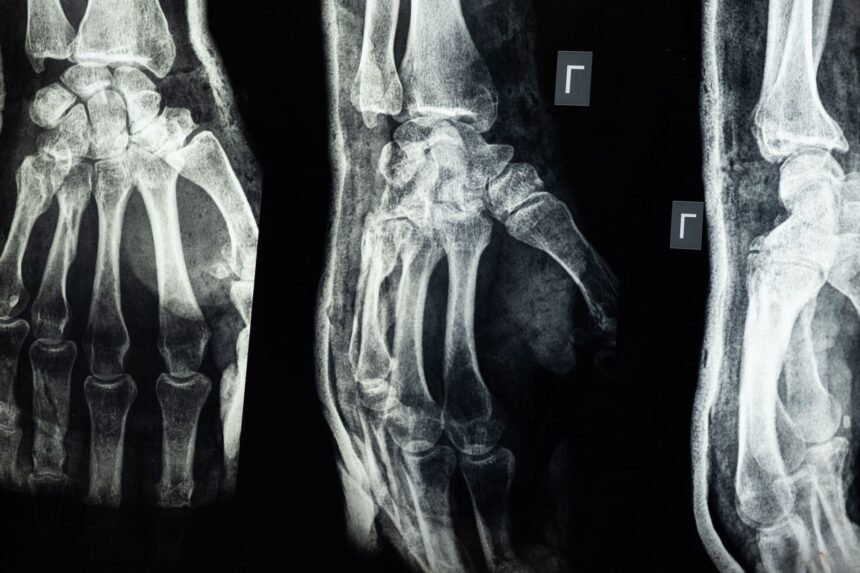
Diagram showing bone–pancreas–muscle metabolic feedback loop: mechanical loading → osteocalcin → improved insulin sensitivity
Bones are metabolic organs, not merely structural tissue. Mechanical loading triggers osteocalcin release, which improves insulin sensitivity and glucose regulation through a bone–pancreas–muscle feedback loop—linking skeletal mechanics to systemic metabolic health. — Photo by cottonbro studio on Pexels (Pexels License)
SHARE
1 min read|57 words

Bones aren't just structural—they're metabolic organs. When you load your skeleton through resistance or impact exercise, bone cells release osteocalcin, a hormone that improves insulin sensitivity & glucose uptake in muscle. This is the bone–pancreas–muscle feedback loop. Movement teaches your body how to handle glucose.

Read the full article on GMJ Newsroom →

Was this article helpful?

GMJ Brief · Announcement

📰 Read the full article: Bones as Metabolic Organs: How Mechanical Loading Triggers Glucose Control →

Related reference
  • Insulin · Drug
Share This Article
Facebook LinkedIn Bluesky Copy Link Print
GMJ
ByProf. Giorgi Pkhakadze
Follow:
Prof. Giorgi Pkhakadze, MD, MPH, PhD, is Editor-in-Chief of the Georgian Medical Journal and Chair of the Public Health Institute of Georgia (PHIG). He is Professor and Head of the Department of Social and Behavioural Sciences at David Tvildiani Medical University, and Secretary/Treasurer of the UEMS Section of Public Health. ORCID: 0000-0001-7609-4515.

Submit Your Paper →

Georgia's peer-reviewed open-access medical journal. No APC until January 2027.
Submit Manuscript →
Informal healthcare providers drive untracked antibiotic use across low- and middle-income countries

A scoping review in BMJ Global Health reveals that informal healthcare providers…

Why Pool Closures in Canada Signal a Broader Public Health Crisis

Pool closures across Canada threaten public health by eliminating access to critical…

Uninsured Gunshot Wound Patients Discharged Faster From Florida Hospitals, Data Shows

Analysis of Florida hospitalisation data by KFF Health News and The Trace…

Submit Your Paper to GMJ

No APC until January 2027.
Submit Manuscript →

You Might Also Like

Medical chart showing maternal mortality timeline with emphasis on late postpartum period risks

Pennsylvania Study Exposes Critical Gap in Postpartum Maternal Care

By
Prof. Giorgi Pkhakadze
15/07/2026
Medical AI algorithm interface showing sepsis prediction with temporal data warning

Critical Flaw Discovered: Sepsis AI Tools Trained on Information From the Future

By
Prof. Giorgi Pkhakadze
13/07/2026
Illustration comparing visceral and subcutaneous fat distribution and their effects on brain volume

Key Finding: Brain preservation depends on where you store fat, not how much you weigh

By
Prof. Giorgi Pkhakadze
03/08/2026
Laboratory mice study examining effects of sugar-free versus moderate sugar diets on metabolic health

Study Reveals Paradox: Sugar-Free Diets Associated with Worse Glucose Control

By
Prof. Giorgi Pkhakadze
13/07/2026
Facebook Twitter Youtube Instagram
Company
  • Privacy Policy
  • Contact US
  • GMJ Journal
  • Submit Manuscript
  • Editorial Team
  • Register at GMJ
  • Terms of Use

Subscribe to GMJ News — Click here

Join Community
© 2026 Georgian Medical Journal (GMJ). Published by the Public Health Institute of Georgia (PHIG). All rights reserved.
Welcome Back!

Sign in to your account

Username or Email Address
Password

Lost your password?

Not a member? Sign Up