By using this site, you agree to the Privacy Policy and Terms of Use.
Accept
GMJ NewsGMJ NewsGMJ News
  • Latest News
    • GMJ Briefs
  • Podcast & Media
    • Podcast Episodes
    • GMJ Audio
    • GMJ Videos
  • Research Digest
    • New Studies
    • Georgian Research
    • Data & Numbers
  • Policy & Systems
    • Health Policy
    • Quality & Safety
    • Migration & Health
    • Global Health
  • Practice
    • Clinical Updates
    • Case Discussions
    • Pharmacy & Prescribing
    • Ingredients A-Z
  • Perspectives
    • Editorial
    • Explainers
    • Voices
    • Letters
  • Health Topics
  • GMJ Articles
    • Vol. 1 Issue 2 (2026)
    • Vol. 1 Issue 1 (2026)
    • Pre-Launch Articles (2025)
  • Read the Journal →
  • About GMJ News
Notification Show More
Font ResizerAa
GMJ NewsGMJ News
Font ResizerAa
  • Latest News
    • GMJ Briefs
  • Podcast & Media
    • Podcast Episodes
    • GMJ Audio
    • GMJ Videos
  • Research Digest
    • New Studies
    • Georgian Research
    • Data & Numbers
  • Policy & Systems
    • Health Policy
    • Quality & Safety
    • Migration & Health
    • Global Health
  • Practice
    • Clinical Updates
    • Case Discussions
    • Pharmacy & Prescribing
    • Ingredients A-Z
  • Perspectives
    • Editorial
    • Explainers
    • Voices
    • Letters
  • Health Topics
  • GMJ Articles
    • Vol. 1 Issue 2 (2026)
    • Vol. 1 Issue 1 (2026)
    • Pre-Launch Articles (2025)
  • Read the Journal →
  • About GMJ News
Follow US
GMJ News > GMJ Briefs > Announcement: Personalised Squat Biomechanics: How Individual Posture Determines Safe Exercise Form

Announcement: Personalised Squat Biomechanics: How Individual Posture Determines Safe Exercise Form

GMJ
Last updated: 13/08/2026 07:29
By
Prof. Giorgi Pkhakadze
Share
0 Min Read
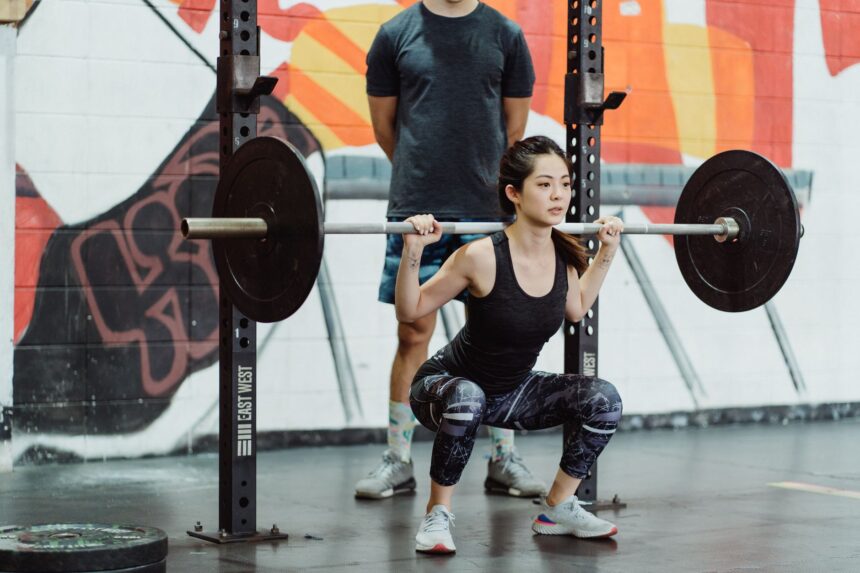
Biomechanics framework showing squat variant selection by postural presentation and anatomical constraints
Effective squat technique depends on individual postural alignment and structural constraints, not universal standards. Exercise variation selection should match personal anatomy—upright posture suits traditional squats, whilst forward collapse, ankle stiffness, or spinal instability each require different variants to minimise injury risk. — Photo by Ketut Subiyanto on Pexels (Pexels License)
SHARE
1 min read|52 words

There is no 'best squat'—only the best squat for YOUR posture and constraints. Exercise variation selection should adapt to individual anatomy: upright posture → traditional squats; forward collapse → front-loaded variants; stiff ankles → heel elevation. Good training adapts the exercise to the body, not vice versa.

Read the full article on GMJ Newsroom →

Was this article helpful?

GMJ Brief · Announcement

📰 Read the full article: Personalised Squat Biomechanics: How Individual Posture Determines Safe Exercise Form →

Share This Article
Facebook LinkedIn Bluesky Copy Link Print
GMJ
ByProf. Giorgi Pkhakadze
Follow:
Prof. Giorgi Pkhakadze, MD, MPH, PhD, is Editor-in-Chief of the Georgian Medical Journal and Chair of the Public Health Institute of Georgia (PHIG). He is Professor and Head of the Department of Social and Behavioural Sciences at David Tvildiani Medical University, and Secretary/Treasurer of the UEMS Section of Public Health. ORCID: 0000-0001-7609-4515.

Submit Your Paper →

Georgia's peer-reviewed open-access medical journal. No APC until January 2027.
Submit Manuscript →
Informal healthcare providers drive untracked antibiotic use across low- and middle-income countries

A scoping review in BMJ Global Health reveals that informal healthcare providers…

Why Pool Closures in Canada Signal a Broader Public Health Crisis

Pool closures across Canada threaten public health by eliminating access to critical…

Uninsured Gunshot Wound Patients Discharged Faster From Florida Hospitals, Data Shows

Analysis of Florida hospitalisation data by KFF Health News and The Trace…

Submit Your Paper to GMJ

No APC until January 2027.
Submit Manuscript →

You Might Also Like

Global HealthHealth PolicyPolicy & Systems

Drought Crisis Deepens Across East Africa: Ethiopia, Kenya, Somalia Face Orange-Level Emergency

By
Prof. Giorgi Pkhakadze
21/07/2026

Magnitude 6.0 Earthquake Strikes Russia; Thousands in Affected Zone

By
Prof. Giorgi Pkhakadze
19/06/2026

🚨 CDC Outbreak Update: Infant Botulism Linked to Powdered Infant Formula

By
Prof. Giorgi Pkhakadze
17/06/2026
Abstract illustration of adolescent digital health technology and food systems interconnection

Most Adolescent Obesity Apps Are Missing the Mark—Here’s Why

By
Prof. Giorgi Pkhakadze
06/08/2026
Facebook Twitter Youtube Instagram
Company
  • Privacy Policy
  • Contact US
  • GMJ Journal
  • Submit Manuscript
  • Editorial Team
  • Register at GMJ
  • Terms of Use

Subscribe to GMJ News — Click here

Join Community
© 2026 Georgian Medical Journal (GMJ). Published by the Public Health Institute of Georgia (PHIG). All rights reserved.
Welcome Back!

Sign in to your account

Username or Email Address
Password

Lost your password?

Not a member? Sign Up