By using this site, you agree to the Privacy Policy and Terms of Use.
Accept
GMJ NewsGMJ NewsGMJ News
  • Latest News
    • GMJ Briefs
  • Podcast & Media
    • Podcast Episodes
    • GMJ Audio
    • GMJ Videos
  • Research Digest
    • New Studies
    • Georgian Research
    • Data & Numbers
  • Policy & Systems
    • Health Policy
    • Quality & Safety
    • Migration & Health
    • Global Health
  • Practice
    • Clinical Updates
    • Case Discussions
    • Pharmacy & Prescribing
    • Ingredients A-Z
  • Perspectives
    • Editorial
    • Explainers
    • Voices
    • Letters
  • GMJ Articles
    • Vol. 1 Issue 2 (2026)
    • Vol. 1 Issue 1 (2026)
    • Pre-Launch Articles (2025)
  • Read the Journal →
  • About GMJ News
Notification Show More
Font ResizerAa
GMJ NewsGMJ News
Font ResizerAa
  • Latest News
    • GMJ Briefs
  • Podcast & Media
    • Podcast Episodes
    • GMJ Audio
    • GMJ Videos
  • Research Digest
    • New Studies
    • Georgian Research
    • Data & Numbers
  • Policy & Systems
    • Health Policy
    • Quality & Safety
    • Migration & Health
    • Global Health
  • Practice
    • Clinical Updates
    • Case Discussions
    • Pharmacy & Prescribing
    • Ingredients A-Z
  • Perspectives
    • Editorial
    • Explainers
    • Voices
    • Letters
  • GMJ Articles
    • Vol. 1 Issue 2 (2026)
    • Vol. 1 Issue 1 (2026)
    • Pre-Launch Articles (2025)
  • Read the Journal →
  • About GMJ News
Follow US
GMJ News > GMJ Briefs > By the Numbers: The Scale of Yemen’s Food Security Crisis

By the Numbers: The Scale of Yemen’s Food Security Crisis

GMJ
Last updated: 25/06/2026 12:07
By
Prof. Giorgi Pkhakadze
Share
1 Min Read
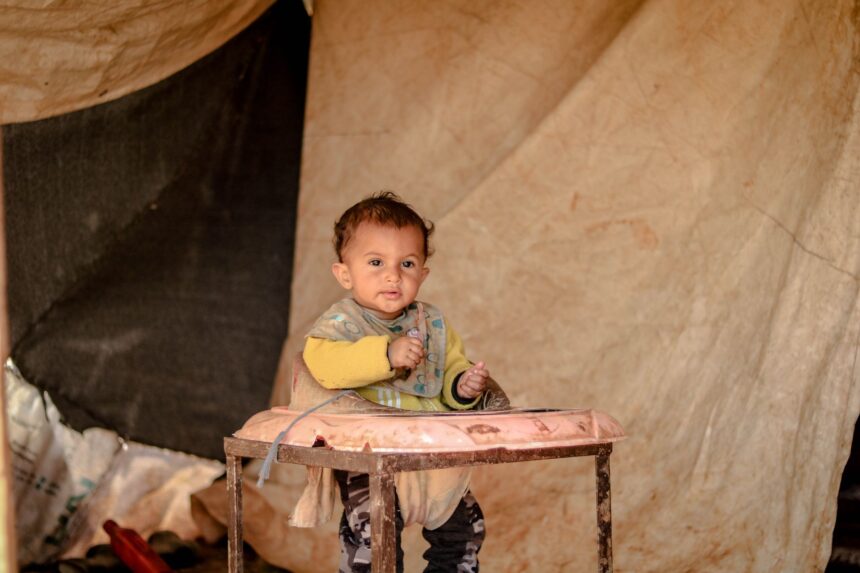
Children receiving nutrition assistance at a Yemen healthcare facility
Nearly 11.2 million Yemenis face severe acute food insecurity as international humanitarian funding drops 60% below 2025 levels. Child malnutrition rates exceed WHO emergency thresholds in 12 governorates, threatening generational health impacts. — Photo: Ahmed akacha / Pexels
SHARE
1 min read|126 words

The scope of Yemen’s humanitarian emergency is staggering. According to the June 2026 Integrated Food Security Phase Classification analysis, 11.2 million people in government-controlled areas cannot access adequate food without external assistance. Breaking down the severity: 7.3 million face stressed conditions (IPC Phase 2), 6.2 million are in crisis (IPC Phase 3), and 5 million are in emergency phase (IPC Phase 4). This crisis has deepened dramatically due to a 60% reduction in international humanitarian funding since 2025. The UN Office for the Coordination of Humanitarian Affairs reports that Yemen’s 2026 Humanitarian Response Plan has received only 28% of its required $4.3 billion funding. Consequently, 127 health facilities have closed and nutrition programs serving 2.8 million children have been suspended. These statistics underscore the urgent need for sustained international support to prevent further deterioration. Read the full article on GMJ Newsroom.

Was this article helpful?

GMJ Brief · Key Finding

📰 Read the full article: Yemen Food Crisis: 11.2 Million Face Acute Hunger as International Aid Funding Cuts Continue →

Share This Article
Facebook LinkedIn Bluesky Copy Link Print
GMJ
ByProf. Giorgi Pkhakadze
Follow:
Prof. Giorgi Pkhakadze, MD, MPH, PhD, is Editor-in-Chief of the Georgian Medical Journal and Chair of the Public Health Institute of Georgia (PHIG). He is Professor and Head of the Department of Social and Behavioural Sciences at David Tvildiani Medical University, and Secretary/Treasurer of the UEMS Section of Public Health. ORCID: 0000-0001-7609-4515.

Submit Your Paper →

Georgia's peer-reviewed open-access medical journal. No APC until January 2027.
Submit Manuscript →
Republican Opposition to Opioid Treatment Medications Sparks Policy Debate

Republican federal actions and proposals targeting opioid treatment medications have sparked debate…

NHS workforce planning faces strategic uncertainty as UK prioritises domestic medical graduates

NHS workforce planning faces uncertainty as new legislation prioritises UK medical graduates…

Maternal mortality crisis deepens for Sudanese refugee women in Central African Republic

Pregnant Sudanese refugee women in Central African Republic face 138 times higher…

Submit Your Paper to GMJ

No APC until January 2027.
Submit Manuscript →

You Might Also Like

Vitamin D supplement capsules with molecular structure diagram showing D2 and D3 differences

What You Need to Know About Your Vitamin D Supplement Choice

By
Prof. Giorgi Pkhakadze
24/06/2026

PHEIC Declaration: Cross-Border Ebola Outbreak DRC-Uganda

By
Prof. Giorgi Pkhakadze
31/05/2026
Policy & SystemsQuality & Safety

Arrow International Recalls Dialysis Catheter Kits Over Defective Components

By
Prof. Giorgi Pkhakadze
27/05/2026
Healthcare worker reviewing infection control data on computer screen in hospital setting

UK Hospitals Launch Comprehensive Superbug Tracking as Antimicrobial Resistance Evolves

By
Prof. Giorgi Pkhakadze
12/06/2026
Facebook Twitter Youtube Instagram
Company
  • Privacy Policy
  • Contact US
  • GMJ Journal
  • Submit Manuscript
  • Editorial Team
  • Register at GMJ
  • Terms of Use

Subscribe to GMJ News — Click here

Join Community
© 2026 Georgian Medical Journal (GMJ). Published by the Public Health Institute of Georgia (PHIG). All rights reserved.
Welcome Back!

Sign in to your account

Username or Email Address
Password

Lost your password?

Not a member? Sign Up