By using this site, you agree to the Privacy Policy and Terms of Use.
Accept
GMJ NewsGMJ NewsGMJ News
  • Latest News
    • GMJ Briefs
  • Podcast & Media
    • Podcast Episodes
    • GMJ Audio
    • GMJ Videos
  • Research Digest
    • New Studies
    • Georgian Research
    • Data & Numbers
  • Policy & Systems
    • Health Policy
    • Quality & Safety
    • Migration & Health
    • Global Health
  • Practice
    • Clinical Updates
    • Case Discussions
    • Pharmacy & Prescribing
    • Ingredients A-Z
  • Perspectives
    • Editorial
    • Explainers
    • Voices
    • Letters
  • GMJ Articles
    • Vol. 1 Issue 2 (2026)
    • Vol. 1 Issue 1 (2026)
    • Pre-Launch Articles (2025)
  • Read the Journal →
  • About GMJ News
Notification Show More
Font ResizerAa
GMJ NewsGMJ News
Font ResizerAa
  • Latest News
    • GMJ Briefs
  • Podcast & Media
    • Podcast Episodes
    • GMJ Audio
    • GMJ Videos
  • Research Digest
    • New Studies
    • Georgian Research
    • Data & Numbers
  • Policy & Systems
    • Health Policy
    • Quality & Safety
    • Migration & Health
    • Global Health
  • Practice
    • Clinical Updates
    • Case Discussions
    • Pharmacy & Prescribing
    • Ingredients A-Z
  • Perspectives
    • Editorial
    • Explainers
    • Voices
    • Letters
  • GMJ Articles
    • Vol. 1 Issue 2 (2026)
    • Vol. 1 Issue 1 (2026)
    • Pre-Launch Articles (2025)
  • Read the Journal →
  • About GMJ News
Follow US
GMJ News > GMJ Briefs > Children’s Skincare Market Boom Raises Questions About Targeting Young Audiences

Children’s Skincare Market Boom Raises Questions About Targeting Young Audiences

GMJ
Last updated: 01/07/2026 00:25
By
Prof. Giorgi Pkhakadze
Share
1 Min Read
Young child looking at skincare products with concerned expression
Mental health experts identify "cosmeticorexia" as children as young as 8 develop obsessive skincare routines driven by social media influence. The behaviour raises concerns about long-term psychological development. — Photo by Anna on Pexels (Pexels License)
SHARE
1 min read|135 words

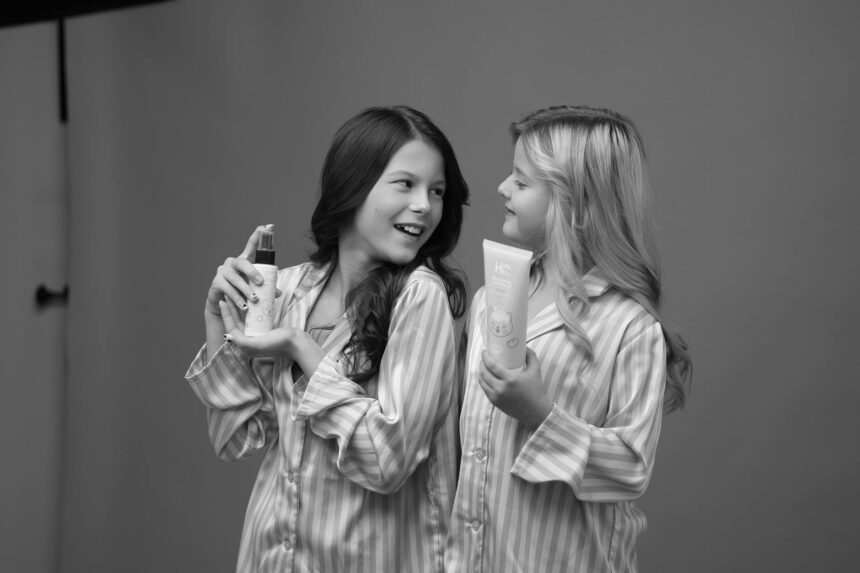
Recent data reveals an alarming trend: children as young as eight years old are now presenting with clinically observable obsessive skincare behaviours, according to mental health professionals documenting this emerging phenomenon. The timing coincides with unprecedented growth in the children’s skincare market, raising serious concerns about age-appropriate marketing practices targeting vulnerable young demographics.

Market expansion in the pediatric skincare sector has accelerated significantly, even as clinical referrals for compulsive beauty-related behaviours among children continue to rise. Mental health experts attribute much of this trend to targeted marketing strategies and influencer content on social platforms that promote elaborate skincare routines to increasingly younger audiences. The disconnect between marketing practices and child developmental psychology has prompted calls for greater scrutiny of beauty industry advertising directed at minors and stronger regulatory frameworks to protect children from age-inappropriate commercialisation.

Was this article helpful?

GMJ Brief · Key Finding

📰 Read the full article: Cosmeticorexia: How Social Media Drives Children’s Obsessive Skincare Behaviour →

Share This Article
Facebook LinkedIn Bluesky Copy Link Print
GMJ
ByProf. Giorgi Pkhakadze
Follow:
Prof. Giorgi Pkhakadze, MD, MPH, PhD, is Editor-in-Chief of the Georgian Medical Journal and Chair of the Public Health Institute of Georgia (PHIG). He is Professor and Head of the Department of Social and Behavioural Sciences at David Tvildiani Medical University, and Secretary/Treasurer of the UEMS Section of Public Health. ORCID: 0000-0001-7609-4515.

Submit Your Paper →

Georgia's peer-reviewed open-access medical journal. No APC until January 2027.
Submit Manuscript →
Personalized Cartilage Grafts Offer New Hope for Infants with Life-Threatening Airway Narrowing

Researchers at Children's Hospital of Philadelphia have developed personalized cartilage grafts using…

Beyond GLP-1 drugs: Why obesity care requires more than medication

GLP-1 medications like semaglutide and tirzepatide have transformed obesity treatment, yet leading…

How US immigration policy shapes maternal and child health outcomes

Immigration policy restrictions directly limit prenatal care access for undocumented women, reshaping…

Submit Your Paper to GMJ

No APC until January 2027.
Submit Manuscript →

You Might Also Like

Medical illustration comparing manufactured biotherapeutic capsules to traditional fecal microbiota transplant procedure

Announcement: Live biotherapeutic matches donor FMT in treating recurrent C. diff infection

By
Prof. Giorgi Pkhakadze
13/06/2026
Diagram showing genomic instability pathway leading to cancer treatment resistance

What Clinicians Need to Know: Three Critical Insights into Cancer Resistance Mechanisms

By
Prof. Giorgi Pkhakadze
28/06/2026

SITUATION BRIEF: WHO PHEIC Declaration – Ebola Cross-Border Transmission DRC-Uganda

By
Prof. Giorgi Pkhakadze
31/05/2026
CoQ10 supplement comparison chart showing bioavailability differences between formulations

Manufacturing Process, Not Molecular Form, Drives CoQ10 Bioavailability

By
Prof. Giorgi Pkhakadze
03/06/2026
Facebook Twitter Youtube Instagram
Company
  • Privacy Policy
  • Contact US
  • GMJ Journal
  • Submit Manuscript
  • Editorial Team
  • Register at GMJ
  • Terms of Use

Subscribe to GMJ News — Click here

Join Community
© 2026 Georgian Medical Journal (GMJ). Published by the Public Health Institute of Georgia (PHIG). All rights reserved.
Welcome Back!

Sign in to your account

Username or Email Address
Password

Lost your password?

Not a member? Sign Up