By using this site, you agree to the Privacy Policy and Terms of Use.
Accept
GMJ NewsGMJ NewsGMJ News
  • Latest News
    • GMJ Briefs
  • Podcast & Media
    • Podcast Episodes
    • GMJ Audio
    • GMJ Videos
  • Research Digest
    • New Studies
    • Georgian Research
    • Data & Numbers
  • Policy & Systems
    • Health Policy
    • Quality & Safety
    • Migration & Health
    • Global Health
  • Practice
    • Clinical Updates
    • Case Discussions
    • Pharmacy & Prescribing
    • Ingredients A-Z
  • Perspectives
    • Editorial
    • Explainers
    • Voices
    • Letters
  • GMJ Articles
    • Vol. 1 Issue 2 (2026)
    • Vol. 1 Issue 1 (2026)
    • Pre-Launch Articles (2025)
  • Read the Journal →
  • About GMJ News
Notification Show More
Font ResizerAa
GMJ NewsGMJ News
Font ResizerAa
  • Latest News
    • GMJ Briefs
  • Podcast & Media
    • Podcast Episodes
    • GMJ Audio
    • GMJ Videos
  • Research Digest
    • New Studies
    • Georgian Research
    • Data & Numbers
  • Policy & Systems
    • Health Policy
    • Quality & Safety
    • Migration & Health
    • Global Health
  • Practice
    • Clinical Updates
    • Case Discussions
    • Pharmacy & Prescribing
    • Ingredients A-Z
  • Perspectives
    • Editorial
    • Explainers
    • Voices
    • Letters
  • GMJ Articles
    • Vol. 1 Issue 2 (2026)
    • Vol. 1 Issue 1 (2026)
    • Pre-Launch Articles (2025)
  • Read the Journal →
  • About GMJ News
Follow US
GMJ News > GMJ Briefs > Hormone-Disrupting Chemicals Found in Infants from Birth, New Research Shows

Hormone-Disrupting Chemicals Found in Infants from Birth, New Research Shows

GMJ
Last updated: 06/07/2026 06:43
By
Prof. Giorgi Pkhakadze
Share
1 Min Read
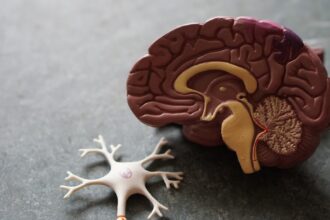
Infographic showing endocrine-disrupting chemical detection timeline from birth to 6 months
New research detects endocrine-disrupting chemicals in breast milk and infant urine from birth through six months. Study presented at ENDO 2026 raises questions about early-life hormone exposure. — Photo by Leeloo The First on Pexels (Pexels License)
SHARE
1 min read|127 words

Endocrine-disrupting chemicals have been detected in both breast milk and infant urine throughout the first six months of life, according to research presented at ENDO 2026, the Endocrine Society’s annual meeting in Chicago. The findings underscore that infants face early exposure to substances that can interfere with critical hormonal functions during sensitive developmental periods.

Endocrine-disrupting chemicals are synthetic or natural substances capable of altering the body’s hormone systems, with potential consequences for development, reproduction, and other physiological processes. The detection of these compounds across multiple biological sources raises important questions about the pathways through which infants encounter these substances.

This preliminary evidence highlights the need for further investigation into sources of exposure and strategies to minimize infant contact with hormone-disrupting chemicals during these vulnerable early months of life.

Was this article helpful?

GMJ Brief · Announcement

📰 Read the full article: Endocrine-disrupting chemicals detected in breast milk and infant urine through 6 months →

Share This Article
Facebook LinkedIn Bluesky Copy Link Print
GMJ
ByProf. Giorgi Pkhakadze
Follow:
Prof. Giorgi Pkhakadze, MD, MPH, PhD, is Editor-in-Chief of the Georgian Medical Journal and Chair of the Public Health Institute of Georgia (PHIG). He is Professor and Head of the Department of Social and Behavioural Sciences at David Tvildiani Medical University, and Secretary/Treasurer of the UEMS Section of Public Health. ORCID: 0000-0001-7609-4515.

Submit Your Paper →

Georgia's peer-reviewed open-access medical journal. No APC until January 2027.
Submit Manuscript →
Trump Administration Removes Job Protections for Thousands of Federal Health Workers

Thousands of federal health workers at HHS agencies including CDC, FDA, and…

Rare Lymphatic-Urinary Fistula Causes Milky Urine in NEJM Case Report

A rare case of chyluria caused by a lymphatic-urinary fistula demonstrates how…

Gene Therapy Shows Promise for Inherited Cholesterol Disorder in First-in-Human Trial

First-in-human gene therapy trial shows preliminary safety and efficacy for treating homozygous…

Submit Your Paper to GMJ

No APC until January 2027.
Submit Manuscript →

You Might Also Like

Scientific researchers working on longevity interventions in laboratory setting

Global Longevity Initiative Launches $101M Competition to Reverse Aging

By
Prof. Giorgi Pkhakadze
05/06/2026

EBOLA OUTBREAK – DRC/UGANDA CROSS-BORDER TRANSMISSION WITH WHO PHEIC DECLARATION

By
Prof. Giorgi Pkhakadze
31/05/2026

🚨 Transcript – Update on Ebola Outbreak in the Democratic Republic of the Congo and Uganda: 6/26/26

By
Prof. Giorgi Pkhakadze
02/07/2026
Clinical UpdatesPractice

Two Children Die as Measles Cases Surge to 736 in England This Year

By
Prof. Giorgi Pkhakadze
12/06/2026
Facebook Twitter Youtube Instagram
Company
  • Privacy Policy
  • Contact US
  • GMJ Journal
  • Submit Manuscript
  • Editorial Team
  • Register at GMJ
  • Terms of Use

Subscribe to GMJ News — Click here

Join Community
© 2026 Georgian Medical Journal (GMJ). Published by the Public Health Institute of Georgia (PHIG). All rights reserved.
Welcome Back!

Sign in to your account

Username or Email Address
Password

Lost your password?

Not a member? Sign Up