By using this site, you agree to the Privacy Policy and Terms of Use.
Accept
GMJ NewsGMJ NewsGMJ News
  • Latest News
    • GMJ Briefs
  • Podcast & Media
    • Podcast Episodes
    • GMJ Audio
    • GMJ Videos
  • Research Digest
    • New Studies
    • Georgian Research
    • Data & Numbers
  • Policy & Systems
    • Health Policy
    • Quality & Safety
    • Migration & Health
    • Global Health
  • Practice
    • Clinical Updates
    • Case Discussions
    • Pharmacy & Prescribing
    • Ingredients A-Z
  • Perspectives
    • Editorial
    • Explainers
    • Voices
    • Letters
  • GMJ Articles
    • Vol. 1 Issue 2 (2026)
    • Vol. 1 Issue 1 (2026)
    • Pre-Launch Articles (2025)
  • Read the Journal →
  • About GMJ News
Notification Show More
Font ResizerAa
GMJ NewsGMJ News
Font ResizerAa
  • Latest News
    • GMJ Briefs
  • Podcast & Media
    • Podcast Episodes
    • GMJ Audio
    • GMJ Videos
  • Research Digest
    • New Studies
    • Georgian Research
    • Data & Numbers
  • Policy & Systems
    • Health Policy
    • Quality & Safety
    • Migration & Health
    • Global Health
  • Practice
    • Clinical Updates
    • Case Discussions
    • Pharmacy & Prescribing
    • Ingredients A-Z
  • Perspectives
    • Editorial
    • Explainers
    • Voices
    • Letters
  • GMJ Articles
    • Vol. 1 Issue 2 (2026)
    • Vol. 1 Issue 1 (2026)
    • Pre-Launch Articles (2025)
  • Read the Journal →
  • About GMJ News
Follow US
GMJ News > GMJ Briefs > How Quickly Does Your Olive Oil Lose Its Health Benefits?

How Quickly Does Your Olive Oil Lose Its Health Benefits?

GMJ
Last updated: 27/07/2026 19:30
By
Prof. Giorgi Pkhakadze
Share
1 Min Read
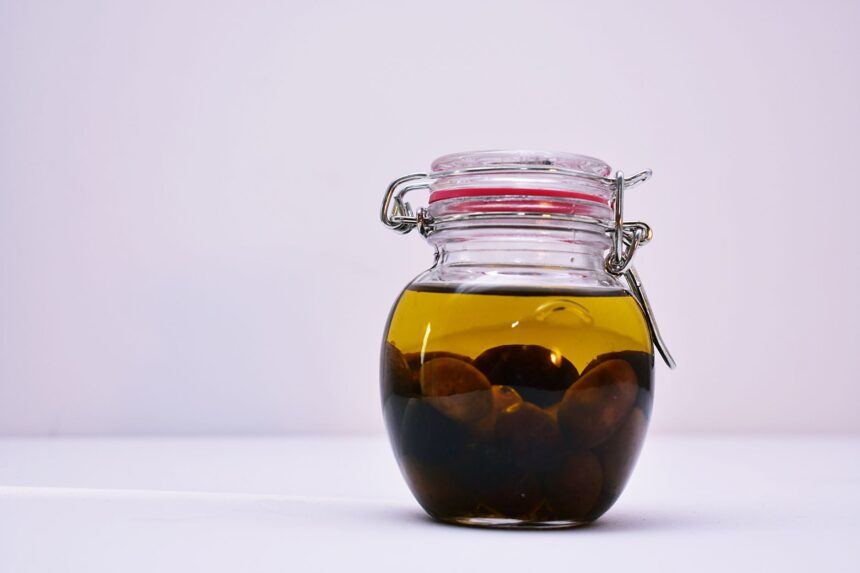
Chart showing 12-month decline of olive oil antioxidants including alpha-tocopherol, polyphenols, and squalene
Bioactive compounds in extra virgin olive oil degrade rapidly after opening, with vitamin E declining 92% within 12 months at room temperature. Storage conditions—especially whether bottles are full or half-empty—dramatically affect the rate of antioxidant loss. — Photo by Diana ✨ on Pexels (Pexels License)
SHARE
1 min read|130 words

The premium extra virgin olive oil in your kitchen cupboard is undergoing rapid chemical degradation—often without visible signs. Research from the Journal of Agricultural and Food Chemistry reveals that alpha-tocopherol (vitamin E), a critical antioxidant in extra virgin olive oil, declines by 92% within 12 months of opening when stored at room temperature.

The degradation process accelerates dramatically in half-empty bottles, which oxidize 2–3 times faster than sealed, full containers due to increased oxygen exposure. Once antioxidant defenses become depleted after 6–8 months, polyphenols and polyunsaturated fatty acids become vulnerable to further oxidation, compromising the oil’s nutritional profile.

To preserve the bioactive compounds that make extra virgin olive oil a staple of health-conscious diets, store bottles in sealed, dark containers and consume within 2–3 months of opening. Read the full article on GMJ Newsroom.

Was this article helpful?

GMJ Brief · Announcement

📰 Read the full article: Olive Oil Degrades Faster Than You Think: What Storage Science Reveals →

Related reference
  • Vitamin E · Ingredient
Share This Article
Facebook LinkedIn Bluesky Copy Link Print
GMJ
ByProf. Giorgi Pkhakadze
Follow:
Prof. Giorgi Pkhakadze, MD, MPH, PhD, is Editor-in-Chief of the Georgian Medical Journal and Chair of the Public Health Institute of Georgia (PHIG). He is Professor and Head of the Department of Social and Behavioural Sciences at David Tvildiani Medical University, and Secretary/Treasurer of the UEMS Section of Public Health. ORCID: 0000-0001-7609-4515.

Submit Your Paper →

Georgia's peer-reviewed open-access medical journal. No APC until January 2027.
Submit Manuscript →
Why Nutrients Work Better Together: How Coordinated Inputs Reshape Brain Synapses

New neuroscience research reveals that synapses respond more robustly to coordinated nutrient…

L-Theanine Improves Task Accuracy Without Expected Brain Wave Changes, Research Shows

L-theanine marketing claims about alpha brain wave enhancement lack experimental support in…

Astrocytes Reshape Understanding of Brain Control: Beyond Neurons to Cellular Regulation

Astrocytes, comprising roughly 50% of brain cells, are now recognised as active…

Submit Your Paper to GMJ

No APC until January 2027.
Submit Manuscript →

You Might Also Like

Global HealthPolicy & Systems

WHO Declares Health Emergency as Ebola Outbreak Spreads from DRC to Uganda

By
Prof. Giorgi Pkhakadze
31/05/2026
Comparative performance chart showing general-purpose AI models outperforming clinical-specific AI tools on physician-generated questions

Surprise Finding: General AI Chatbots Outshine Purpose-Built Clinical Tools

By
Prof. Giorgi Pkhakadze
19/07/2026
Diagram of neuronal membrane showing DHA molecule and six double bonds creating membrane fluidity

Depression Linked to Critical DHA Deficiency in Brain Tissue

By
Prof. Giorgi Pkhakadze
04/08/2026
Illustration of brain cooling mechanism in acute ischemic stroke treatment

Drug-Induced Hypothermia Emerges as Promising Neuroprotective Strategy for Acute Stroke

By
Prof. Giorgi Pkhakadze
19/07/2026
Facebook Twitter Youtube Instagram
Company
  • Privacy Policy
  • Contact US
  • GMJ Journal
  • Submit Manuscript
  • Editorial Team
  • Register at GMJ
  • Terms of Use

Subscribe to GMJ News — Click here

Join Community
© 2026 Georgian Medical Journal (GMJ). Published by the Public Health Institute of Georgia (PHIG). All rights reserved.
Welcome Back!

Sign in to your account

Username or Email Address
Password

Lost your password?

Not a member? Sign Up