🟠 Moderate Evidence
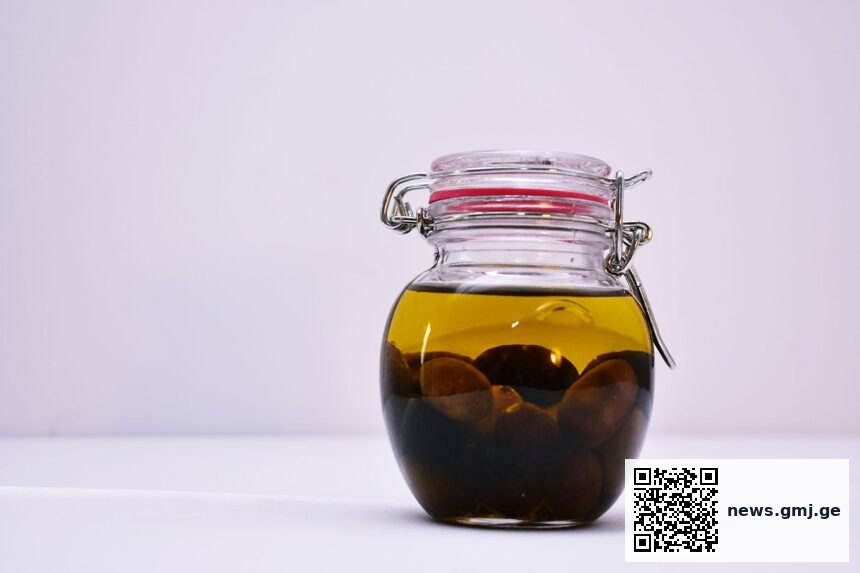
The bottle of olive oil sitting in your pantry is chemically different from the day you opened it. Bioactive compounds that define extra virgin olive oil—including polyphenols and vitamin E—begin oxidizing within weeks of opening, according to a controlled storage study by Rastrelli and colleagues published in the Journal of Agricultural and Food Chemistry (2002). The degradation accelerates predictably based on storage conditions, with half-empty bottles losing protective antioxidants far more rapidly than sealed containers.
Key takeaways
- α-tocopherol (vitamin E) in extra virgin olive oil drops 92% within 12 months of opening under room temperature storage
- Half-empty bottles degrade 2–3 times faster than full bottles due to increased oxygen exposure
- Once antioxidant defenses are depleted (after 6–8 months), polyphenols and polyunsaturated fatty acids become vulnerable to oxidation
Study at a Glance
| Source | Journal of Agricultural and Food Chemistry |
| Study type | Controlled experimental storage study |
| Sample | Two extra virgin olive oils from Calabria, Italy |
| Storage conditions | Dark/colorless glass bottles, full/half-filled, room temperature, 12 months |
| Outcome measures | α-tocopherol, polyphenols, squalene, polyunsaturated fatty acids (HPLC, GC-MS) |
Olive Oil Antioxidant Decline Over 12 Months
Loss of key bioactive compounds in extra virgin olive oil under room temperature storage
Source: Rastrelli et al., Journal of Agricultural and Food Chemistry, 2002 | Georgian Medical Journal News

The Chemistry of Oxidation: A Cascade Effect
The degradation of olive oil follows a predictable chemical cascade, according to research at the University of Salerno. α-tocopherol (vitamin E) acts as a sacrificial antioxidant, oxidizing first and most rapidly. In the Rastrelli study, α-tocopherol had already declined by 20% within just two months of opening, reaching 92% loss by the end of 12 months. This vitamin E depletion happens fastest in half-empty bottles, where the oil has the most contact with oxygen in the headspace.
The mechanism is straightforward physics: more headspace equals more oxygen exposure per unit of oil, accelerating the oxidation reaction. Researchers used high-performance liquid chromatography (HPLC) and gas chromatography-mass spectrometry (GC-MS) to track these compounds, providing precise quantification of degradation rates. Half-empty bottles consistently showed 2–3 times faster decline in antioxidants compared with full bottles stored under identical conditions.
When Polyphenols Become Vulnerable
While α-tocopherol oxidizes rapidly, polyphenols and squalene remain relatively protected during the first 6–8 months, according to the Rastrelli team. This protection occurs because the vitamin E sacrifices itself, consuming the available oxygen before these other bioactive compounds can be attacked. However, once α-tocopherol reserves are depleted—typically after 6–8 months—the polyphenols become vulnerable and begin to decline significantly. The polyunsaturated fatty acids follow a similar pattern, remaining stable for about 8 months before oxidizing once the antioxidant defenses are substantially consumed.
This temporal pattern has practical implications for consumers who assume that extra virgin olive oil retains its nutritional properties throughout its shelf life. The distinction between extra virgin and refined olive oil lies primarily in these polyphenols and other micronutrients—compounds that decline steadily once a bottle is opened. Light exposure compounds the problem; even colorless glass bottles offer less protection than dark amber or opaque containers.
Storage Matters: Full Bottles Win
The practical takeaway from oxidation chemistry is clear: store olive oil in sealed, completely full bottles in a dark cupboard, not on open kitchen shelves or in half-full decanters. The Rastrelli study directly compared full versus half-filled bottles and found that half-empty containers degraded significantly faster due to the greater oxygen-to-oil ratio in the headspace. Room temperature storage accelerated degradation compared with cooler conditions, though the study did not systematically test refrigeration.
For consumers seeking to preserve the health benefits associated with extra virgin olive oil—including its antioxidant and anti-inflammatory properties—consuming the oil within 2–3 months of opening provides the most reliable assurance that polyphenols and vitamin E remain intact. Beyond 6–8 months, even properly stored bottles will have lost a substantial fraction of these bioactive compounds, reducing the oil to little more than a source of oleic acid and refined fats. Proper storage practices are essential for maintaining nutritional value.
α-tocopherol declined 92% within 12 months at room temperature; half-empty bottles showed the most pronounced losses, consistent with greater oxygen exposure per unit of oil.
— Rastrelli and colleagues, University of Salerno (Journal of Agricultural and Food Chemistry, 2002)
What this means
Frequently asked questions
Does refrigerating olive oil preserve antioxidants better?
The Rastrelli study tested room temperature storage but did not systematically compare refrigeration. However, lower temperatures slow oxidation chemistry, suggesting that cold storage would extend the stability of bioactive compounds. Refrigerated olive oil may become cloudy (due to wax crystallization), but the quality is not compromised—simply allow it to warm to room temperature before use.
Is old olive oil harmful to eat?
Degraded olive oil is not toxic, but it has lost the antioxidants and polyphenols that justify its higher price and health claims. Once α-tocopherol and polyphenols are oxidized, the oil becomes nutritionally similar to refined vegetable oil. It remains safe to consume but no longer delivers the anti-inflammatory or cardioprotective benefits associated with extra virgin olive oil.
Why is headspace (empty space in the bottle) so important?
Oxygen in the headspace directly attacks antioxidants in the oil through oxidation reactions. Half-empty bottles expose the oil to roughly twice the oxygen concentration compared with full bottles, accelerating the degradation cascade. This is why transferring oil from a half-empty large bottle into a smaller, filled bottle slows further degradation.
As consumers increasingly recognize olive oil as a functional food rather than a commodity fat, understanding the chemistry of oxidation becomes essential for realizing its health benefits. The science is clear: once opened, extra virgin olive oil is in a slow race against time. Proper storage—sealed, full, dark, cool—is not a luxury; it is the only practical way to preserve the bioactive compounds that distinguish premium olive oil from generic alternatives. For those seeking to maximize intake of polyphenols and vitamin E, consumption within the first 2–3 months after opening offers the best assurance of therapeutic value.
Source: Rastrelli and colleagues, Journal of Agricultural and Food Chemistry, 2002
Was this article helpful?
Disclaimer. This article is health journalism intended for general information and education. It is not medical advice and is not a substitute for professional diagnosis or treatment. Always consult a qualified healthcare provider about your individual circumstances. Full disclaimer →
Related Coverage


Editorial standards. This article was produced under the GMJ News editorial process, with oversight by the GMJ Editorial Board. Our editorial process. Spotted an error? Contact the editorial team.