By using this site, you agree to the Privacy Policy and Terms of Use.
Accept
GMJ NewsGMJ NewsGMJ News
  • Latest News
    • GMJ Briefs
  • Podcast & Media
    • Podcast Episodes
    • GMJ Audio
    • GMJ Videos
  • Research Digest
    • New Studies
    • Georgian Research
    • Data & Numbers
  • Policy & Systems
    • Health Policy
    • Quality & Safety
    • Migration & Health
    • Global Health
  • Practice
    • Clinical Updates
    • Case Discussions
    • Pharmacy & Prescribing
    • Ingredients A-Z
  • Perspectives
    • Editorial
    • Explainers
    • Voices
    • Letters
  • GMJ Articles
    • Vol. 1 Issue 2 (2026)
    • Vol. 1 Issue 1 (2026)
    • Pre-Launch Articles (2025)
  • Read the Journal →
  • About GMJ News
Notification Show More
Font ResizerAa
GMJ NewsGMJ News
Font ResizerAa
  • Latest News
    • GMJ Briefs
  • Podcast & Media
    • Podcast Episodes
    • GMJ Audio
    • GMJ Videos
  • Research Digest
    • New Studies
    • Georgian Research
    • Data & Numbers
  • Policy & Systems
    • Health Policy
    • Quality & Safety
    • Migration & Health
    • Global Health
  • Practice
    • Clinical Updates
    • Case Discussions
    • Pharmacy & Prescribing
    • Ingredients A-Z
  • Perspectives
    • Editorial
    • Explainers
    • Voices
    • Letters
  • GMJ Articles
    • Vol. 1 Issue 2 (2026)
    • Vol. 1 Issue 1 (2026)
    • Pre-Launch Articles (2025)
  • Read the Journal →
  • About GMJ News
Follow US
GMJ News > GMJ Briefs > Managing Iron Absorption: What Clinicians and Patients Should Know About Beverages and Supplements

Managing Iron Absorption: What Clinicians and Patients Should Know About Beverages and Supplements

GMJ
Last updated: 27/06/2026 11:40
By
Prof. Giorgi Pkhakadze
Share
1 Min Read
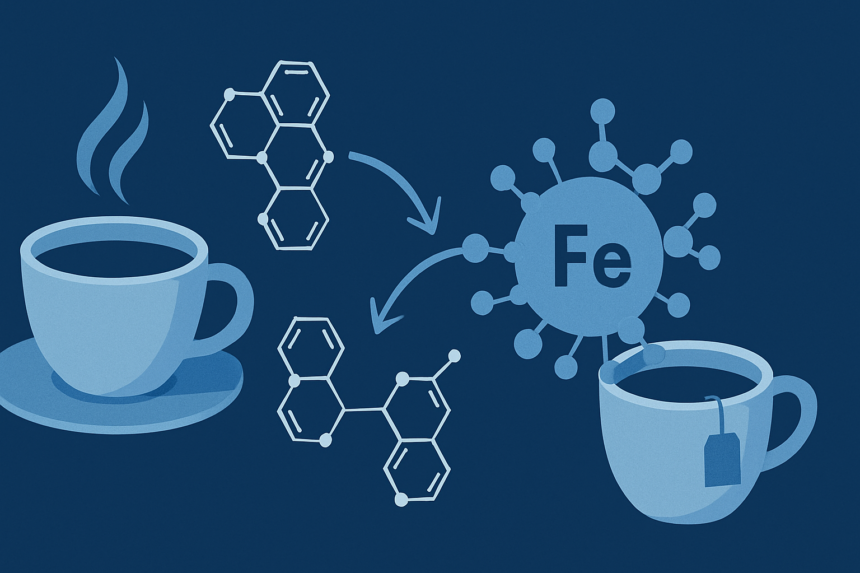
Scientific illustration showing polyphenol molecules binding to iron in digestive system
New research reveals how coffee and tea reduce iron absorption by up to 94% through polyphenol binding. Study identifies vitamin C as effective counteraction strategy.
SHARE
1 min read|138 words

Three critical findings emerge from recent nutritional research that should inform clinical practice and patient counseling. First, black tea and other polyphenol-rich beverages produce dramatic reductions in iron absorption (79-94%), making timing of consumption relative to iron-rich meals clinically significant. Second, 50 mg of vitamin C can increase iron absorption 3-6 fold, effectively overriding polyphenol inhibition even in high-concentration beverages.

Third, it is important to distinguish between non-heme iron from plant and fortified sources—which is susceptible to polyphenol interference—and heme iron from animal products, which remains unaffected by these interactions. For patients with iron deficiency or those on iron supplementation therapy, simple dietary modifications such as consuming beverages separately from meals or pairing iron intake with citrus fruits or supplements can substantially improve therapeutic outcomes without requiring restrictive dietary changes.

Read the full article on GMJ Newsroom.

Was this article helpful?

GMJ Brief · Takeaway

📰 Read the full article: How Coffee and Tea Reduce Iron Absorption by Up to 94% Through Polyphenol Binding →

Related reference
  • Vitamin C · Ingredient
  • Iron · Ingredient
Share This Article
Facebook LinkedIn Bluesky Copy Link Print
GMJ
ByProf. Giorgi Pkhakadze
Follow:
Prof. Giorgi Pkhakadze, MD, MPH, PhD, is Editor-in-Chief of the Georgian Medical Journal and Chair of the Public Health Institute of Georgia (PHIG). He is Professor and Head of the Department of Social and Behavioural Sciences at David Tvildiani Medical University, and Secretary/Treasurer of the UEMS Section of Public Health. ORCID: 0000-0001-7609-4515.

Submit Your Paper →

Georgia's peer-reviewed open-access medical journal. No APC until January 2027.
Submit Manuscript →
Corrected Global Data on Substance Use Burden Across 204 Countries Reveals Shifting Patterns

Nature Medicine has published a corrected Global Burden of Disease assessment of…

Engineered Heart Muscle From Stem Cells Shows Promise in First-in-Human Trial

A first-in-human clinical trial of engineered heart muscle derived from induced pluripotent…

Most People Who Stop GLP-1 Drugs Like Ozempic Eventually Return to Treatment

A new analysis of treatment patterns shows that many patients who discontinue…

Submit Your Paper to GMJ

No APC until January 2027.
Submit Manuscript →

You Might Also Like

Global HealthPolicy & Systems

Ebola outbreak spreads unchecked in eastern DR Congo amid conflict

By
Prof. Giorgi Pkhakadze
28/05/2026
Medical professional reviewing infant formula safety documentation

Georgia’s Rapid Response Model: How Modern Public Health Infrastructure Shortens Crisis Response Time

By
Prof. Giorgi Pkhakadze
31/05/2026

EPIDEMIOLOGICAL INTELLIGENCE BRIEF: Ebola Cross-Border Transmission DRC-Uganda

By
Prof. Giorgi Pkhakadze
31/05/2026
Conceptual illustration showing interconnected flags of middle power countries around health AI technology symbols

Big Tech Controls 62% of Health AI Market as Public Initiatives Lag Behind

By
Prof. Giorgi Pkhakadze
08/07/2026
Facebook Twitter Youtube Instagram
Company
  • Privacy Policy
  • Contact US
  • GMJ Journal
  • Submit Manuscript
  • Editorial Team
  • Register at GMJ
  • Terms of Use

Subscribe to GMJ News — Click here

Join Community
© 2026 Georgian Medical Journal (GMJ). Published by the Public Health Institute of Georgia (PHIG). All rights reserved.
Welcome Back!

Sign in to your account

Username or Email Address
Password

Lost your password?

Not a member? Sign Up