Updated 13/09/2026
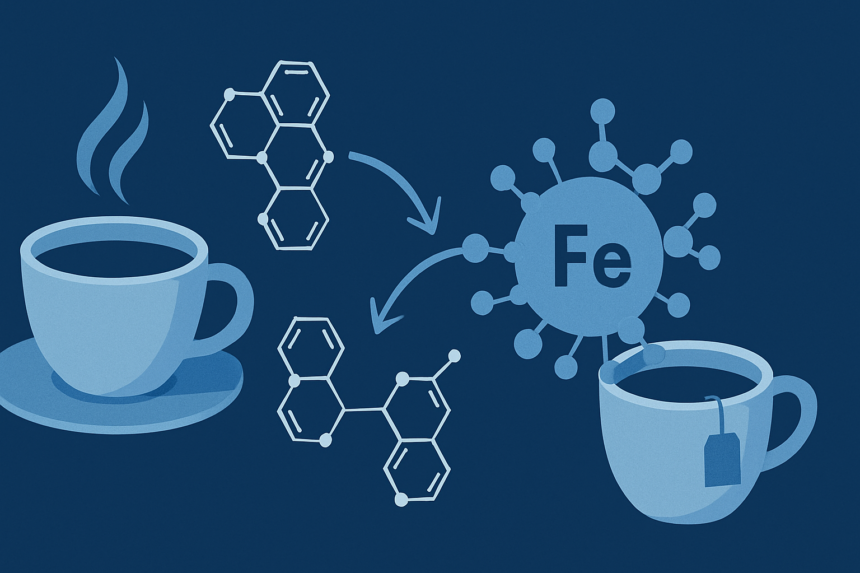
Coffee and tea consumption can dramatically reduce iron absorption from meals, with black tea cutting absorption by up to 94% through polyphenol compounds that bind non-heme iron in the digestive tract. Research by Hurrell and colleagues (1999, British Journal of Nutrition) using radio-labeled iron in controlled human studies reveals the precise mechanisms behind this interaction and identifies strategies to counteract the effect.
Iron Absorption Reduction by Beverage Type
Percentage reduction compared to water, standardized bread meal
Source: Hurrell et al., British Journal of Nutrition, 1999 | Georgian Medical Journal News

Polyphenol Concentration Drives Iron Blocking Effect
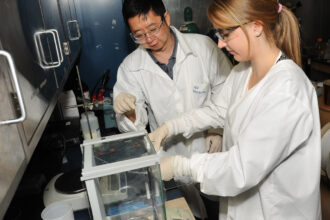
Research by Hurrell and colleagues published in the British Journal of Nutrition (1999) tested this interaction directly using radio-labeled iron in adult humans consuming standardized bread meals with different beverages. Iron absorption was measured through erythrocyte incorporation of radioactive tracers.
The study found that beverages containing 20 to 50 mg of polyphenols per serving reduced iron absorption by 50 to 70%. At higher concentrations of 100 to 400 mg, the reduction increased to 60 to 90%. This dose-dependent relationship demonstrates that polyphenol content, not beverage type alone, determines the magnitude of iron inhibition.
Galloyl Structure Identified as Key Inhibitor
The mechanism behind polyphenol-iron interactions is highly specific to chemical structure rather than total phenolic content. Research by Brune, Rossander, and Hallberg published in the European Journal of Clinical Nutrition (1989) demonstrated that tannic acid inhibits iron absorption in a dose-dependent manner that correlates with galloyl content.
Their findings showed that 5 mg of tannic acid reduced absorption by 20%, while 25 mg cut it by 67%, and 100 mg reduced it by 88%. Gallic acid produced equivalent inhibition per mole of galloyl groups. In contrast, catechin, which lacks the galloyl structure, showed no inhibition at any tested concentration.
Chlorogenic acid, the dominant polyphenol in coffee, also inhibits iron absorption but with less potency than tannins, according to the same study by Brune, Rossander, and Hallberg (1989).
Heme Iron Remains Protected from Polyphenol Effects
The polyphenol-iron interaction affects only non-heme iron sources, which include plant-based foods, eggs, and iron-fortified products. Heme iron from meat, poultry, and fish remains completely unaffected because it is absorbed intact through the HCP1 transporter while protected within its porphyrin ring structure.
Vitamin C Provides Effective Counteraction Strategy
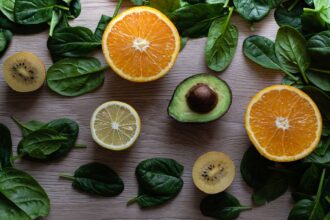
Vitamin C effectively counteracts polyphenol-iron binding by reducing ferric iron (Fe³⁺) to ferrous iron (Fe²⁺) and forming soluble ascorbate-iron complexes that resist polyphenol binding. Research by Hallberg and Hulthen published in the American Journal of Clinical Nutrition (2000) showed that adding 50 mg of vitamin C to meals with significant polyphenol inhibitors increased non-heme iron absorption by 3 to 6-fold.
Beverages containing 100 to 400 mg of polyphenols reduced non-heme iron absorption by 60 to 90% in controlled human studies using radio-labeled iron tracers.
— Hurrell et al., British Journal of Nutrition, 1999
Key takeaways
- Black tea produces the strongest iron inhibition at 79-94% reduction when consumed with meals (Hurrell et al., 1999)
- Polyphenol content of 20-50 mg per serving reduces iron absorption by 50-70% (Hurrell et al., 1999)
- Adding 50 mg vitamin C can increase iron absorption 3-6 fold despite polyphenol presence (Hallberg and Hulthen, 2000)
- Heme iron from meat sources remains unaffected by polyphenol interactions
Frequently asked questions
Should I avoid coffee and tea if I have iron deficiency?
Based on the research by Hurrell et al. (1999), you don’t need to eliminate these beverages entirely, but timing matters. Consider consuming coffee and tea between meals rather than with iron-rich foods, and include vitamin C sources when eating iron-containing meals.
Does adding milk to tea reduce the iron-blocking effect?
No, according to Hurrell et al. (1999), adding milk does not meaningfully change the polyphenol effect on iron absorption. The galloyl compounds remain active regardless of milk addition.
Which type of iron supplement is affected by polyphenols?
Only non-heme iron supplements are affected by polyphenol binding. Heme iron supplements, though less common, would remain unaffected due to their protected porphyrin ring structure.
Understanding polyphenol-iron interactions, as demonstrated by research from Hurrell and colleagues (1999), Brune, Rossander, and Hallberg (1989), and Hallberg and Hulthen (2000), provides evidence-based guidance for optimizing iron nutrition.
🗺️ Find certified Georgian healthcare providers: sheniekimi.ge — Georgia Health Map · 998 clinics · 6,600+ doctors · 2,296 pharmacies
Was this article helpful?
Disclaimer. This article is health journalism intended for general information and education. It is not medical advice and is not a substitute for professional diagnosis or treatment. Always consult a qualified healthcare provider about your individual circumstances. Full disclaimer →
Related Coverage


Editorial standards. This article was produced under the GMJ News editorial process, with oversight by the GMJ Editorial Board. Our editorial process. Spotted an error? Contact the editorial team.