By using this site, you agree to the Privacy Policy and Terms of Use.
Accept
GMJ NewsGMJ NewsGMJ News
  • Latest News
    • GMJ Briefs
  • Podcast & Media
    • Podcast Episodes
    • GMJ Audio
    • GMJ Videos
  • Research Digest
    • New Studies
    • Georgian Research
    • Data & Numbers
  • Policy & Systems
    • Health Policy
    • Quality & Safety
    • Migration & Health
    • Global Health
  • Practice
    • Clinical Updates
    • Case Discussions
    • Pharmacy & Prescribing
    • Ingredients A-Z
  • Perspectives
    • Editorial
    • Explainers
    • Voices
    • Letters
  • GMJ Articles
    • Vol. 1 Issue 2 (2026)
    • Vol. 1 Issue 1 (2026)
    • Pre-Launch Articles (2025)
  • Read the Journal →
  • About GMJ News
Notification Show More
Font ResizerAa
GMJ NewsGMJ News
Font ResizerAa
  • Latest News
    • GMJ Briefs
  • Podcast & Media
    • Podcast Episodes
    • GMJ Audio
    • GMJ Videos
  • Research Digest
    • New Studies
    • Georgian Research
    • Data & Numbers
  • Policy & Systems
    • Health Policy
    • Quality & Safety
    • Migration & Health
    • Global Health
  • Practice
    • Clinical Updates
    • Case Discussions
    • Pharmacy & Prescribing
    • Ingredients A-Z
  • Perspectives
    • Editorial
    • Explainers
    • Voices
    • Letters
  • GMJ Articles
    • Vol. 1 Issue 2 (2026)
    • Vol. 1 Issue 1 (2026)
    • Pre-Launch Articles (2025)
  • Read the Journal →
  • About GMJ News
Follow US
GMJ News > GMJ Briefs > Microplastics Move from Environmental Concern to Documented Cardiac Risk

Microplastics Move from Environmental Concern to Documented Cardiac Risk

GMJ
Last updated: 25/07/2026 17:30
By
Prof. Giorgi Pkhakadze
Share
1 Min Read
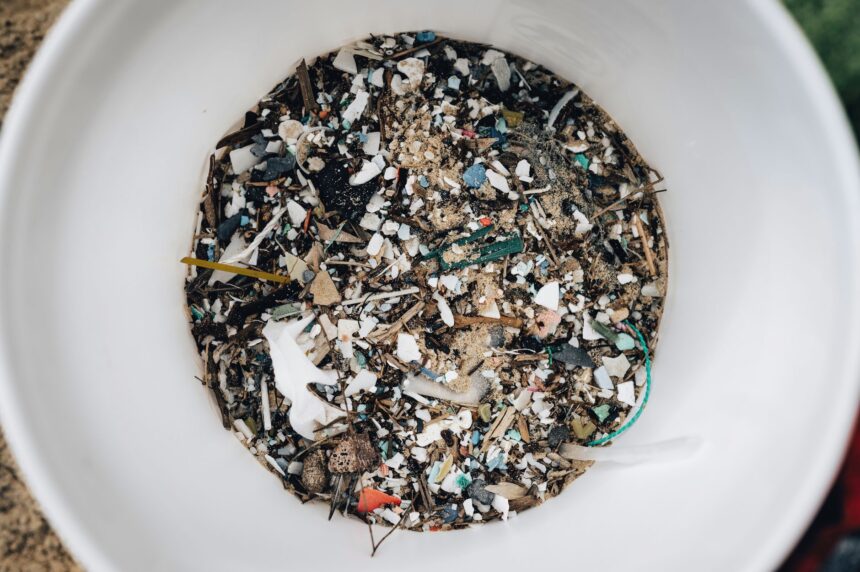
Diagram showing microplastics embedded in arterial plaque with cardiovascular risk data
Microplastics detected in nearly 6 in 10 patients with arterial plaque are linked to a 4.5-fold increased risk of heart attack and stroke, according to a New England Journal of Medicine analysis. The finding shifts microplastics from theoretical concern to documented cardiovascular pathology. — Photo by Alfo Medeiros on Pexels (Pexels License)
SHARE
1 min read|113 words

Microplastics have transitioned from theoretical environmental hazard to measurable cardiovascular threat. A landmark study published in the New England Journal of Medicine identified polyethylene particles in arterial plaques of 58% of cardiovascular patients undergoing carotid surgery, establishing a direct link between plastic contamination and heart disease pathology.

Researchers analyzed 257 patients and documented mean microplastic concentrations of 21.7 micrograms per milligram of tissue. The clinical significance is striking: patients with detectable microplastics faced a 4.53-fold increased hazard ratio for myocardial infarction, stroke, or death during 33.7-month follow-up. This finding represents a paradigm shift, moving microplastics from epidemiological hypothesis into documented cardiovascular pathology requiring clinical attention and public health intervention.

Read the full article on GMJ Newsroom.

Was this article helpful?

GMJ Brief · Announcement

📰 Read the full article: Microplastics Found in Human Arterial Plaque Linked to Heart Attack and Stroke Risk →

Related reference
  • Stroke · Condition
  • Iron · Ingredient
Share This Article
Facebook LinkedIn Bluesky Copy Link Print
GMJ
ByProf. Giorgi Pkhakadze
Follow:
Prof. Giorgi Pkhakadze, MD, MPH, PhD, is Editor-in-Chief of the Georgian Medical Journal and Chair of the Public Health Institute of Georgia (PHIG). He is Professor and Head of the Department of Social and Behavioural Sciences at David Tvildiani Medical University, and Secretary/Treasurer of the UEMS Section of Public Health. ORCID: 0000-0001-7609-4515.

Submit Your Paper →

Georgia's peer-reviewed open-access medical journal. No APC until January 2027.
Submit Manuscript →
Sleep Quality Drives Daily Movement More Than Exercise Boosts Rest, 2025 Data Shows

Wearable data from 71,000 adults over 3.5 years reveal that sleep quality…

Taurine and Cancer: Separating Laboratory Findings from Dietary Risk

Recent headlines claimed taurine fuels cancer, but a Nature study of leukemia…

Sleep deprivation damages multiple body systems simultaneously, six controlled studies show

Six controlled studies show that sleep deprivation simultaneously disrupts hormonal regulation, metabolic…

Submit Your Paper to GMJ

No APC until January 2027.
Submit Manuscript →

You Might Also Like

Children receiving nutrition assistance at a Yemen healthcare facility

Yemen’s Perfect Storm: Conflict, Economic Collapse, and Aid Withdrawal Converge in Humanitarian Emergency

By
Prof. Giorgi Pkhakadze
18/06/2026
Infographic showing congenital syphilis prevention through prenatal screening and maternal penicillin treatment

The Prevention Paradox: Why 100% Preventable Congenital Syphilis Is Still Rising

By
Prof. Giorgi Pkhakadze
23/07/2026
WHO certification document for Turks and Caicos Islands mother-to-child transmission elimination

What Turks and Caicos Teaches the World: Eliminating Mother-to-Child HIV and Hepatitis B is Achievable

By
Prof. Giorgi Pkhakadze
13/07/2026

SITUATION BRIEF: Ebola Cross-Border Transmission DRC-Uganda, WHO PHEIC Declaration

By
Prof. Giorgi Pkhakadze
31/05/2026
Facebook Twitter Youtube Instagram
Company
  • Privacy Policy
  • Contact US
  • GMJ Journal
  • Submit Manuscript
  • Editorial Team
  • Register at GMJ
  • Terms of Use

Subscribe to GMJ News — Click here

Join Community
© 2026 Georgian Medical Journal (GMJ). Published by the Public Health Institute of Georgia (PHIG). All rights reserved.
Welcome Back!

Sign in to your account

Username or Email Address
Password

Lost your password?

Not a member? Sign Up